
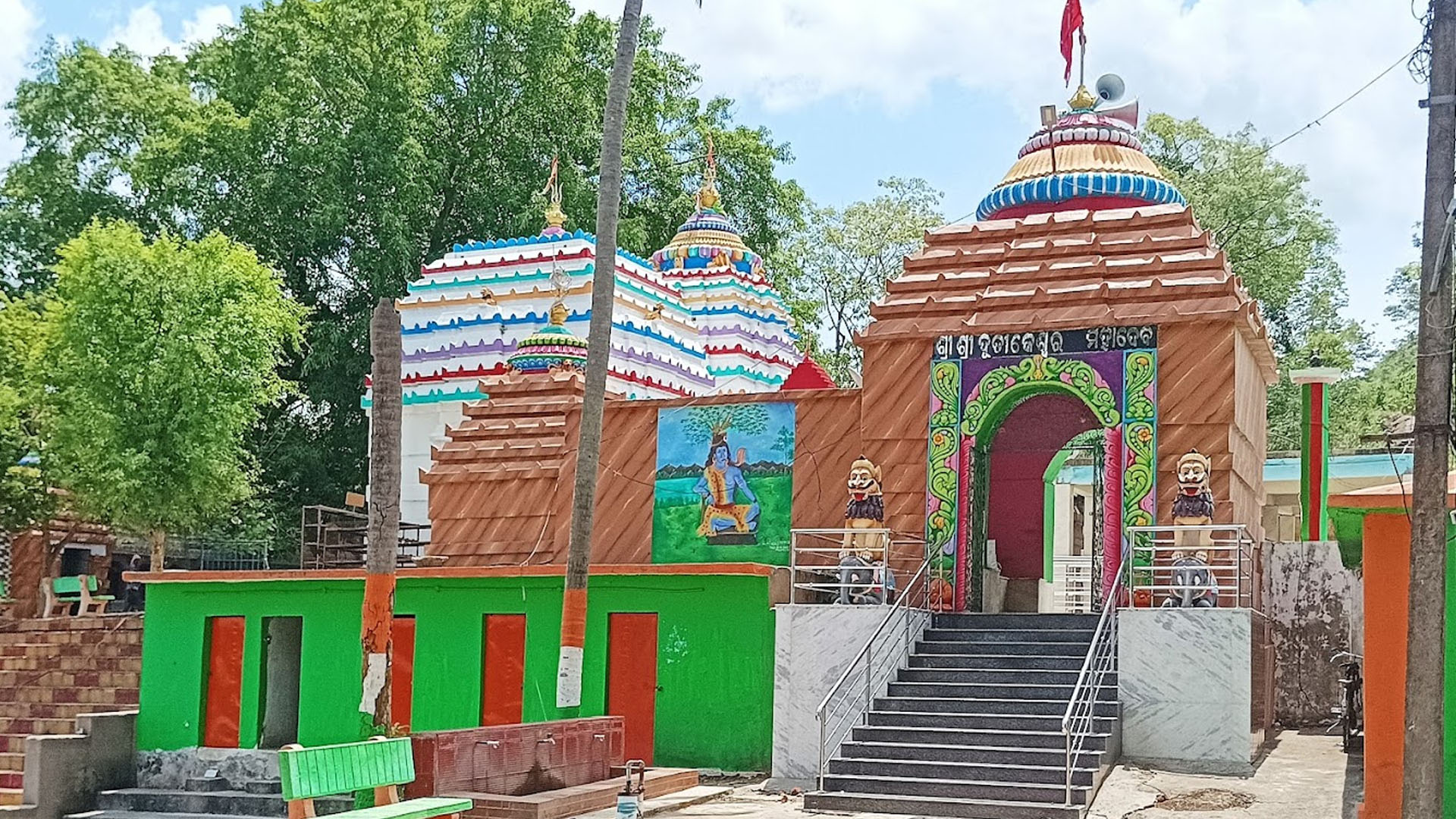
Dwitikeshwar Mahadev Temple at Jamupatna, on the Nayagarh to Odagaon road in Odisha, is a small Shiva shrine built around a swayambhu linga, a self manifested stone that local belief says rose from the earth where Sage Dutika once meditated. A centuries old banyan tree called Kalpabata stands before the temple, and devotees tie threads to its branches while praying for health, family wellbeing and success.
Key Highlights
- Dwitikeshwar Mahadev Temple stands at Jamupatna village, on the Nayagarh to Odagaon road in Nayagarh district.
- The sanctum holds a swayambhu Shiva linga, believed by devotees to be self manifested.
- Local legend credits Sage Dutika Muni, whose penance gave the shrine its name, meaning the God of Dutika.
- A massive Kalpabata banyan tree in front of the temple is treated as wish fulfilling.
- There is no entry fee, and the temple is listed as open from 6 am to 7 pm daily.
Legend of Sage Dutika
Local telling says Sage Dutika Muni chose this forest clearing for intense penance, living on forest fruit and stream water. Pleased by his devotion, Shiva appeared before him as a column of light and granted him liberation, and the linga that rose from the earth took the name Dutikeswar, the God of Dutika. The shrine is also spelt Dutikeswar and Dutikeshwar in local listings, and all three spellings point to the same Jamupatna temple.
The same belief extends to the Kalpabata banyan before the temple. Devotees tie sacred threads around its trunk and pray for rain in drought, protection in calamity and wellbeing for their families. The temple serves as a guardian shrine for surrounding villages, and its following rests on these lived beliefs rather than on inscriptions or royal records.
Architecture and the Temple Complex
The shrine follows the Kalinga style of Odisha, with a curved Rekha deula spire over the sanctum, a small mandapa hall in front, and the garbhagriha holding the linga. Local laterite stone gives the structure its plain, uncluttered look. A statue of Nandi, Shiva’s bull, faces the sanctum from the courtyard, as in traditional Shiva temples, and a small pond beside the temple adds to the calm, with fields, plantations and low hills around.
On age, honesty matters. Some travel writers claim an Eastern Ganga era origin or an age beyond a thousand years, and the old listing for this temple claimed a date in the 1000s. No archaeological publication dates this shrine, so this rewrite calls it several centuries old by local tradition and leaves the exact age open. Visitors should enjoy the shrine for its living worship, not for a documented antiquity it does not claim in any record.
Rituals and Festivals
Daily worship
Daily worship centres on the linga, with morning and evening puja, abhishekam and arati. The temple stays quiet on ordinary weekdays, which suits visitors who want an unhurried darshan. Dress modestly, remove footwear at the entrance, and follow the priests’ guidance on photography inside the sanctum.
Festivals through the year
Maha Shivratri is the temple’s biggest festival, when devotees gather through the night for worship. Shravan Mondays in the monsoon month of Shravan, Kartik Purnima and Pradosh observances also draw crowds from nearby villages. Festival days bring extra stalls, music and long queues, so arrive early if you plan a festival visit, and pick a weekday for a quiet trip.
Best Time to Visit
October to March gives the most comfortable weather, with cooler days for the village walk and temple visit. The monsoon months turn the fields green and suit Shravan Monday visits, but rain can disrupt rural roads. Maha Shivratri, which falls in February or March by the Hindu calendar, is the best festival window and the busiest day of the year.
How to Reach Dwitikeshwar Mahadev Temple
By Air
Biju Patnaik International Airport at Bhubaneswar is the nearest major airport, roughly 90 km from Nayagarh town. From the airport, a taxi or bus covers the onward journey to Nayagarh and then to Jamupatna.
By Train
Nayagarh Town railway station is the nearest railhead, about 30 km from the temple by road. Trains connect Nayagarh with Bhubaneswar and Khordha, and from the station a taxi or auto rickshaw reaches Jamupatna.
By Road
By road, the temple sits on the Nayagarh to Odagaon road at Jamupatna, about 32 km from Nayagarh town by one local listing. Buses from Bhubaneswar and Nayagarh run toward Odagaon, and a taxi hired for the day gives the most flexibility for combining the temple with other Nayagarh sights. The temple address is listed as Nayagarh-Odagaon Road, Jamupatna, Hatiasila, Odisha 752082.
Entry Fee and Timings
There is no entry fee at Dwitikeshwar Mahadev Temple, and no ticket system exists at this village shrine. Travel sources list the timings as 6 am to 7 pm daily. Festival days extend the hours, especially Maha Shivratri, when worship runs through the night.
Nearby Places to Visit
Nayagarh town, with its markets and district sights, is the natural base for this trip. Within the district, the Ram Mandir at Fategarh in Bhapur, Nayagarh offers another village temple stop on the same route.
Nayagarh town itself rewards a short stop, with its bazaars, local eateries and the district’s rural pace. The town is a working centre rather than a tourist hub, so facilities stay plain and prices stay local.
A day trip across the district needs a plan for return transport, since rural buses thin out by evening. Hiring a taxi for the day is the simplest way to cover Jamupatna and a second village shrine without worrying about the last bus.
Travellers building a wider Odisha temple route can add the Naganatheswar Temple in Dhenkanal, another Shiva shrine with its own local legend. It suits a second day of the circuit, paired with Dhenkanal town sights.
Travel Tips for Dwitikeshwar Temple
Carry drinking water and cash, since village shops are basic and card payment is rare. Visit in the morning for the calmest darshan, and keep festival days for the full crowd experience.
Respect the Kalpabata tree and the pond, avoid plucking leaves or branches, and leave the temple surroundings clean. A taxi for the day beats relying on infrequent buses for the return trip.
Travellers extending the circuit can add the Metakani Temple in Subarnapur, a goddess shrine that shows a different side of Odisha’s village worship. It pairs with Dwitikeshwar for a two shrine route across neighbouring districts.
Festival days change the rhythm of these village shrines completely, with extra buses, temporary stalls and crowds that a weekday visitor never sees. If you travel for a festival, book transport early and expect the temple surroundings to stay busy well into the evening.
Rural Odisha rewards unhurried travel, and the gaps between shrines are part of the experience, with paddy fields, village markets and forest patches along every road. Keep the itinerary to two temples a day so each visit gets the time it deserves.
For a third stop on the same circuit, the Mahavir Hanuman Temple in Khordha brings Hanuman devotion into the route. Together, the three shrines give a fair picture of how village temples anchor daily life across Odisha.
Frequently Asked Questions
Where is Dwitikeshwar Mahadev Temple located?
Dwitikeshwar Mahadev Temple is located at Jamupatna village, on the Nayagarh to Odagaon road in Nayagarh district, Odisha, about 32 km from Nayagarh town. The nearest railway station is Nayagarh Town, and Bhubaneswar airport is the nearest major airport. A taxi or bus from Nayagarh reaches the temple.
Who is the deity of Dwitikeshwar Temple?
The deity of Dwitikeshwar Temple is Lord Shiva, worshipped as Dwitikeshwar Mahadev through a swayambhu linga in the sanctum. Devotees believe the linga is self manifested, having risen from the earth. A statue of Nandi faces the sanctum, as in traditional Shiva temples.
What is the legend behind Dwitikeshwar Temple?
Local legend says Sage Dutika Muni performed penance at this spot, and Shiva appeared before him as a column of light and granted him liberation. The linga that emerged was named Dutikeswar, meaning the God of Dutika. The temple is also spelt Dutikeswar and Dutikeshwar in local listings.
What is the Kalpabata tree at the temple?
The Kalpabata is a centuries old banyan tree standing in front of Dwitikeshwar Temple, treated by devotees as wish fulfilling. Visitors tie sacred threads around its trunk while praying for health, family wellbeing and success. Local belief says Sage Dutika meditated beneath this very tree.
What are the timings and entry fee of Dwitikeshwar Temple?
Dwitikeshwar Temple is listed as open from 6 am to 7 pm daily, and there is no entry fee. Festival days, especially Maha Shivratri, extend the hours with night long worship. Timings at a village shrine can shift, so confirm locally before a festival visit.
Which festivals are celebrated at Dwitikeshwar Temple?
Maha Shivratri is the main festival at Dwitikeshwar Temple, drawing devotees through the night. Shravan Mondays, Kartik Purnima and Pradosh observances also fill the calendar with village crowds. For a quiet visit, choose an ordinary weekday outside festival season, when the temple is at its calmest.
Plan Your Visit
Come on a quiet morning, take darshan at the swayambhu linga, tie a thread at the Kalpabata tree, and pair the temple with a Nayagarh town stop for a full day out.
Weather Dwitikeshwar Mahadev Temple
[location-weather id="5549"]