
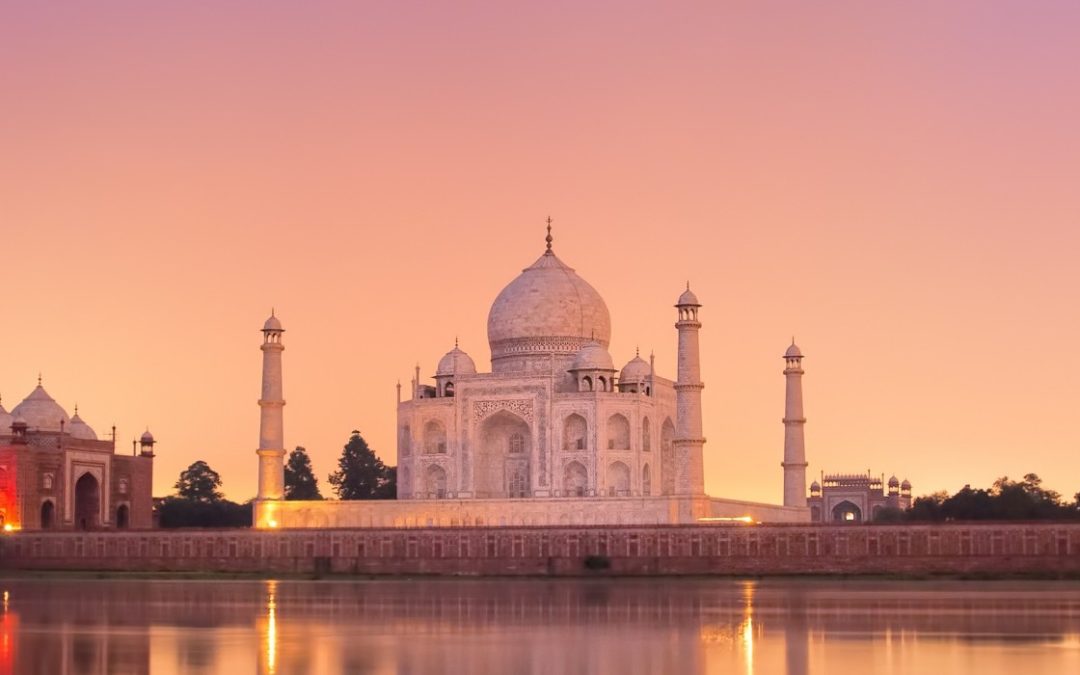
Agra Tourism starts with the Taj Mahal, but the city holds much more than one monument. Agra Fort, Fatehpur Sikri, the Baby Taj, and the gardens across the Yamuna fill two or three full days, and the Mughlai food and marble-inlay workshops fill the gaps between them. This guide covers the main sights, tickets, timings, how to reach the city, and where to stay.
Key Highlights
- The Taj Mahal is open from 30 minutes before sunrise to 30 minutes after sunset and closed every Friday. Indian tickets cost about Rs 250 in practice; foreign tickets are about Rs 1,100 plus Rs 200 for the main mausoleum.
- Agra Fort sits about 2.5 km from the Taj and needs 1.5 to 2 hours. Fatehpur Sikri, about 40 km west, needs half a day.
- Delhi to Agra is about 230 km by the Yamuna Expressway, 3 to 4 hours by car, or about 1 hour 40 minutes on the Gatimaan Express to Agra Cantt.
- The best time to visit is October to March. December and January mornings can be foggy, which sometimes hides the Taj at sunrise.
- Two to three days cover the main sights. Stay near Taj Ganj or Fatehabad Road for the easiest dawn entry to the Taj.
Agra at a Glance
Agra stands on the Yamuna in western Uttar Pradesh, about 230 km south of Delhi. It rose to prominence under Akbar, who rebuilt its fort in the 1560s and made it the Mughal capital, and it reached its peak under Shah Jahan, who built the Taj Mahal here in the 1600s. The city holds three UNESCO World Heritage Sites: the Taj Mahal, Agra Fort, and Fatehpur Sikri. Today it is a large industrial and trading city as well as a tourist hub, known for marble inlay, leather goods, and petha, its signature sweet. Most visitors come for the Taj and stay for the fort and the food, and the city works best as a two- or three-day stop on a Delhi to Jaipur route.
Taj Mahal
The Taj Mahal was built by Shah Jahan for his wife Mumtaz Mahal, who died in 1631. Work took about 22 years and finished around 1653. The white marble mausoleum stands on the right bank of the Yamuna, and it has been a UNESCO World Heritage Site since 1983, drawing about 4 million visitors a year. It is open from 30 minutes before sunrise to 30 minutes after sunset and closed every Friday for mosque prayers. Night viewing is possible on full-moon nights, plus or minus two days, except on Fridays and during Ramadan, and needs advance booking through the Archaeological Survey of India. For a deeper look at tickets and timings, see this Taj Mahal tour guide for Agra tickets and timings.
Tickets cost about Rs 50 for Indian visitors plus a Rs 200 Agra Development Authority toll, so Rs 250 in practice, with another Rs 200 for entry to the main mausoleum. Foreign visitors pay about Rs 1,100 plus Rs 200 for the mausoleum. Children under 15 enter free. Online booking is slightly cheaper, and there is a three-hour visit limit in place since 2019. The East Gate is usually the calmest at opening, while the West Gate draws the biggest crowds.
Only electric vehicles are allowed within 500 metres of the Taj, so taxis drop you at the car parks and you continue by battery bus, golf cart, or on foot. Security is airport-style: phones, cameras, a small bag, and water are allowed, but food, tripods, drones, large bags, chargers, and tobacco are not. Shoe covers are provided with foreign tickets.
Agra Fort
Agra Fort stands about 2.5 km from the Taj, upriver on the same bank of the Yamuna. Akbar rebuilt it in red sandstone in the 1560s, and its walls run for about 2.5 km. It became a UNESCO site in 1983. The open sections include Diwan-i-Am, the hall of public audience, Jahangiri Mahal, Khas Mahal, Diwan-i-Khas, and the white marble Moti Masjid. Shah Jahan spent his last eight years imprisoned here by his son Aurangzeb, looking across the river at the Taj from the Musamman Burj. Roughly half the fort is still an Indian Army cantonment and closed to visitors. Indian tickets cost about Rs 50 and foreign tickets about Rs 650. The fort is open from about 6 AM to 6 PM, with last entry around 5:30 PM, and the open sections take 1.5 to 2 hours. Go early, since the red sandstone holds the heat by midday.
Fatehpur Sikri
Fatehpur Sikri, about 40 km west of Agra, was Akbar’s capital in the 1570s and was abandoned after about 14 years, most likely over water supply. It is a UNESCO site since 1986. The royal complex holds Diwan-i-Khas with its carved central pillar, the five-storey Panch Mahal, and the palace courtyards, while the Jama Masjid, still in use, is reached through the Buland Darwaza gateway. The white marble tomb of Salim Chishti stands beside the mosque. Indian tickets cost about Rs 40 and foreign tickets about Rs 550 to Rs 610, and the complex is open roughly 6 AM to 6:30 PM. Allow two hours inside plus travel, so treat it as a half-day trip, ideally as a stop on the Agra to Jaipur road rather than a return journey.
More Places to See in Agra
Itimad-ud-Daulah, known as the Baby Taj, was built in the 1620s by Nur Jahan for her father. Its marble pietra dura inlay came before the Taj and showed what the later monument would do at full scale. Foreign tickets cost about Rs 310, and the tomb takes one to one and a half hours. Mehtab Bagh, the Moonlight Garden, sits directly across the Yamuna from the Taj and gives the best sunset view of the monument. Foreign tickets cost about Rs 300, and it is open seven days a week, including Fridays when the Taj is closed.
Sikandra, about 10 km north-west of the city, holds Akbar’s tomb in a walled garden with deer and langurs, and works as a quiet late-afternoon stop. Sur Sarovar Bird Sanctuary, about 20 km away on the Delhi road, suits a morning trip for birdwatchers. The old city also holds the Jama Masjid, the Gurudwara Guru ka Taal, Mankameshwar Temple, and Chini ka Rauza, all within a short drive of the fort. For more Mughal sites across the state, see the Uttar Pradesh tourism guide.
How to Reach Agra
By Air
Agra airport at Kheria is small, about 5 km from the city, with only a few domestic flights. Most visitors fly into Delhi and continue by road or rail, which is faster and better connected.
By Train
Agra Cantt is the main station, with Agra Fort station in the old city as the second option. The Gatimaan Express covers New Delhi to Agra Cantt in about 1 hour 40 minutes, and Vande Bharat services take about 2 to 2.5 hours. Book through IRCTC, and pick a morning train if you want a full day in the city. Seven stations serve the city, so check that your train stops at Agra Cantt before you book.
By Road
Delhi to Agra is about 230 km by the Yamuna Expressway, a 3 to 4 hour drive. Three national highways pass through the city, and buses run from Delhi, Jaipur, and Mathura. The Agra Metro Yellow Line runs six stations from Taj East Gate along Fatehabad Road to Agra Fort and Mankameshwar, from 6 AM to 10 PM, with fares of about Rs 10 to Rs 30 per journey. Within the city, autos and e-rickshaws cover the old city and the fort area.
Best Time to Visit Agra
October to March is the best time to visit Agra. November to February is the most comfortable, with daytime temperatures of about 10 to 26 degrees. December and January mornings can be foggy, which sometimes hides the Taj at sunrise and delays trains, so keep your first morning flexible. April to June is hot, with afternoons reaching 40 to 45 degrees, and July to September brings monsoon humidity. The Taj looks its best in the soft light just after sunrise, which is one more reason to stay near the East Gate and arrive early.
Where to Stay and Getting Around
Taj Ganj and Fatehabad Road, near the East Gate, are the best areas to stay for a dawn entry to the Taj. Sadar Bazaar and Mall Road are central and good for shopping and restaurants, while the Mehtab Bagh side across the river suits travellers who want the sunset view. Hotels range from five-star properties to budget guest houses, and a daily budget of roughly Rs 2,000 to Rs 5,000 per person, excluding the hotel, covers food, transport, and tickets. The 500-metre electric-vehicle-only zone around the Taj means you will walk or take a battery bus for the last stretch, so wear comfortable shoes. Agra pairs naturally with the rest of Uttar Pradesh, and the wider state is worth a few extra days if you have them.
Food and Shopping in Agra
Petha, a crystallised ash-gourd sweet, is the signature food of Agra, and the shops near the Taj sell it in many flavours. Mughlai dishes are the other staple: korma, biryani, and dal nihari. Joney’s Place in Taj Ganj, Pinch of Spice on Fatehabad Road, Peshawri at ITC Mughal, and Esphahan at the Oberoi Amarvilas are the best-known restaurants. Sheroes Hangout, a cafe run by acid-attack survivors, works on a pay-what-you-feel basis and is worth a stop. For shopping, marble inlay, known as pietra dura, is the craft to look for, along with leather goods and textiles. Kinari Bazaar in the old city, running from Jama Masjid toward the fort, is where locals shop, and the workshops near the Taj show the inlay work being made. Watch out for touts and commission guides near the monuments, and agree on prices before you buy.
Suggested Itineraries for Agra
One day is possible but tight: arrive early, see the Taj at sunrise, then Agra Fort, then Mehtab Bagh at sunset. Two days is the better plan. Day one covers the Taj and the fort, with an evening at Mehtab Bagh. Day two covers Itimad-ud-Daulah, Sikandra, and the old city markets, with time for a marble workshop.
Three days add Fatehpur Sikri as a half-day trip and a morning at Sur Sarovar. Agra also sits on the Golden Triangle route with Delhi and Jaipur, and the New Delhi tourism guide covers the Delhi corner of that circuit.
Travel Tips for Agra
Book Taj tickets online in advance to skip the ticket queue, and carry the same ID you used for booking. Keep your visit to the three-hour limit in mind, since the ticket allows a single entry. Do not carry food, tripods, or large bags to the Taj. Confirm entry fees on the ASI ticketing portal before you travel, since prices change, and the figures here are as of late 2026. Avoid touts near the gates, and use the official guides or the ASI audio guide instead. If you are travelling in December or January, keep your train and flight plans flexible because fog can delay both.
Frequently Asked Questions
What is the best time to visit Agra?
October to March is the best time to visit Agra, with November to February the most comfortable at about 10 to 26 degrees. December and January mornings can be foggy and may hide the Taj at sunrise. April to June is very hot, and July to September brings monsoon humidity.
Is the Taj Mahal closed on Friday?
Yes, the Taj Mahal is closed every Friday for mosque prayers. It is open from 30 minutes before sunrise to 30 minutes after sunset on other days. Mehtab Bagh across the river stays open on Fridays and gives a good view of the Taj from the other bank.
How much is the Taj Mahal entry ticket for Indians and foreigners?
Indian visitors pay about Rs 50 plus a Rs 200 Agra Development Authority toll, so Rs 250 in practice, with another Rs 200 for the main mausoleum. Foreign visitors pay about Rs 1,100 plus Rs 200 for the mausoleum. Children under 15 enter free. Confirm prices on the ASI portal before visiting.
How many days are enough for Agra?
Two to three days are enough for Agra. One day covers the Taj and Agra Fort at a rush, two days add Itimad-ud-Daulah, Sikandra, and the markets, and three days add Fatehpur Sikri and Sur Sarovar. A single day is possible but exhausting.
How do I reach Agra from Delhi?
Agra is about 230 km from Delhi by the Yamuna Expressway, a 3 to 4 hour drive. By train, the Gatimaan Express takes about 1 hour 40 minutes from New Delhi to Agra Cantt, and Vande Bharat takes about 2 to 2.5 hours. Book train tickets through IRCTC.
What is there to see in Agra besides the Taj Mahal?
Agra Fort, Fatehpur Sikri, Itimad-ud-Daulah, Mehtab Bagh, and Sikandra are the main sights beyond the Taj. The old city adds the Jama Masjid, Gurudwara Guru ka Taal, and Kinari Bazaar. Agra Fort alone needs 1.5 to 2 hours, and Fatehpur Sikri needs half a day.
Conclusion
Agra works best as a slow two-day stop: the Taj at sunrise, the fort in the morning, and the gardens across the river at sunset. Book your tickets online, stay near the East Gate, and keep a day free for Fatehpur Sikri.