
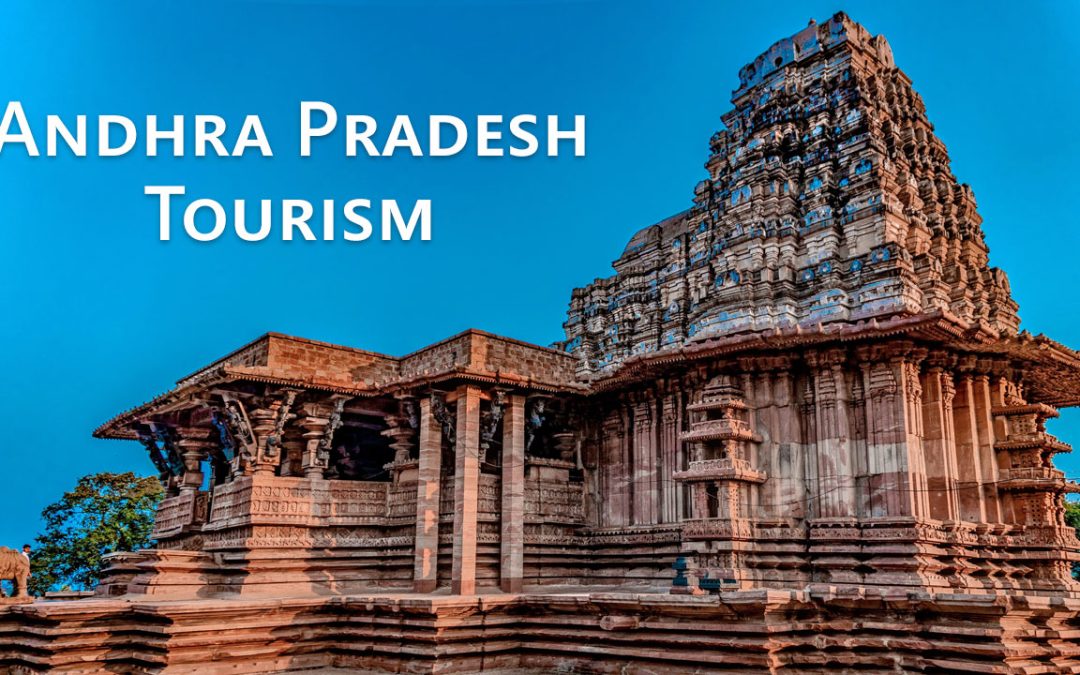
Andhra Pradesh Tourism covers a state that packs India’s variety into one coastline: the temple town of Tirupati, the port city of Visakhapatnam, the coffee hills of Araku Valley, and a gorge nicknamed India’s Grand Canyon. This guide covers the places, the food, the best season and how to plan a trip across the state.
Key Highlights
- Tirupati’s Sri Venkateswara Temple on Tirumala hill is among the most visited shrines on earth, so book darshan in advance through the TTD portal.
- Visakhapatnam pairs Bay of Bengal beaches with a submarine museum, Buddhist hilltop sites and the Vistadome train to Araku Valley.
- Araku Valley sits 900 to 1,100 metres up in the Eastern Ghats, with coffee estates, tribal villages and the Borra Caves nearby.
- Belum Caves run 3.23 km underground and Gandikota gorge cuts through the Erramala hills on the Pennar river.
- October to February is the best season; watch the cyclone risk on the coast from October to December.
Andhra Pradesh at a Glance
Andhra Pradesh sits on India’s south-east coast, between Telangana, Tamil Nadu, Karnataka and Odisha, with a long Bay of Bengal shoreline. Amaravati is the capital, and the state covers 1,60,205 sq km with 26 districts since the 2022 reorganisation. Telugu is the official language, and English, Hindi and Urdu are widely understood in the cities. The state animal is the blackbuck, the state bird the Indian roller, and the state tree the neem.
The state divides roughly into Coastal Andhra and Rayalaseema, and the two halves feel different. The coast is humid, green and temple-rich; the interior is drier, rockier and full of forts and canyons. Food follows the same split: coastal cooking leans on seafood and rice, while Rayalaseema cooking is fiery, with millets and groundnut-based gravies. The best-known dishes are pesarattu, the green-moong dosa, gongura pickle made from sorrel leaves, and prawn fry.
Tirupati and Tirumala
Tirupati is the gateway town, and above it, reached by a winding ghat road or by thousands of steps climbed barefoot, sits Tirumala, a temple town built entirely around the shrine of Sri Venkateswara. The temple draws tens of thousands of pilgrims a day and is among the most visited places of worship anywhere in the world. The single biggest factor in your visit is the darshan booking: reserve a slot through the official TTD website weeks in advance, or a two-hour visit can stretch to ten.
Allow a full day for Tirumala itself. The main darshan is the heart of it, but Silathoranam, the natural rock arch, Akasha Ganga waterfall and the Papavinasanam theertham fill the rest of the hill. Down in Tirupati town, Sri Padmavathi Ammavari Temple at Tiruchanur, Kapila Theertham at the foot of the hills and Chandragiri Fort, the old Vijayanagara stronghold, complete the circuit. The temple architecture here shares its Dravidian roots with the great shrines further south, and travellers heading on to Tamil Nadu can compare notes with these famous temples in Tamil Nadu before they go.
Visakhapatnam (Vizag)
Visakhapatnam, Vizag to almost everyone, is Andhra Pradesh’s great coastal city, folded between the Eastern Ghats and a wide arc of the Bay of Bengal. It is a working port with a genuinely scenic coastline, and it makes the best base for the Araku run. RK Beach is the city’s social heart, a long promenade for evening walks, and the INS Kurusura Submarine Museum, set inside a decommissioned submarine on the beach road, is the sight children remember longest.
Kailasagiri hilltop park, reached by ropeway, gives the best sunset view over the city and the coast, with large statues of Shiva and Parvati at the summit. Simhachalam Temple, a millennium-old shrine blending Kalinga and Chola elements, sits on a hill north of the city. Thotlakonda and Bavikonda, the Buddhist monastic sites on windy headlands above the sea, are among the oldest Buddhist remains on the east coast and are an easy half-day from the beach road.
Araku Valley and Borra Caves
Araku Valley sits about 115 km north of Visakhapatnam, a broad bowl of terraced fields, coffee gardens and Adivasi villages at around 900 metres. The train ride is half the destination: from Visakhapatnam the line climbs into the Eastern Ghats through dozens of tunnels and over high bridges, and the Vistadome coach, with its glass roof, is worth booking for the views. The journey takes about three and a half to four hours.
Araku coffee, grown by tribal cooperatives, is the valley’s pride, so drink it at the source and visit the Tribal Museum to understand the cultures of the hills. Borra Caves, vast limestone caverns on the road back toward Vizag, are the classic pairing, with cathedral-like chambers of stalactites and stalagmites said to be around 150 million years old. Katiki Waterfalls and the Galikonda viewpoint fill a second day, and the valley’s waterfalls rank among the most rewarding in the region, as this guide to beautiful waterfalls in India shows in a wider Indian context.
Vijayawada and Amaravati
Vijayawada, on the Krishna river, is the state’s commercial hub and the natural stop between the coast and the interior. Kanaka Durga Temple crowns Indrakeeladri hill above the river, and the Prakasam Barrage, lit up at night, is the city’s evening promenade. Undavalli Caves, carved into a hillside south of the river, hold a massive reclining Vishnu and some of the finest early rock-cut sculpture in the region.
Amaravati, a short drive away, was an ancient Buddhist capital, and its great stupa and the museum beside it hold some of the most important Buddhist sculpture in India. The new capital city rising nearby carries the same name, which confuses first-time visitors: the ancient site and the modern capital are two different places a few kilometres apart. Plan half a day for the old stupa, the museum and the riverfront.
Belum Caves and Gandikota
Belum Caves, near Belum village in Nandyal district, are a limestone cave system extending over 3.23 km, the second-largest cave network in India, formed by water eroding limestone over millions of years. The caves became a Geo-heritage Site in 2025, and the walk through their chambers, past stalactite formations and underground pools, takes about an hour. Carry a light jacket: the caves stay cool even in summer.
Gandikota is where the Pennar river has cut a deep gorge through the Erramala hills, and the view from the rim, red rock walls dropping to a green river bend, is why it is called India’s Grand Canyon. The fort above the gorge holds a mosque, a granary and a temple in various states of repair, and the sunset from the rim is the moment to be there. Stay overnight if you can: the gorge at dawn, with mist in the river bend, is quieter and finer than the crowded sunset hour.
Lepakshi and the Rayalaseema Trail
Lepakshi, in Anantapur district, is a small village with a large temple. The Veerabhadra Temple holds the famous hanging pillar, one of its stone pillars that does not touch the ground, and the ceiling frescoes are among the best-preserved Vijayanagara paintings anywhere. The giant Nandi statue outside the temple is carved from a single rock. Lepakshi pairs well with Gandikota on a two-day Rayalaseema loop from Bengaluru or Tirupati.
Food to Try in Andhra Pradesh
Andhra food is the spiciest in South India, and the state is proud of it. Start with pesarattu, the green-moong dosa served with ginger chutney, and a plate of idli with spicy podi. Gongura, the sour sorrel-leaf pickle, turns up with rice and dal in homes across the state. On the coast, order prawn fry and fish pulusu, the tamarind fish curry, and in Rayalaseema try ragi sangati with groundnut chutney. Filter coffee is the default drink, and the tiffin rooms of Vijayawada and Tirupati are the cheapest way to eat well.
How to Reach Andhra Pradesh
The state has three useful gateways: Visakhapatnam on the coast, Tirupati in the south and Vijayawada in the centre. Most itineraries start at one of these and move by train or road. Book temple darshan and Vistadome train seats well in advance, since both sell out in the winter season.
By Air
Visakhapatnam airport connects to Delhi, Mumbai, Bengaluru, Hyderabad and Chennai. Tirupati airport serves the temple town with flights from the same cities, and Vijayawada airport covers the central districts. A morning flight from Visakhapatnam to Tirupati takes about ninety minutes when scheduled, or three to five hours via Hyderabad or Chennai.
By Train
Visakhapatnam, Vijayawada and Tirupati are all major junctions on the east-coast main line, with trains from Delhi, Kolkata, Chennai and Bengaluru. The Visakhapatnam to Araku line is the scenic highlight, and the Vistadome coach needs advance booking through IRCTC. Travellers coming from the north often build a longer heritage run that starts at the Taj Mahal, and this Agra tour guide covers that circuit for anyone pairing north and south India in one trip.
By Road
NH-16 runs the length of the coast from Chennai to Kolkata, linking Tirupati, Vijayawada and Visakhapatnam. State highways connect the interior towns, and the drive from Visakhapatnam to Araku takes about three hours by road. Hire a car with a driver for the hill sections, since the ghat roads to Tirumala and Araku are winding and the local drivers know them well.
Best Time to Visit Andhra Pradesh
October to February is the ideal window, with temperatures between 15 and 28°C, clear skies and the state at its most comfortable for temple queues, beach walks and the drive up to Araku. November to February is the sweet spot, with the cyclone season safely behind you and the winter light at its best.
The coast is hot and humid for much of the year, and the Bay of Bengal carries a real cyclone risk between October and December, so track forecasts before coastal travel. The monsoon runs roughly June to September and turns the Araku hills green, but it also makes the ghat roads slippery and the beach towns muggy. Summer, from March to May, is best avoided except for the hills.
Suggested Itineraries
Three days: fly into Visakhapatnam, spend day one on RK Beach, the submarine museum and Kailasagiri, take the Vistadome train to Araku on day two for the valley and Borra Caves, and return to Vizag on day three for Simhachalam and the Buddhist sites. This is the best first taste of the state.
Seven days: add Tirupati and Tirumala for two days, with darshan booked in advance, then Vijayawada and Amaravati for a day, and finish with Belum Caves and Gandikota for the gorge and the caves. With a week, the full loop covers the state, from the coast to the Rayalaseema interior. Travellers with more time often extend south after Vizag to the Kerala backwaters, which pair well with the Andhra coast as a slow finish to the trip.
Travel Tips for Andhra Pradesh
Book darshan slots and Vistadome seats weeks ahead in the winter season. Dress modestly at temples, carry cash for small towns and temple towns, and keep a scarf handy for shrine visits. Telugu helps in the villages, but English works in the cities and at all the major sites.
Carry sun protection for the coast and a light jacket for Araku and the caves. Check cyclone forecasts before October to December coastal travel, and keep buffer time in any plan that depends on the Vistadome train, since seats sell out fast. Hydration matters on the coast: the humidity is high even when the temperature looks mild.
Andhra Pradesh rewards the traveller who mixes the sacred and the scenic rather than choosing one. If you have days to spare after the state, Goa’s beaches on the west coast make an easy next stop by train or flight, and the contrast between the two coasts is worth the journey. Book the darshan first, then build the rest of the trip around it.
Frequently Asked Questions
What is the best time to visit Andhra Pradesh?
October to February is the best time to visit Andhra Pradesh, with temperatures between 15 and 28°C and clear skies across the coast and the hills. November to February is the sweet spot. The coast carries a cyclone risk from October to December, so check forecasts before travelling in that window.
How many days are needed for Andhra Pradesh?
Three days cover Visakhapatnam and Araku Valley, including the Vistadome train and Borra Caves. Seven days cover the full loop: Vizag and Araku, Tirupati and Tirumala, Vijayawada and Amaravati, and Belum Caves with Gandikota. Add two more days if you want Lepakshi and the Rayalaseema trail.
How do I book Tirupati darshan tickets?
Book darshan slots through the official TTD website weeks in advance, since slots sell out in the winter season. Without a booking, a visit that could take two hours can stretch to ten. Carry the booking confirmation and a photo ID, and dress modestly for the temple.
How do I reach Araku Valley from Visakhapatnam?
Take the Visakhapatnam to Araku train, which climbs into the Eastern Ghats through dozens of tunnels and over high bridges in about three and a half to four hours. Book the Vistadome coach in advance through IRCTC for glass-roof views. The drive by road takes about three hours.
What is Andhra Pradesh famous for?
Andhra Pradesh is famous for Tirupati’s Sri Venkateswara Temple, one of the most visited shrines on earth, for Visakhapatnam’s beaches and submarine museum, for Araku Valley’s coffee and the Vistadome train, for Belum Caves and Gandikota gorge, and for its spicy food, especially pesarattu, gongura and prawn fry.
Is Andhra Pradesh safe for tourists?
Yes, Andhra Pradesh is generally safe for tourists, including solo travellers, with the usual care needed in any Indian state. Keep valuables secure in crowded temple towns, use prepaid taxis or app cabs at night, check cyclone forecasts on the coast from October to December, and book temple darshan and train seats in advance.
Andhra Pradesh is a state best taken slowly: one temple town, one beach city, one coffee valley and one canyon, in that order. Book the darshan first, then let the rest of the trip fall into place around it.