
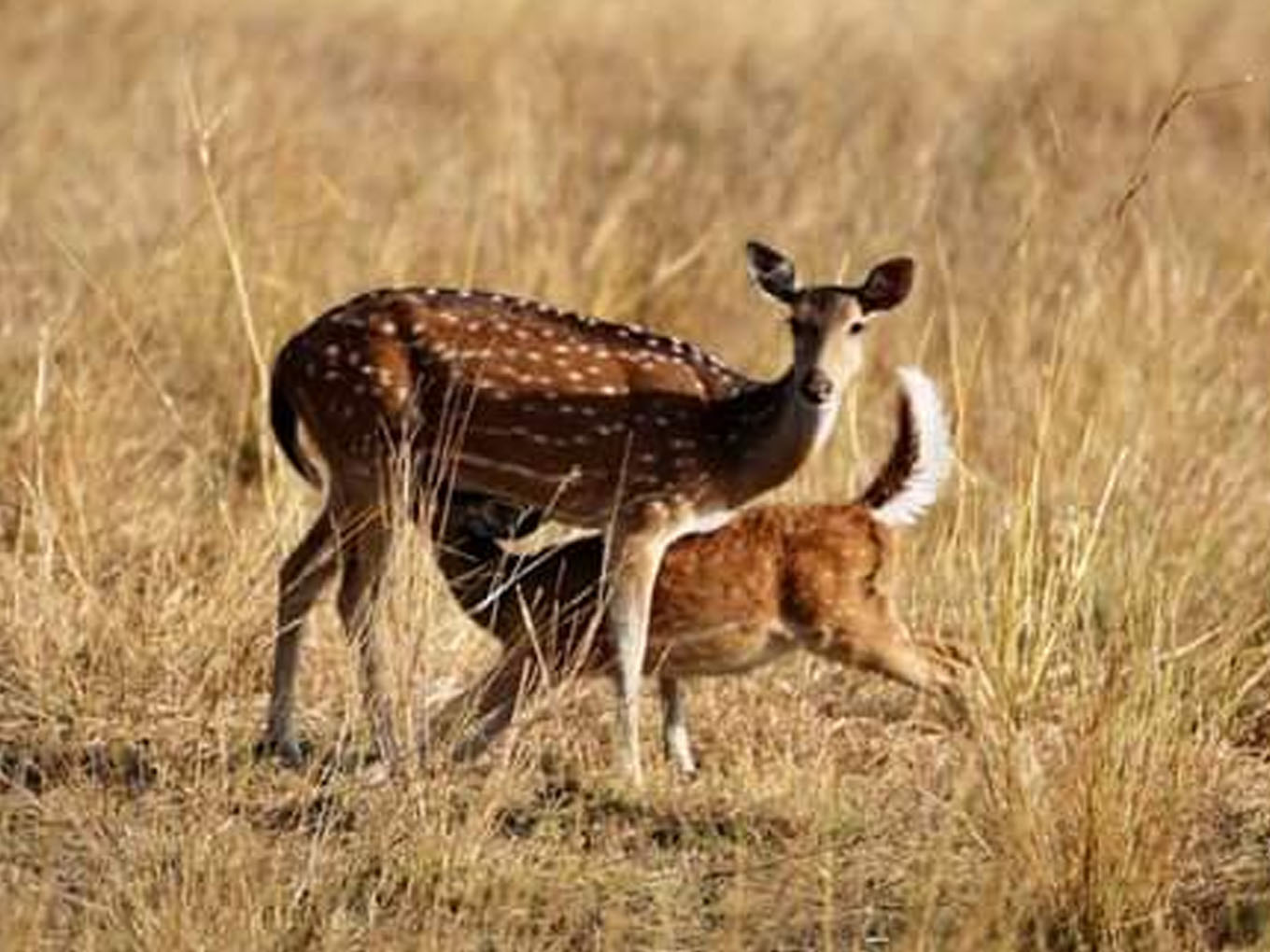
If you are planning a wildlife stop on your Odisha trip, Deer Zoological Park Sambalpur is the one place in western Odisha where you can walk through a real green patch and spot spotted deer grazing a few metres away from you. Set inside Sambalpur town at Sakhipara, this 35-acre mini-zoo works as the city’s favourite weekend green space, a small but serious wildlife conservation centre, and a simple family outing all rolled into one. The deer are the headline act — spotted deer, sambar and barking deer move freely in large enclosures — but the park also houses leopards, sloth bears, monkeys, pythons and a lively collection of birds, so children and casual visitors stay engaged through the whole visit.
Key Highlights
- Where: Sakhipara (Motijharan), Sambalpur town — just about 2.1 km from the city centre, easy to reach by auto-rickshaw or cab.
- What you will see: Spotted deer, sambar and barking deer in open enclosures, plus leopard, sloth bear, monkeys, pythons, peacocks, parrots and an aquarium with fish.
- Entry fee: Around ₹10 for adults and free for children below 5 years, as per current visitor reports — one of the cheapest outings in Odisha.
- Timing: The park runs on seasonal morning-and-evening sessions and stays closed on Mondays — confirm the day’s hours at the gate before you set out.
- Plan around: A 1–2 hour visit; combine it with Hirakud Dam, Samaleswari Temple or Debrigarh Wildlife Sanctuary for a full Sambalpur day.
About the Deer Zoological Park, Sambalpur
Locals know this place by a few names — Sambalpur Zoo, Sakhipara Deer Park, or the deer park at Motijharan. The park sits on roughly 35 acres that still feel like a patch of dense forest, with tall trees lining the approach road and flowering plants spread through the campus. Visitor guides report somewhere between 280 and 333 animals here across about 15 species, plus 20 or more varieties of birds in around 27 enclosures — treat these as the park’s reported scale, since the numbers shift year to year.
The park doubles up as a wild animal conservation centre for the region, and visitors rate its upkeep well — paths are walkable, enclosures are landscaped, and the greenery keeps it pleasant even in warmer months. Because it sits within town limits, it works well as a half-day stop alongside Sambalpur’s temples and dams.
Animals to Spot at the Park
Do not walk in expecting a giant metropolitan zoo. This is a compact mini-zoo, and its strength is deer — herds of them, fawns trailing behind, which is exactly what children come to see.
Deer Species
The three deer species you are most likely to spot are the spotted deer (chital) with its dappled coat; the sambar, the largest of the three with the most imposing antlers; and the barking deer (muntjac), smaller and shier — watch the quieter corners of the enclosures. Morning hours are best for deer watching, when the herds are active and feeding.
Other Animals and Birds
Beyond the deer, the park holds leopards, sloth bears, monkeys, jungle pigs, jackals and pythons, plus peacocks, parrots and other birds, and a small aquarium that young children enjoy. A children’s play park sits inside the campus, making this a genuinely family-friendly outing.
How to Reach Deer Zoological Park Sambalpur
The park’s biggest practical advantage is that it is inside Sambalpur town — a city auto-rickshaw or cab gets you there, no forest permits or day-long transfers needed.
By Air
The nearest airport is Veer Surendra Sai Airport at Jharsuguda, roughly 60 km from Sambalpur — about an hour’s drive. For wider connections, Biju Patnaik International Airport at Bhubaneswar is around 285–300 km away. From either airport, take a pre-paid taxi or an intercity cab to Sambalpur and then a local auto to the park.
By Train
Sambalpur Junction is the main railhead and one of the busiest in western Odisha, with trains from Bhubaneswar, Kolkata, Delhi, Mumbai, Chennai and Hyderabad. The park is only about 2.1 km from the city centre, so from the station you can reach it in 10–15 minutes by auto-rickshaw or app cab.
By Road
Sambalpur sits on National Highway 53, with NH-55 connecting it towards Cuttack and Bhubaneswar. State-run and private buses link the town with Bhubaneswar, Puri, Cuttack and Raipur. Within the city, the Government Bus Stand is the nearest bus point to the park at roughly 2.1 km; autos and taxis are easily available, and the park offers parking for a small fee.
Best Time to Visit
October to March is the comfortable window — cool mornings, active animals, and pleasant walking weather through the green campus. The park stays open through the year and the tree cover keeps it bearable even in summer, but April–June midday heat makes the animals sluggish and the walk tiring. For a quieter visit, go on a weekday morning right at opening time.
Entry Fee and Timings
The entry fee is famously nominal — current visitor reports put it at about ₹10 for adults, with no charge for children below 5 years. Timings follow a seasonal pattern with a midday break: summer sessions (roughly mid-February to mid-November) generally run 7 AM–12 PM and 4 PM–6:30 PM, while winter sessions (mid-November to mid-February) run around 8 AM–1 PM and 3 PM–5 PM. The park is closed on Mondays. Because hours are managed locally and can shift with the season, confirm the day’s timing at the gate before heading out in 2026; ticket counters typically stop issuing tickets shortly before the session ends.
Facilities for Visitors
For a small town park, the facilities cover the basics well: a cafeteria and snack shop near the entrance for tea and light snacks, drinking water points, clean restrooms, and seating areas to rest between enclosures. The children’s play park keeps younger kids occupied, and the flower beds and tree-lined paths make the walk itself enjoyable. Carry a reusable water bottle and avoid single-use plastic — the staff discourages littering inside the campus.
Nearby Places to Visit in Sambalpur
The deer park covers barely two hours, so plan the rest of your day around Sambalpur’s bigger draws. The Debrigarh Wildlife Sanctuary, about 40 km from the city on the Hirakud reservoir, is the region’s flagship wildlife destination with safari options — pair it with the deer park for a full wildlife day. Closer to town, the Ushakothi Wildlife Sanctuary offers another forested escape, while the Hirakud Dam — one of the longest earthen dams in the world — lies roughly 15–18 km away and is the classic sunset point. In town, the Samaleswari Temple and the Gudeswar Shiva Temple at Durgapalli are easy additions. For wider Odisha wildlife reading, see our guides to the Satkosia Wildlife Sanctuary and Tiger Reserve in Angul and Bhitarkanika National Park in Kendrapara.
Travel Tips
- Go early: Animals are most active in the first hour after opening; the deer herds feed in the morning and rest through midday.
- Skip Mondays: Monday is the park’s weekly off-day — plan around it.
- Carry cash: The entry fee is tiny but counters may not accept digital payments; keep small change for ticket and parking.
- Dress for walking: Comfortable footwear, a cap and a water bottle — the campus is a full walk with limited shade between enclosures.
- Photography: Mornings give the best light on the deer enclosures; never tease or feed the animals.
- Combine smartly: Club the park with Hirakud Dam or Samaleswari Temple in one day to make the most of your Sambalpur stay.
Frequently Asked Questions
What is the entry fee for Deer Zoological Park Sambalpur?
As per current visitor reports, the entry fee is around ₹10 for adults, and children below 5 years enter free. There is also a small parking charge — about ₹5 for two-wheelers and ₹10 for cars. Confirm the fee at the counter before your visit in 2026, as rates can be revised.
What are the timings of Deer Zoological Park Sambalpur?
The park generally runs two seasonal sessions with a midday break — roughly 7 AM–12 PM and 4 PM–6:30 PM in summer, and 8 AM–1 PM and 3 PM–5 PM in winter — and stays closed on Mondays. Hours are set locally, so verify the day’s timing at the gate.
How do I reach Deer Zoological Park Sambalpur?
The park is at Sakhipara, about 2.1 km from Sambalpur city centre, easy to reach by auto-rickshaw or cab. The nearest airport is Veer Surendra Sai Airport, Jharsuguda (about 60 km); the nearest major railway station is Sambalpur Junction, well connected to Bhubaneswar, Kolkata, Delhi, Mumbai and Chennai. Sambalpur also lies on NH-53 with regular bus services.
Which animals can I see at Deer Zoological Park Sambalpur?
The park is known for its deer — spotted deer, sambar and barking deer — alongside leopards, sloth bears, monkeys, jungle pigs, jackals, pythons, peacocks, parrots and a small aquarium with fish. A children’s play area sits inside the campus too.
Is Deer Zoological Park Sambalpur good for a family visit with children?
Yes, it is one of the most family-friendly outings in Sambalpur. The walk is easy, there is a children’s play park, a cafeteria near the entrance, restrooms and drinking water points. A complete visit takes about 1–2 hours.
What is the best time to visit Deer Zoological Park Sambalpur?
October to March is the best time to visit, when the weather is cool and the animals are active through the day. Weekday mornings are the quietest. Avoid Mondays, when the park is closed, and the harsh midday heat of peak summer.
Weather Deer and Zoological Park
[location-weather id="5549"]