
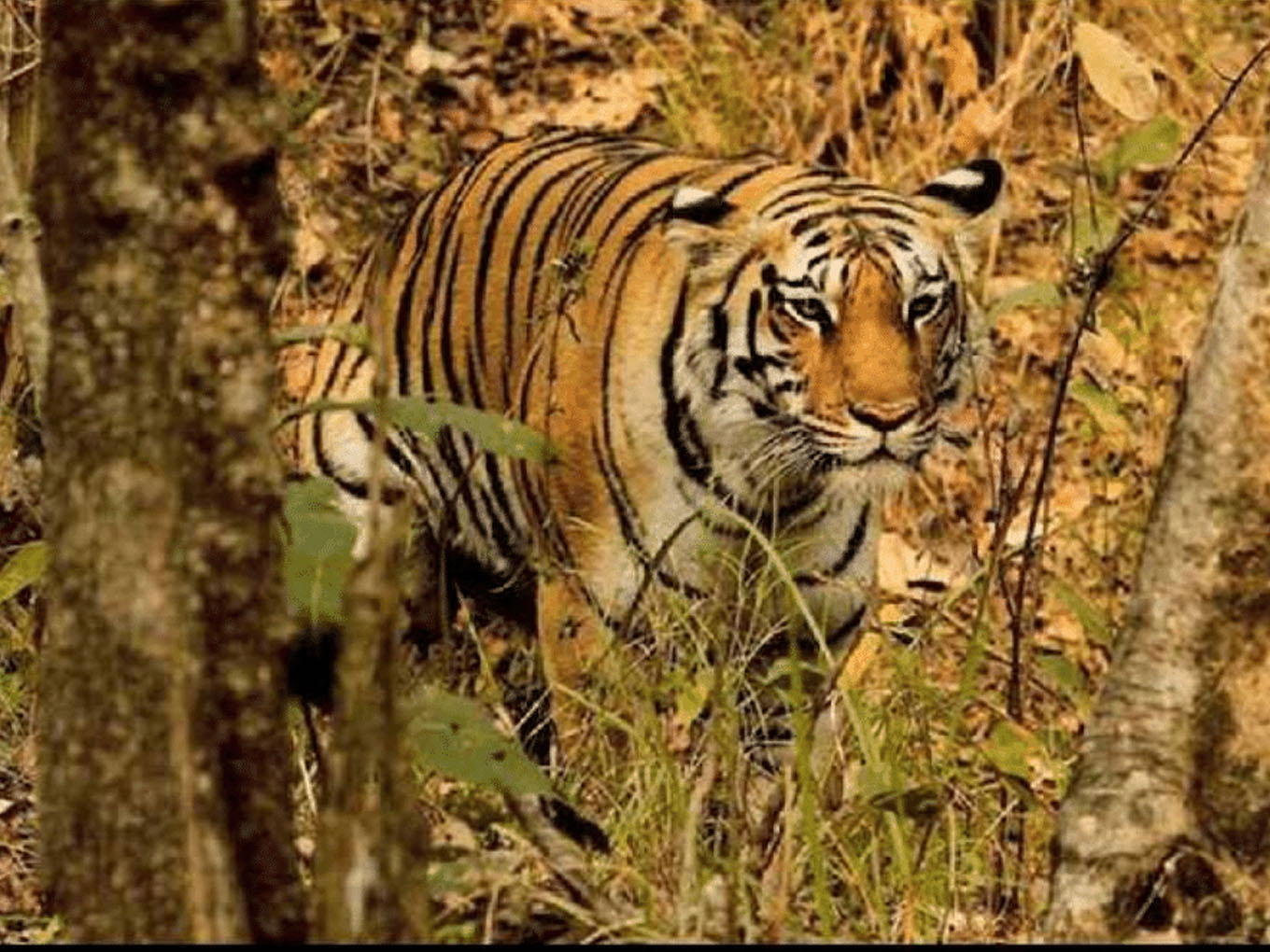
Satkosia Wildlife Sanctuary and Tiger Reserve, spread across Angul, Cuttack, Nayagarh and Boudh districts of Odisha, is the state’s best-known gorge landscape — a 22-km canyon where the Mahanadi River cuts straight through the Eastern Ghats. Notified as a tiger reserve in 2007, it protects Bengal tigers, elephants, leopards and gaur across nearly 964 sq km of sal forest, and it is one of the few places in India where you can see gharial and mugger crocodiles basking on the same sandbanks. Come for a boat safari through the gorge, stay overnight in a forest nature camp, and you will experience one of Odisha’s most complete wildlife trips.
Key Highlights
- Satkosia Tiger Reserve spans about 964 sq km across Angul, Cuttack, Nayagarh and Boudh districts, and was notified as a tiger reserve in 2007.
- The 22-km Satkosia Gorge — its name comes from “sat” (seven) and “kos” (two miles), i.e. 14 miles — is the reserve’s defining landscape, with the Mahanadi River running through it.
- The gorge is a stronghold of freshwater reptiles: gharial and mugger crocodiles, freshwater turtles, and the endangered Indian skimmer, which breeds here.
- Forest nature camps at Pampasar, Tikarpada, Chhotkei, Purunakote and Badmul let you stay inside the reserve, booked through Odisha’s ecotourism system.
- October to March is the best window for safaris and river trips; the reserve effectively winds down during the monsoon months of July to September.
How to Reach Satkosia Tiger Reserve
The reserve has two main approaches. The northern approach is through Angul, which brings you to the main entry gate at Pampasar, about 30 km from Angul town. The southern approach is through Nayagarh district, with the entry gate at Chhamundia roughly 60 km from Nayagarh, useful if you are combining Satkosia with southern Odisha.
By Air
The nearest airport is Biju Patnaik International Airport, Bhubaneswar, around 190 km away. From the airport you can hire a cab or take a bus to Angul (roughly 4 hours) and then continue to Pampasar by taxi or local transport.
By Train
The nearest major railway station is Angul, about 60 km from the Pampasar entry gate, with good connections to Bhubaneswar and other Odisha cities. From the station, hire a taxi to reach the gate.
By Road
Angul is the natural road hub for Satkosia — Pampasar is only about 30 km from Angul town. From Bhubaneswar, the drive via Angul takes around 4 hours. Private vehicles are not allowed into the core area, so plan your final leg by taxi to the gate and continue on foot, boat or approved vehicles as permitted.
Best Time to Visit Satkosia
Plan your visit between October and March. Winter mornings are cool (15–22°C), and migratory birds — bar-headed geese, Brahminy ducks and the rare Indian skimmer — gather on the river. November to February is the sweet spot for crocodile sightings, as gharials and muggers bask on sandbanks in the morning sun. The monsoon months of July to September bring heavy rain that makes forest roads and river trips difficult, and the reserve effectively winds down during this window.
Safari and Things to Do in Satkosia
Jeep Safari Through the Forest
Guided jeep safaris run through the reserve’s forest tracts in the early morning and late afternoon — the hours when animals are most active. The forests here are moist and dry deciduous, dominated by sal, and hold Bengal tigers, leopards, elephants, gaur, sambar, spotted deer, sloth bears and wild dogs. Tigers are present but, as in most Indian reserves, sightings depend on luck; the elephants, deer and birdlife are far more dependable.
Boat Safari on the Mahanadi Gorge
The boat ride through the 22-km gorge is Satkosia’s signature experience. Boats leave from points near Tikarpada or Badmul, with the driver usually doubling as guide, and drift past sheer gorge walls while you watch for gharials, mugger crocodiles and turtles on the sandbanks. This is also the best way to see the gorge’s birds. Book through the forest department or your nature camp, and carry cash — mobile networks and digital payments are patchy inside the reserve.
Stay in a Forest Nature Camp
The Odisha Forest Department runs eco-cottages and tents across the reserve — at Pampasar, Tikarpada, Chhotkei, Purunakote and Labangi, plus the popular Satkosia Sands Resort on the sandbar at Badmul in the Nayagarh side. These camps bundle stay, meals and guided activities (nature walks, campfires, folk dance evenings), and rooms are limited, so book well in advance through ecotour.odisha.gov.in. If you enjoy the concept, you may also like the Rajhans Nature Camp island near Puri, another Odisha ecotourism favourite.
Tikarpada Interpretation Centre and Nature Trails
Do not skip the Interpretation Centre at Tikarpada, which explains the reserve’s ecology, the crocodile conservation story and the Mahanadi river system. Guided treks and nature walks with local eco-guides are available from most camps — a morning walk is the best way to notice the smaller residents: the Indian giant squirrel, langurs, butterflies and the forest’s 561-odd climber species recorded in botanical surveys.
Satkosia Entry Fee and Timings
Entry permits are issued at the gates — Pampasar, Chhamundia and Kusanga — and day visitors are generally admitted in the morning, typically from around 7 am to late afternoon; those staying at forest camps may enter slightly earlier or later. The official entry fee is nominal (tens of rupees for Indian visitors, higher for foreign nationals), with separate charges for safari vehicles and boat rides that vary by vehicle type and sharing arrangements. These rates are revised periodically by the Odisha Forest Department, so check the current fee at the gate or on the ecotourism portal before you go rather than relying on figures quoted in old blogs. HMVs and two-wheelers are not permitted inside the core area.
Wildlife You Can See at Satkosia
Satkosia is managed as a tiger reserve, but its real distinction is breadth. Mammals include the Bengal tiger, leopard, Asian elephant, gaur (Indian bison), sambar, spotted deer, mouse deer, sloth bear and Indian wild dog. The Mahanadi holds gharial and mugger crocodiles plus freshwater turtles, and the riverbanks draw a strong winter birding list — Indian skimmers, Brahminy ducks and bar-headed geese. Three elephant corridors (Athamallik–Chhendipada–Telkoi, Satkosia–Khalasuni and Kapilas–Rebena) pass through the reserve, which is why elephant herds are among the most reliably seen large mammals here. For a completely different wildlife habitat in Odisha, wildlife lovers also rate Turekela Wildlife Sanctuary in Balangir.
Nearby Places to Visit
Satkosia sits in a part of Odisha with several easy add-ons. Lobhi Thakurani Temple near Garhsantry in Angul is a natural stop if Angul is your base. On the Nayagarh side, the Khandapada Palace and Jagannath Temple in Nayagarh make a good detour. Boudh district, which the reserve touches, has the Dambarugad hill station for a short excursion. Heading toward Cuttack afterwards? The Silver City Boat Club in Cuttack keeps the river theme going.
Travel Tips for Satkosia
Book your nature camp and safari slots in advance — camps have very few rooms and the December–January weekends fill up. Carry cash, since connectivity inside the reserve is unreliable for digital payments. Wear earthy colours on safaris and keep the boat quiet near wildlife. Mornings are the best slot for both jeep and boat safaris, so try to arrive the previous evening. Finally, set realistic expectations about tigers: Satkosia is a working conservation landscape where tiger numbers are still recovering, so treat a tiger sighting as a bonus — the gorge, the crocodiles and the elephant herds will not disappoint.
Frequently Asked Questions
Is Satkosia Tiger Reserve worth visiting?
Yes — for the 22-km Mahanadi gorge alone, Satkosia is worth the trip, and the boat safari is genuinely distinctive. Tiger sightings are a matter of luck, but elephants, deer, gaur, gharials and mugger crocodiles are seen regularly, and the forest nature camps make it one of Odisha’s best overnight wildlife experiences.
What is the best time to visit Satkosia Tiger Reserve?
October to March is the best window, with November to February ideal for crocodile sightings on the sandbanks and winter migratory birds. Avoid the monsoon months of July to September, when heavy rain makes forest roads and river safaris difficult.
How do I book a safari or a nature camp in Satkosia?
Nature camps at Pampasar, Tikarpada, Chhotkei, Purunakote and Badmul are booked through the Odisha Forest Department’s ecotourism portal, ecotour.odisha.gov.in. Jeep and boat safaris can be arranged through your camp or at the entry gates (Pampasar, Chhamundia, Kusanga); entry permits are issued at these gates.
How many days are enough for Satkosia?
Two nights and three days is ideal — one full day for the forest jeep safari and interpretation centre, and one for the Mahanadi gorge boat safari. A single overnight trip works if you are short on time: arrive in the evening, take the morning safari and boat ride, and leave after lunch.
How do I reach Satkosia Tiger Reserve?
The most common route is via Angul, which is the nearest major railway station (about 60 km from the Pampasar entry gate). Biju Patnaik International Airport in Bhubaneswar, around 190 km away, is the nearest airport. From Angul, Pampasar is a 30-km taxi ride; the southern gate at Chhamundia is about 60 km from Nayagarh.
What wildlife can I see at Satkosia?
Bengal tigers, leopards, Asian elephants, gaur, sambar, spotted deer, sloth bears and wild dogs in the forest; gharial and mugger crocodiles plus freshwater turtles in the Mahanadi; and winter migrants like the endangered Indian skimmer, bar-headed geese and Brahminy ducks along the river.
Weather Satkosia Wildlife Sanctuary & Tiger Reserve
[location-weather id="5549"]