
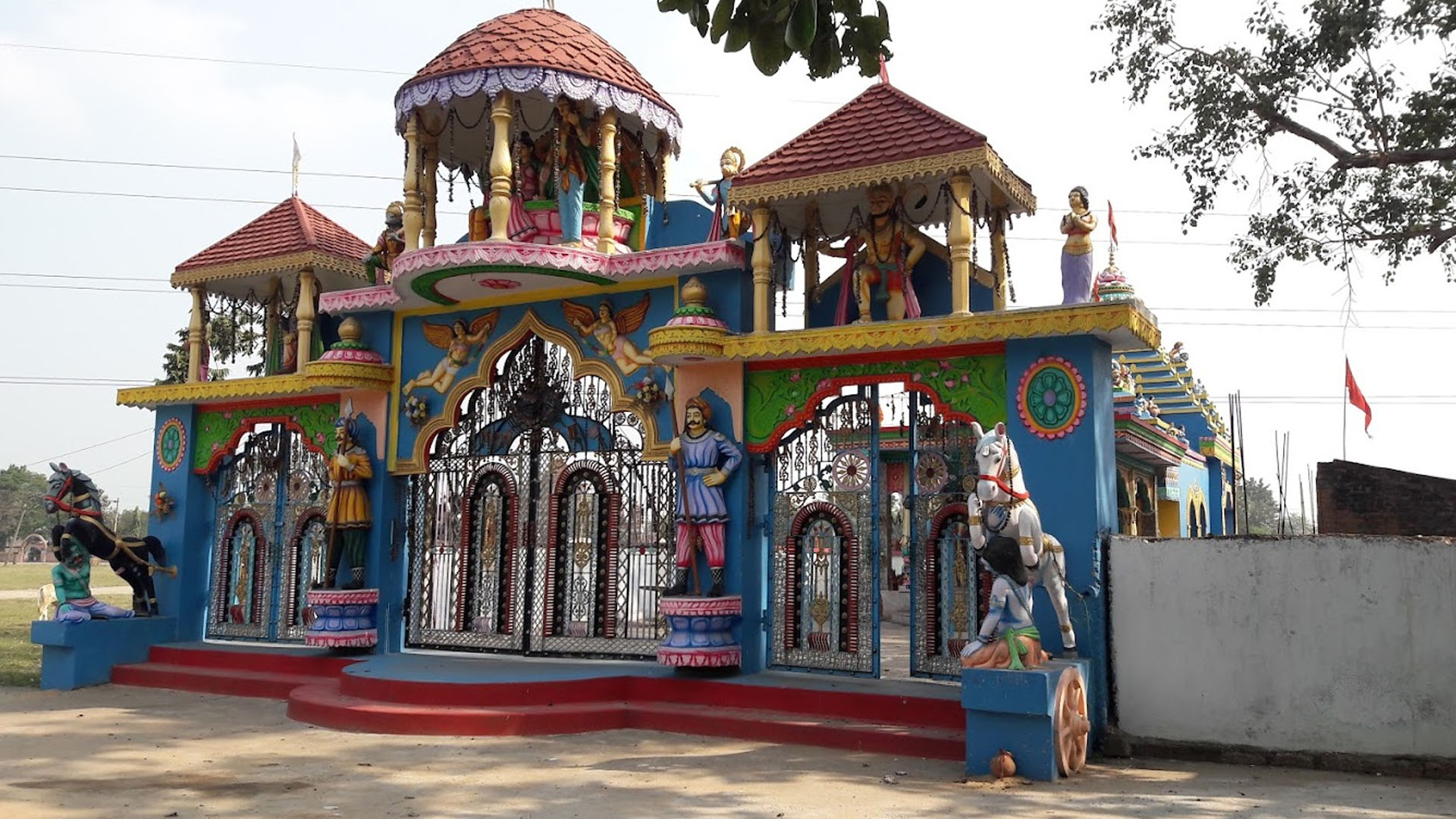
The Lobhi Thakurani Temple is an ancient shrine dedicated to Goddess Lobhi — a fierce, much-loved form of Durga — in the village of Garhsantry (also called Gadasantri) in Angul district, Odisha, roughly 13–17 km from Angul town. Built in the Kalinga style and best known for the four-day Lobhi Thakurani Yatra held every Kartik Purnima, it draws thousands of devotees each year for its grand procession, Paika dance, and the ceremonial transfer of the goddess’s image from Tulsipal village to the main temple.
Key Highlights
- Deity: Goddess Lobhi (Lobhi Thakurani), worshipped as an incarnation of Durga — the protector goddess of the Garhsantry region.
- Location & distances: Garhsantry village, Banarpal block, Angul, Odisha — about 13–17 km from Angul town, 7 km from Banarpal bus stand, and around 125–130 km from Bhubaneswar.
- Best time to visit: October to February, when the weather is cool; time your trip for Kartik Purnima (October–November) to witness the famous Yatra.
- Timings & entry: Temple hours are commonly listed as 5:00 AM–12:00 PM and 4:30 PM–8:30 PM; there is no fixed entry fee — entry is free and donation-based.
- Top tip: Reach by morning on Kartik Purnima to see the procession set off, and carry cash for the fair — the surrounding stalls rarely accept digital payments.
About the Temple & Legend
Step into Garhsantry on a quiet morning and the first thing you notice is how ordinary the village looks — mud-and-concrete houses, paddy stubble at the field edges, a tea stall doing brisk business. Then the temple comes into view, small but unmistakable, its Kalinga-style vimana rising above the rooftops, and the place feels different. That is the Lobhi Thakurani Temple: not a grand royal monument, but a living shrine where the goddess has been worshipped for generations.
The presiding deity is Maa Lobhi Thakurani, regarded locally as an incarnation of Goddess Durga — mother and fierce protector in the same breath. The name itself stops first-time visitors. In Sanskrit, “lobhi” means “greedy,” and priests here will smile when you ask about it. The local reading is that she is “greedy” only for devotion: greedy for offerings, for the surrender of the ego, for the love of her devotees. What sounds like a negative word in a dictionary becomes a badge of spiritual hunger here.
The legends here run deep. One widely repeated story says the goddess was once worshipped by the demon king Ravana himself; after Rama defeated him, the goddess followed Sri Ram toward Ayodhya and chose to settle at Garh Santry along the way. Another thread of the story blends ancient tribal custom with mainstream Shakti worship — the kind of syncretism you find across western Odisha, where the goddess is both the mother of the village and its guardian against misfortune. Nobody can pin down the exact year the shrine was built; local belief simply treats it as ancient, and the worn stonework of the sanctum agrees.
Architecturally, the temple is a compact example of the Kalinga style that defines Odisha’s sacred landscape. The shrine is modest in scale, but its walls carry paintings and carved depictions of the goddess in her various manifestations, and the vimana over the sanctum gives the whole complex its classic silhouette. Devotees describe the inner sanctum as intimate rather than intimidating — you stand close to the deity, close enough to feel the heat of the lamps.
Where the Temple Is
Garhsantry (spelled Gadasantri in several records) sits in the Banarpal block of Angul district, in the heart of western Odisha’s coal-and-forest belt. Angul town, the district headquarters, is the practical anchor for any visit — roughly 13–17 km away, depending on the route. Talcher, the nearest industrial town, lies about 25–30 km to the north. Bhubaneswar, the state capital, is roughly 125–130 km to the southeast, and Cuttack is a little farther out on the same corridor.
The village itself is agricultural and calm, ringed by the kind of flat-to-gently-rolling farmland typical of the Angul plains. Do not expect signboards in English at every turn — the temple is well known locally, so asking anyone in Banarpal or on the Angul–Garhsantry road for “Lobhi Thakurani Mandir” will get you pointed the right way.
How to Reach
The temple is a straightforward road trip from Angul town, and Angul is well connected to the rest of Odisha by rail and road.
By Air
The nearest airport is Biju Patnaik International Airport (BBI) in Bhubaneswar, about 121–127 km from the temple. From the airport, the practical options are a pre-booked taxi or a bus to Angul followed by a local taxi or auto to Garhsantry. The drive from Bhubaneswar to Angul takes roughly 3–3.5 hours on NH-55, and the final leg to the village adds another 30–40 minutes. If you are flying in for Kartik Purnima, book your return taxi in advance — festival days stretch local transport thin.
By Train
Angul railway station, on the Talcher–Sambalpur line, is the nearest major railhead — about 20 km from the temple. It has direct trains from Bhubaneswar, Puri, Sambalpur, and Howrah, so booking through IRCTC is easy for most travellers. Burhapanka station, a smaller halt, is listed at roughly 12 km and can suit travellers coming from the Sambalpur side. From Angul station, hire an auto-rickshaw or taxi for the last stretch; shared autos toward Banarpal run frequently through the day.
By Road
Road is the most convenient way to arrive. The Banarpal bus stand is only about 7 km from the temple, and Angul’s bus stand is around 19 km away — both are served by OSRTC and private buses from Bhubaneswar, Cuttack, Sambalpur, and Rourkela. From Angul town, a hired auto or taxi reaches Garhsantry in 30–45 minutes. The road is a standard two-lane rural highway; during the monsoon (roughly August–October) expect the usual potholes and slowed traffic, so leave buffer time if you are visiting in the rainy season.
Best Time to Visit
The comfortable window is October to February, when daytime temperatures sit in the pleasant mid-20s °C and evenings cool off — ideal weather for standing through a festival procession or simply walking the temple courtyard without breaking a sweat. September is also fine as the rains taper off.
If you want the full experience, come on Kartik Purnima (the full-moon day of the Kartik month, falling in October–November). That is when the Lobhi Thakurani Yatra takes over the village — four days of ritual, music, and fairground energy. Avoid April to June unless you have a specific reason to brave it: Angul’s summer pushes past 40°C and can touch 45°C, and the temple courtyard offers little shade at midday.
Temple Timings, Entry Fee & Facilities
Temple information listings commonly show the shrine open from 5:00 AM to 12:00 PM and again from 4:30 PM to 8:30 PM every day, with morning and evening aarti as the main rituals. Some travel listings give a single window of roughly 6:00 AM–7:00 PM. Hours stretch considerably during Kartik Purnima, when the temple stays active through much of the day and night. Since timings at village shrines can shift with the season and the festival calendar, it is worth confirming with a local contact on the day of your visit.
There is no fixed entry fee — darshan is free, and the temple runs on devotees’ offerings and donations. Prasad counters operate during festival days. Facilities are basic, as you would expect at a village temple: drinking water, shaded rest areas, and temporary stalls during the Yatra. Angul town, 13–17 km away, is where you will find ATMs, fuel stations, pharmacies, and proper restaurants, so stock up before heading to the village.
On dress and conduct: treat it like any traditional Shakti shrine. Temple guidance asks visitors to bathe and wear clean clothes before entering, and modest dress is the norm — shirts with trousers or dhoti for men, saree or salwar suits for women. Shorts, sleeveless tops, and short skirts are frowned upon. Smoking, alcohol, and chewing tobacco or gutka are strictly prohibited on the premises, and photography inside the sanctum is best avoided unless a priest explicitly allows it.
Festivals & Rituals
The Lobhi Thakurani Yatra, held every year on Kartik Purnima, is the reason most of Odisha has heard of this temple. For four days, Garhsantry stops being a quiet village. The centrepiece is a grand procession covering about 5 km, with drums, folk songs, and the unmistakable rhythm of Paika dance — Odisha’s martial dance tradition — rolling through the streets.
The most moving ritual is the transfer of the goddess’s holy image. The idol is carried from the Aalam Ghar — the house of daily offerings at Tulsipal village — to the main temple at Gadasantri, in a joint procession organised by both villages. Devotees from across Odisha join in, and the four-day fair that runs alongside it sells everything from brass puja items to the sweet, fried snacks that define a rural Odia mela.
Daily worship follows the rhythm of a village Shakti shrine: morning aarti, offerings of flowers, coconuts, and red cloth through the day, and evening aarti as the lamps are lit. The Dehury — the head priest — leads the major rituals, a role passed down through families. Families also come through the year for mundan (a child’s first haircut ceremony) and to pray for health and long life, both considered especially auspicious here. Like many Shakti shrines of the region, the temple’s goddess tradition shares a cultural family with other fierce mother goddesses of Odisha, such as Maa Batamangala in Puri and Chandi at Chandikhol in Jajpur — worth knowing if you are tracing the goddess circuit of the state.
Things to Do Nearby
Garhsantry works best as the anchor of a one- or two-day Angul district trip. The district packs in an unusual mix of Shakti shrines, river gorges, and crocodile country.
- Budhi Thakurani Temple & Saila Srikhetra, Angul town: the district’s other great goddess shrine, with a newly built Jagannath temple — a full-scale replica of Puri’s — on the Sunasagada hilltop beside it. An easy pairing with the Lobhi Thakurani visit.
- Tikarapada & Satkosia Gorge: about 60 km from Angul town, the Mahanadi cuts through the Satkosia gorge in one of Odisha’s most dramatic river landscapes. The Gharial Crocodile Sanctuary here is the district’s signature wildlife stop.
- Waterfalls of the region: if you are building an Odisha nature leg around this trip, Brahman Kund Waterfall near Bangriposi and Khambeswari Waterfall in Kantamunda are two of the state’s rewarding monsoon-season cascades.
- Extend to Puri: many travellers combine an Angul temple run with the coast — the Puri circuit pairs naturally, from the Swargadwar Sea Beach to the Batamangala shrine at the city’s entrance.
- Nilakantheswar Temple, Padmapur (Rayagada): for the committed temple traveller, this ancient Shiva temple in southern Odisha makes a fine second leg on a longer pilgrimage route.
Where to Stay
Garhsantry itself has no hotels — plan to base yourself in Angul town. Angul offers a solid spread of budget hotels, lodges, and mid-range business hotels. Expect roughly ₹800–₹1,500 a night for a clean budget room and ₹2,000–₹3,500 for a comfortable mid-range hotel. Book ahead if you are coming for Kartik Purnima, when rooms fill with returning devotees.
Travel Tips
- Festival planning: Kartik Purnima draws the year’s biggest crowds. Arrive the evening before, secure your hotel in Angul first, and reach the temple by early morning.
- Cash: carry enough cash for the day — the village has limited digital-payment acceptance. The nearest reliable ATMs are in Angul.
- Footwear: slip-ons save time; the courtyard stone gets hot by afternoon in summer.
- Food: simple vegetarian meals near the temple; for a proper sit-down meal, head back to Angul.
- Language: Odia is local; Hindi works with most shopkeepers; English is patchy outside Angul town.
Frequently Asked Questions
What are the temple timings of Lobhi Thakurani Temple?
The temple is generally open from 5:00 AM to 12:00 PM and again from 4:30 PM to 8:30 PM every day, with morning and evening aarti as the main rituals. Hours are extended during the Kartik Purnima Yatra.
How do I reach Lobhi Thakurani Temple from Angul town?
About 13–17 km by road, a 30–45 minute drive. Hire an auto-rickshaw or taxi from Angul, or take a bus/shared auto toward Banarpal (7 km from the temple).
Which is the nearest railway station to the temple?
Angul railway station, about 20 km away, with direct trains from Bhubaneswar, Puri, Sambalpur, and Howrah. Burhapanka halt is roughly 12 km away.
What is the best time to visit Lobhi Thakurani Temple?
October to February for pleasant weather. For the full experience, visit during Kartik Purnima (October–November) for the four-day Yatra. Avoid April–June heat.
What is special about the Lobhi Thakurani Yatra?
A four-day festival with a grand 5 km procession, Paika dance, and the ceremonial transfer of the goddess’s image from Tulsipal village to the main temple, plus a large fair.
Is there an entry fee at Lobhi Thakurani Temple?
No — darshan is free; the temple runs on offerings and donations.
Weather Lobhi Thakurani Temple
[location-weather id="5549"]