
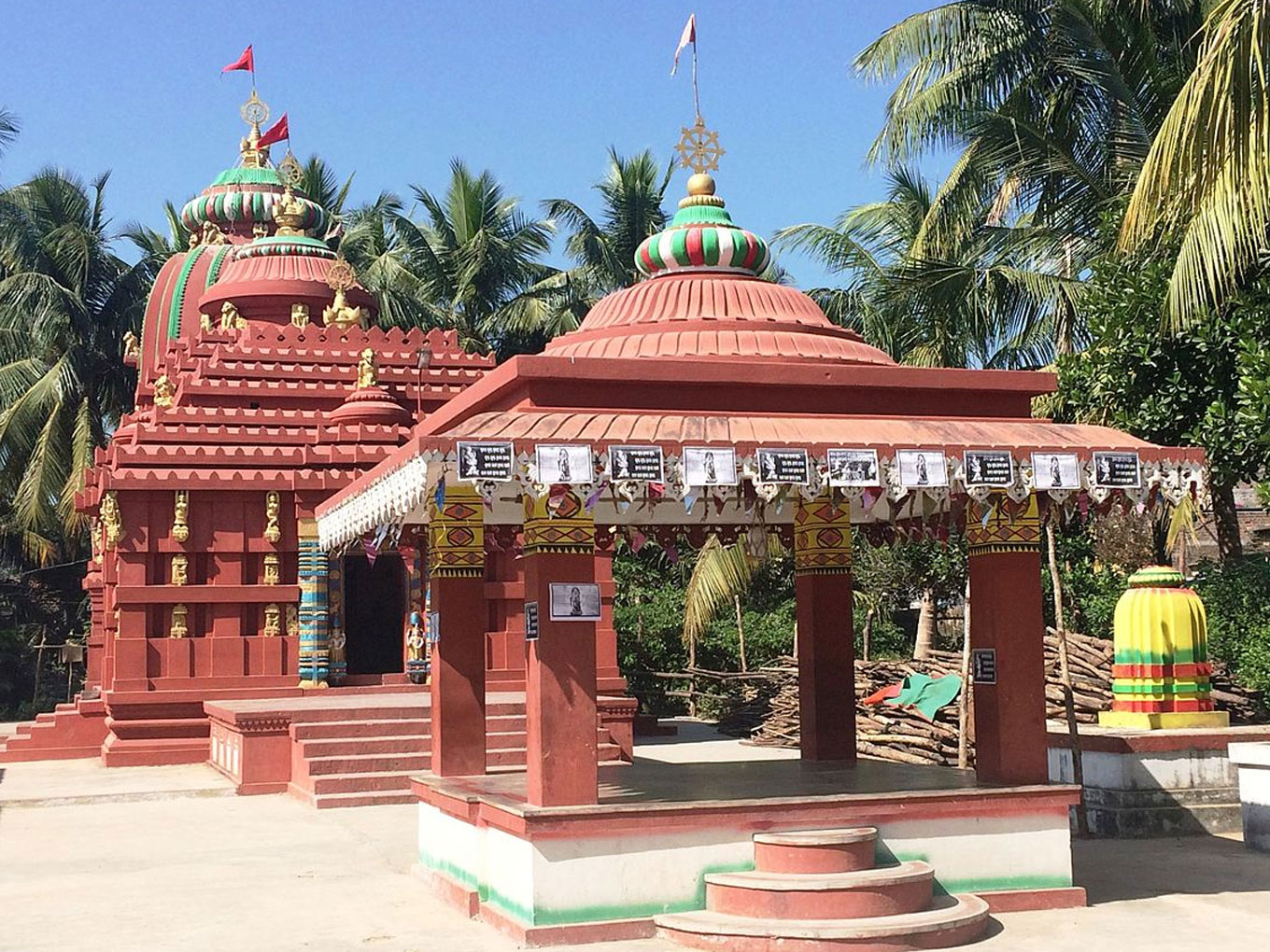
Nilakantheswar Temple at Padmapur is an ancient Shiva shrine on the Jagamanda hill in Rayagada district, Odisha — where a living Shaivite tradition sits atop a 7th-century Buddhist past. The main shrine, dedicated to Lord Shiva in his “Nilakantha” (blue-throated) form, is said to be built on just seven massive rocks, and it shares the hilltop with three more small Shiva temples, centuries-old rock inscriptions, a cave, and a natural water tank. It works well as a quiet half-day trip from Rayagada, with a fair-sized Maha Shivaratri mela each year.
Key Highlights
- Ancient Shiva temple on the Jagamanda hill at Padmapur, Rayagada district, Odisha (PIN 765025) — the presiding deity is Lord Shiva as Nilakantheswar, the blue-throated one.
- Most accounts date the site to the 7th century AD, and Brahmi rock inscriptions link the hill to a former Buddhist monastery associated with Dharmakirti.
- The main shrine is famously said to stand on just seven large rocks; the hilltop also holds three other small Shiva shrines — Pudukeswar, Dhabaleswar, and Mallikeswar.
- Maha Shivaratri draws the biggest crowds of the year, and Tuesdays are considered especially auspicious for a visit here.
- Entry is reported as free, and the temple stays open through the day; the climb is short but uneven, so mornings suit it best.
History and Legend of Nilakantheswar Temple
The name “Nilakantheswar” comes from “Nilakantha” — the blue-throated one. It refers to the episode from the Samudra Manthan, when Shiva is said to have swallowed the halahala poison to save creation, leaving his throat blue. The shrine is also called the shrine of Manikeswar Siva.
What makes this hill unusual is how many centuries of belief it carries in one place. Most sources date the temple complex to the 7th century AD, which would make it one of the oldest religious sites in the Rayagada region. The key evidence is an inscription in Brahmi script on one of the hill’s rocks. Studying it, Padma Shri Dr. Satyanarayana Rajguru — the well-known Odia historian and epigraphist — concluded that the site had once housed Dharmakirti, the 7th-century Buddhist logician and philosopher.
On that reading, the hill was a monastic learning centre before it became a Shaivite site, and it is described as the only Buddhist monastery of the Rayagada district. One honest caveat: the state’s protected monuments list places the standing stone shrines in the 9th–10th century, likely reflecting the difference between the site’s earliest activity and the shrines you see today.
Either way, this is among the few places in Odisha where Buddhist heritage and Shaivite worship visibly overlap. A small cemented front hall added in recent years shelters visitors without altering the old structure.
How to Reach Nilakantheswar Temple
Padmapur lies roughly 65–70 km from Rayagada town and about 20 km from Gunupur — sources differ slightly by route, so check locally. There is no direct rail or air connectivity to Padmapur itself; most visitors travel via Rayagada or Gunupur first.
By Air
The nearest practical airport is Visakhapatnam in Andhra Pradesh, which sources place roughly 150–240 km away depending on the route. From the airport, travel by train or road to Rayagada and then onward to Padmapur by bus or hired vehicle.
By Train
The nearest railway station is Gunupur, about 20 km from Padmapur. For long-distance trains, use Rayagada Junction, the nearest major railhead, which connects well with Bhubaneswar, Visakhapatnam, and Kolkata. From either station, Padmapur is reachable by bus, shared auto, or hired car — check IRCTC for current train timings before planning.
By Road
This is the most convenient way in. Padmapur connects with Rayagada by OSRTC and private buses, and with Gunupur by local services. From Padmapur town, the temple hill is a short drive or auto ride away. If you are driving yourself, the Rayagada–Gunupur–Padmapur route is standard — fill up on fuel in Rayagada town.
Best Time to Visit
October to February is the most comfortable window. The air is cool and dry — important, since you climb a hill to reach the shrines — and the views from the top are clearest then. Maha Shivaratri, which falls in February or March, is when the temple comes most alive, with the annual fair drawing pilgrims in large numbers. If crowds are not your thing, come on a weekday morning instead.
In the monsoon, the hills turn a deep green, but the rock paths get slippery — time your climb for a dry spell. Summer afternoons are best avoided, since the exposed rock heats up.
Things to Do and Rituals
Start with darshan at the main Nilakantheswar shrine, then walk across to the smaller Shiva temples on the hill — Pudukeswar, Dhabaleswar, and Mallikeswar. The Mallikeswar walls carry the inscriptions that historians come to study, so give them a few unhurried minutes. The natural cave and water tank complete the quiet appeal of the hilltop.
Worship here follows the usual Shiva rituals — bel leaves, milk, and flowers. Tuesdays are regarded as special days for visiting, and Maha Shivaratri’s annual mela draws devotees from across the district. The hilltop views over Padmapur village and the surrounding forests are worth the climb on their own.
Entry Fee and Timings
Entry to the temple is reported as free — no ticket or charge for visitors. The temple is said to stay open from around 6:00 AM to 7:00 PM every day, which is consistent across travel sources, though it is worth confirming locally. Mornings remain the better choice: pleasant weather, an easier climb, and the calmest surroundings.
Nearby Places to Visit
The temple hill works as a half-day trip from Rayagada. Khambeswari Waterfall and Chatikona Waterfall near Bissamcuttack make natural picnic additions, especially after the monsoon. In Rayagada town, the Majhighariani Temple — a widely revered shrine of Goddess Majhighariani — is the district’s best-known pilgrimage stop, and the town’s markets and tribal haats give you a sense of the region.
For a wider Odisha temple itinerary, Sureswari Temple in Sonepur, Maninaga hill station and temple in Nayagarh, Maa Batamangala Temple in Puri, and Lobhi Thakurani Temple at Garhsantry in Angul make rewarding reading and future stops. Daringbadi, the hill station known for its cool climate, lies roughly 90 km away if you have an extra day.
Travel Tips
Facilities on the hill are basic, so carry drinking water — particularly outside winter. Wear grippy footwear, and remember that shoes come off inside the shrine. The climb is short but uneven; elderly visitors and small children should take it slowly and avoid the midday heat. Keep silence around the sanctum, do not touch the carvings and inscriptions, and avoid plastic and litter. Padmapur has only basic lodges, so most travellers base themselves in Rayagada town, which has budget and mid-range hotels.
Frequently Asked Questions
What is Nilakantheswar Temple famous for?
The temple is famous as an ancient Shiva shrine on the Jagamanda hill at Padmapur, with most accounts dating it to the 7th century AD. What draws historians as much as devotees is its layered past — Brahmi rock inscriptions connect the hill to a former Buddhist monastery associated with the philosopher Dharmakirti. Add the striking seven-rock construction of the main shrine, the smaller Shiva temples sharing the hilltop, and the annual Maha Shivaratri mela, and you have a site that suits pilgrimage and heritage travel alike.
Is there really a Buddhist connection to the temple?
Yes, and it is the best-documented part of the site’s history. An inscription in Brahmi script on one of the hill’s rocks was studied by Padma Shri Dr. Satyanarayana Rajguru, who identified it as evidence that the hill once housed Dharmakirti, the 7th-century Buddhist logician-philosopher. On this reading, the hill was a monastic learning centre before it became a Shaivite site — one of the few places in Odisha where the two heritages visibly overlap.
How old is Nilakantheswar Temple?
Most published accounts place the temple complex in the 7th century AD, based on the inscription evidence and the rock-cut character of the shrines. However, the state’s protected monuments list records the standing stone shrines as 9th–10th century structures — the gap likely reflects the difference between the site’s earliest activity and the shrines visible today. Either way, this is among the oldest religious sites in the Rayagada region.
What are the temple timings and is there an entry fee?
The temple is reported to stay open from around 6:00 AM to 7:00 PM every day, and entry is free — there is no ticket or charge. Morning visits are recommended for the easiest climb and the calmest surroundings. Since published timings for smaller Odisha shrines can change, it is sensible to confirm locally, particularly on festival days like Maha Shivaratri.
How do I reach Nilakantheswar Temple from Rayagada?
Padmapur is roughly 65–70 km from Rayagada town, depending on the route. The simplest option is an OSRTC or private bus from Rayagada to Padmapur, then a short auto or car ride up to the Jagamanda hill. By rail, the nearest station is Gunupur (about 20 km away), while Rayagada Junction is the nearest major railhead with long-distance trains. The nearest airport is Visakhapatnam, roughly 150–240 km away by road.
Can I cover it in a day trip from Rayagada?
Yes — it works comfortably as a half-day trip from Rayagada. Most visitors spend two to three hours on the hill: darshan at the main shrine, the smaller Shiva temples, the inscriptions, the cave, and the views. It pairs well with the Majhighariani Temple in Rayagada town or Chatikona Waterfall for a full day. Start early and carry water.
Weather Nilakantheswar Temple
[location-weather id="5549"]