
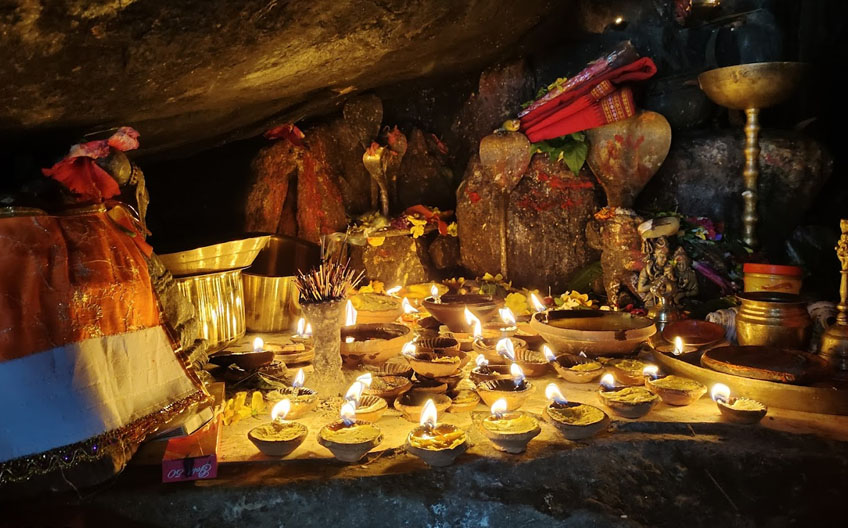
Deep in the Eastern Ghats of Odisha, Luha Khambeswara is a cave shrine where Shiva is worshipped in an iron incarnation, reached only by a steep 6 to 7 kilometre forest trek from near R. Udayagiri. This guide covers the iron-Shiva legend, the trek itself, festivals, and how to plan the visit.
Key Highlights
- “Luha Khamba” means “iron pillar” in Odia, and Shiva is worshipped here in an iron incarnation standing for strength, permanence, and endurance.
- The cave shrine sits atop Luhakhamba Mountain and is reachable only on foot: a steep 6 to 7 kilometre serpentine forest path from near R. Udayagiri, taking 2 to 3 hours to climb.
- There is no official schedule. Treat the trek and shrine as a daylight-only affair, roughly 6:00 AM to 6:00 PM, and never climb after dark.
- The best months are October to February, when the path is dry and cool. Avoid the June to September monsoon, when the trail turns slippery and leech-prone.
- Karthika Purnima, in October or November, is the main festival, drawing devotees up the mountain; Maha Shivaratri is also observed with night-long worship.
Why Shiva Is Worshipped as Iron at Luha Khambeswara
The name itself tells the story. In Odia, “Luha Khamba” means “iron pillar”, and the shrine honours Shiva in an iron incarnation: a god imagined not as carved sandstone but as raw iron, standing for strength and eternity. It fits the Gajapati hills: hard, iron-red country. The shrine itself is modest, a structure of iron and local stone inside a natural cave, with no ticket counter or managed complex.
At the shrine, tribal belief and mainstream Shaivism merge. Rituals often overflow from the small cave into the open ground beneath the sacred trees, where leaves, flowers, fire, and wind become part of worship. For many pilgrims, the demanding climb is itself an offering.
What is known (and not known) of its origins
Honest guides say this plainly: no one has documented a dynasty or a date of origin for this cave shrine. The broader tradition is genuinely old. The Khambeswari name appears in 13th-century epigraphy elsewhere in Odisha: a Sonepur inscription in the Odisha State Museum’s records notes Mahamayadevi’s land grant to God Krittivasa, that is Shiva. And the Odisha government’s Odisha Review journal, in its September to October 2014 issue on “Siva and Shakti Cult in Parlakhemundi”, lists Khambeswari among the region’s Shakti deities. The name has lived in these hills for centuries; this cave shrine’s own beginning remains unrecorded.
The Trek to Luha Khambeswara: Distance, Difficulty, and Route
The cave sits atop Luhakhamba Mountain, about 27 kilometres from R. Udayagiri and roughly 82 kilometres from Paralakhemundi. From the trailhead, the climb is a steep, serpentine 6 to 7 kilometre path through dense forest and rocky outcrops, taking most walkers 2 to 3 hours.
Route, distance, and timing
R. Udayagiri is the base town, and vehicles go no further than the start of the path; the final stretch is walk-only. The route winds upward through thick forest, with rocky sections needing careful footing. Reach the trailhead early, since the trek is daylight-only (roughly 6:00 AM to 6:00 PM), and plan to be down well before sunset.
Difficulty and who should sit this one out
Do not underestimate this steep, uneven climb; it demands real fitness. It is not suitable for elderly visitors or anyone with limited mobility, and those with heart or knee conditions should give it a pass.
What to carry, since nothing is there
There are no shops, restrooms, or ticket counters on the route, so carry at least 2 litres of water per person, snacks, and trekking shoes with grip. Keep a torch handy for delays, and consider hiring a local guide at R. Udayagiri on a first visit. Leave no litter; the forest is the temple’s walls. Travellers who want a Shiva pilgrimage without this climb could try Gupteswar Baba Shiva Temple in Boudh, Odisha, a cave temple set against dramatic hills.
Darshan and Practical Information at the Shrine
There is no official schedule, and no priest keeps a fixed roster. Worship is simple and personal: devotees offer what they carry up, and on quiet days the cave may hold only a handful of visitors. Entry is free, since this is not a managed monument.
Two rules matter most. Respect the daylight rhythm: arrive with the morning light and start down long before evening. And keep the sanctity of the spot: stay quiet around the cave, carry out all waste, and remember that for the hill communities this is a living shrine, not a photo stop.
How to Reach Luha Khambeswara
By Air
The nearest major airport is Biju Patnaik International Airport in Bhubaneswar, about 275 to 300 kilometres from the shrine via Paralakhemundi. From there, hire a taxi or take an intercity bus toward Paralakhemundi or Berhampur, then continue by road to R. Udayagiri.
By Train
The nearest railway station is Paralakhemundi, roughly 82 kilometres away. The nearest major railhead is Berhampur (Brahmapur), from where the drive to R. Udayagiri takes about 2 to 2.5 hours.
By Road
R. Udayagiri, about 27 kilometres from the mountain, is the road base, with buses from Paralakhemundi (roughly 82 kilometres) and Berhampur. For the final stretch to the trailhead, take a local taxi or jeep. Travellers touring southern Odisha often pair the trip with the Ganjam district temples, such as Balakumari Temple at Koligam in Chikiti, Ganjam.
Best Time to Visit Luha Khambeswara
October to February is the right season: cool, dry weather, a firm path, and clear hill views. Karthika Purnima, in October or November, is the most atmospheric but also the busiest time. Skip June to September, when the steep trail turns slippery and leech-prone.
Festivals at Luha Khambeswara
Karthika Purnima
Karthika Purnima, the full moon of the Kartika month (October to November), is the main festival. Devotees from across the region climb the mountain, and the usually quiet cave fills with drums, incense, chants, and a night gathering. Visit on this night only if you reach R. Udayagiri a day early and plan the climb with locals.
Maha Shivaratri
Maha Shivaratri is also observed here with night-long worship of Shiva. The cave shrine, normally daylight-only, stays alive through the night with bhajans and offerings, and pilgrims who climbed earlier often stay for the vigil.
Places to Visit Near Luha Khambeswara
The Gajapati hills reward travellers who stay a second day. Mahendragiri Hills, Odisha’s second-highest peak, make a natural trekking pairing with the Luha Khamba climb, and Gandahati Waterfall offers an easy picnic stop after the hard mountain day.
Closer to this shrine’s spirit is Nilakantheswar Temple at Padmapur, another respected Shiva shrine of the region worth adding to the same circuit.
In Paralakhemundi, about 82 kilometres away, visit the Gajapati Palace and the Jagannath Temple, known for its Rath Yatra celebrations. For a different faith tradition in these hills, the Chandragiri Buddhist Monastery lies roughly 80 kilometres from Paralakhemundi.
Those heading east toward the coast can add Jagannath Temple at Paradeep in Jagatsinghpur, a major Odisha Jagannath shrine, to their temple route.
Travel Tips for Luha Khambeswara
Start as early as the light allows, keep the day’s plan loose for a slower-than-expected climb, and remember there is no food, water, or medical help on the trail. Skip monsoon visits entirely, and carry cash for the taxi and guide at R. Udayagiri. Above all, treat the mountain with the respect it is owed.
Frequently Asked Questions
Where is Luha Khambeswara Temple located?
Luha Khambeswara Temple sits inside a natural cave atop Luhakhamba Mountain in the Eastern Ghats of Gajapati district, Odisha. The shrine is about 27 kilometres from R. Udayagiri, which is the trailhead town, and roughly 82 kilometres from Paralakhemundi, the district headquarters.
Why is it called “Luha Khambeswara”?
“Luha Khamba” means “iron pillar” in Odia, and the name honours Shiva in an iron incarnation. The modest shrine of iron and local stone inside the cave treats iron as a symbol of strength, permanence, and endurance. There is no carved stone spire here.
How long is the trek to Luha Khambeswara?
The trek is 6 to 7 kilometres each way on a steep, serpentine forest path, and most walkers take 2 to 3 hours to climb up. Vehicles cannot go beyond the trailhead, so the full distance must be covered on foot. Plan the descent with enough daylight left.
What are the temple timings?
There is no official schedule for the shrine. The trek and darshan are a daylight-only affair, roughly 6:00 AM to 6:00 PM, and the climb should never be attempted after dark. Entry is free, and no tickets or advance booking are involved.
What is the best time to visit Luha Khambeswara?
October to February, when the air is cool and dry and the forest path holds its footing. The October or November Karthika Purnima is the most atmospheric visit but also the busiest, while the June to September monsoon makes the steep climb genuinely risky.
Is Luha Khambeswara suitable for elderly visitors?
No, the shrine is not suitable for elderly visitors or anyone with limited mobility. The 6 to 7 kilometre climb is steep and uneven, with no vehicle access, no rest stops, and no medical help on the trail. A reasonable level of fitness is essential.
Conclusion
Attempt Luha Khambeswara as a one-day trek if you are fit and can start early. Set R. Udayagiri as your base, arrange a local guide, and read the trek section above once more before you go.
Location for Luha Khambeswara Shiva Temple, Luha Khamba, Gajapati, Odisha
Weather Luha Khambeswara Shiva Temple
[location-weather id="5549"]