
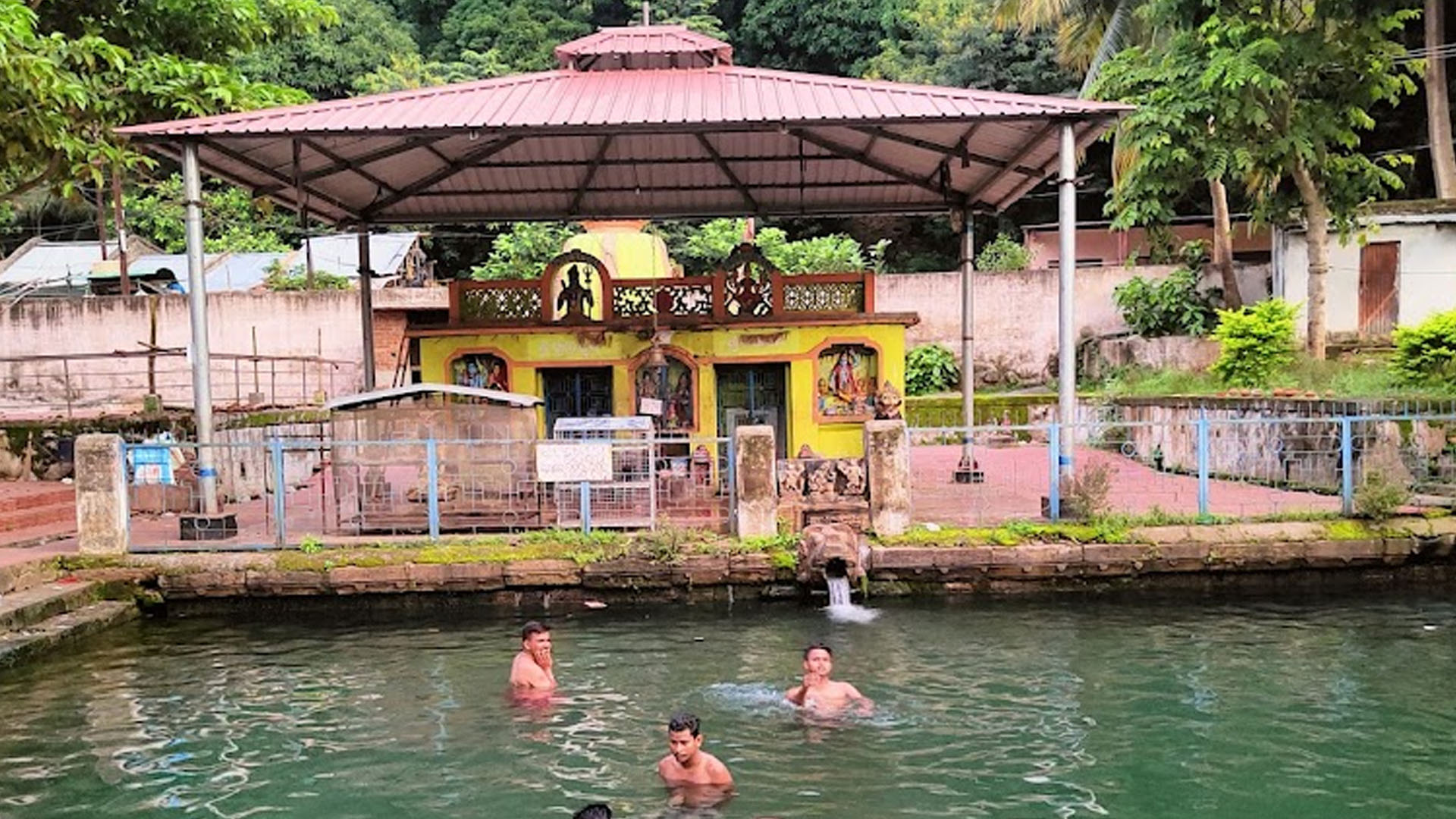
Jhadeswar Temple at Talarampalli in Ganjam district is a quiet Shiva shrine that local tradition links to the Somavamsi (Keshari) era. Set in the countryside near Khallikote, it draws devotees through the year and fills up on Maha Shivaratri and Shravan Mondays. The visit takes half a day from Khallikote town and pairs well with the region’s other old temples. This guide covers the shrine’s history, worship practicalities, how to reach it, and the best time to go.
Key Highlights
- Jhadeswar Temple is a Shiva shrine at Talarampalli village, near Khallikote in Ganjam district, Odisha, a half-day trip from Khallikote town.
- Local tradition attributes the temple to the Somavamsi (Keshari) era; historians date the Somavamshi dynasty to the 9th–12th century CE (Wikipedia), so the popular “8th century” claim found on some blogs does not hold up; treat the exact age as unverified.
- The busiest days are Maha Shivaratri and the Mondays of the Shravan month, when devotees offer water and bel leaves to the Shiva lingam.
- Nearest railhead is Khallikote station (about 25 km); the nearest airport is Biju Patnaik International Airport, Bhubaneswar (about 134 km). Distances are approximate, so confirm locally before you set out.
- There is no published entry ticket; like most village shrines in Odisha it is free to enter, with donations voluntary. The best visiting season is October to March.
The Deity and the Shrine
Shiva is worshipped here as Jhadeswar, and the shrine follows the familiar Shaivite pattern of rural Odisha: a stone sanctum housing the lingam, a small pillared porch for devotees, and a courtyard where festival crowds gather. The masonry and carved doorway belong to the Kalinga idiom, the temple-building tradition of Odisha whose classic forms are the curvilinear Rekha Deula tower, the stepped Pidha Deula hall and the barrel-roofed Khakhara Deula (Wikipedia, Kalinga architecture). Do not expect the scale of Bhubaneswar’s great temples; this is a village shrine, and its appeal is calm rather than grandeur. Worship follows the usual Shaivite routine of morning abhishek, bel-leaf offerings and evening aarti, and on ordinary days the sanctum is quiet enough for unhurried darshan.
History: What Can Be Said With Confidence
No published inscription or Archaeological Survey record pins down this temple’s age. Local tradition credits the Somavamsi (Keshari) rulers, a Shaivite dynasty that patronised temples across Odisha. That much is plausible. But blogs that name the “8th century CE” contradict themselves, because historians place the Somavamshi/Keshari dynasty in the 9th–12th century CE (Wikipedia, Somavamshi dynasty). A temple cannot predate the dynasty it is attributed to. The safe reading: the shrine belongs to the medieval temple-building tradition of the region, its exact century unverified. Enjoy the stonework for what it is rather than the round numbers some websites attach to it. For a documented Ganjam-district Shiva shrine of similar vintage, the Koteswar Shiva Temple in Ganjam makes a good companion visit.
Festivals and Worship Through the Year
Maha Shivaratri is the temple’s biggest day. Devotees keep the traditional fast, offer water to the lingam through the night, and the courtyard stays lit and crowded till the early hours. The Mondays of Shravan (July–August) bring the next-largest crowds, with kanwariya-style water offerings common across Ganjam’s Shiva shrines. Kartik Purnima also sees special worship. On ordinary days the rhythm is simple: morning and evening worship, a midday break when the sanctum may close. If you want the festival atmosphere, plan around Shivaratri; if you want quiet darshan, pick a weekday morning outside Shravan. Across the state border in Gajapati, the Luha Khambeswara Shiva Temple follows a similar festival calendar and makes a natural second stop on a Shiva-temple circuit of southern Odisha.
Timings and Entry Fee
No officially published darshan timings exist for this shrine, and one travel blog’s “5 am to 8 pm” figure is unverified, so treat it as indicative at best. In practice, village Shiva temples in Odisha open around sunrise for morning worship, close for a midday break, and reopen in the late afternoon for evening aarti. Arrive before 11 am or after 4 pm to be safe, and check with a local shopkeeper or the priest’s family if you are timing a tight itinerary. There is no entry ticket and no published fee of any kind; offerings and donations are voluntary. Photography inside the sanctum is generally discouraged, so ask before you point a camera at the deity.
How to Reach Jhadeswar Temple
By Air
The nearest airport is Biju Patnaik International Airport, Bhubaneswar, about 134 km away (an approximate, single-source figure), so confirm the route with your driver. From the airport, hire a taxi or take a bus toward Berhampur/Khallikote and continue by road to Talarampalli.
By Train
The nearest railway station is Khallikote, about 25 km from the temple (approximate). Khallikote sits on the Howrah–Chennai main line, so it has direct trains from Bhubaneswar, Berhampur, Visakhapatnam and Kolkata. From the station, take an auto-rickshaw or a local taxi to Talarampalli.
By Road
Khallikote town, about 15 km away (approximate), is the road base; it has the nearest bus stand with connections to Berhampur and Bhubaneswar. The last stretch to Talarampalli is on village roads; a private vehicle or hired auto is the practical option, and the drive from Khallikote takes roughly 30–40 minutes depending on the road.
Best Time to Visit
For the 2026 season, October to March is the comfortable window, with daytime temperatures in the high 20s and cool mornings, good for the open courtyard and village lanes. Maha Shivaratri (February–March) is the time for the festival experience, though you should expect crowds and limited parking near the temple. Avoid the peak monsoon if you dislike slushy village roads, though the surrounding fields look their best in August–September. For a relaxed darshan with the place nearly to yourself, pick a winter weekday morning. If you are building a longer Shiva-temple itinerary, Dhenkanal’s Naganatheswar Shiva Temple is worth adding to the list for another season.
Nearby Places Worth Adding
Khallikote town itself holds the historic Jagannath Temple, built between 1730 and 1868 and documented by INTACH, an unusual late-period temple with an interesting building history, and the obvious first stop before or after Jhadeswar. The Narayani Temple area near Khallikote, listed on the state’s ecotourism portal, sits in forested hill country good for a short walk. Berhampur, the commercial hub of southern Odisha, is the practical base for food and stays. If your trip extends to the temple city, Bhubaneswar’s old-town cluster rewards a full day: the Ananta Vasudeva Temple (the city’s famous Vishnu shrine) and the tantric Baitala Temple with its Khakhara-style roof both sit within a short drive of each other.
Travel Tips
- Carry cash: the village has no ATMs and small shops may not accept digital payments.
- Wear footwear you can slip off easily; you will remove it before the sanctum, and the stone courtyard gets hot by midday.
- Bring water and a snack; there are no restaurants at Talarampalli itself. Khallikote town has the nearest proper meals.
- On festival days, arrive early: parking near the temple fills by mid-morning and the approach lane gets congested.
- Dress modestly (covered shoulders and knees) as a courtesy at any working shrine.
Frequently Asked Questions
Where exactly is Jhadeswar Temple located?
Jhadeswar Temple stands at Talarampalli village near Khallikote town in Ganjam district, southern Odisha. Khallikote, about 15 km away, is the nearest town with a bus stand, railway station and places to eat. The temple sits in a rural setting, so the final approach is on village roads best covered by auto-rickshaw or private vehicle.
Which deity is worshipped at Jhadeswar Temple?
Shiva is the presiding deity, worshipped as Jhadeswar in the form of a Shiva lingam in the sanctum. It is a Shaivite shrine, so the main observances are Maha Shivaratri, the Mondays of Shravan and Kartik Purnima, with daily morning abhishek and evening worship on the usual village-temple routine.
How old is Jhadeswar Temple?
The exact age is unverified. Local tradition attributes the shrine to the Somavamsi (Keshari) rulers, but blogs claiming an “8th century” date contradict the history books: historians date the Somavamshi dynasty to the 9th–12th century CE (Wikipedia). No published inscription fixes the construction date, so treat the century as uncertain rather than settled.
What are the darshan timings of Jhadeswar Temple?
No official timings are published. One travel blog reports 5 am to 8 pm, but that figure is unverified. In practice, village Shiva temples in Odisha open around sunrise for morning worship, take a midday break and reopen in the late afternoon. Plan to arrive before 11 am or after 4 pm, and confirm locally if your schedule is tight.
How do I reach Jhadeswar Temple by public transport?
Take a train to Khallikote station (on the Howrah–Chennai main line) or a bus to Khallikote town, then hire an auto-rickshaw or taxi for the roughly 15 km run to Talarampalli village. The nearest airport is Biju Patnaik International Airport at Bhubaneswar, about 134 km away. Distances are approximate single-source figures.
Is there an entry fee at Jhadeswar Temple?
No. There is no published entry ticket, and like most village shrines in Odisha the temple is free to enter; offerings and donations are voluntary. Carry small cash for prasad or donations if you wish, since there are no digital payment points at the village.
Pair the visit with Khallikote’s historic Jagannath Temple for a satisfying half-day, and confirm your route from Khallikote town before setting out.
Weather Jhadeswar Temple
[location-weather id="5549"]