
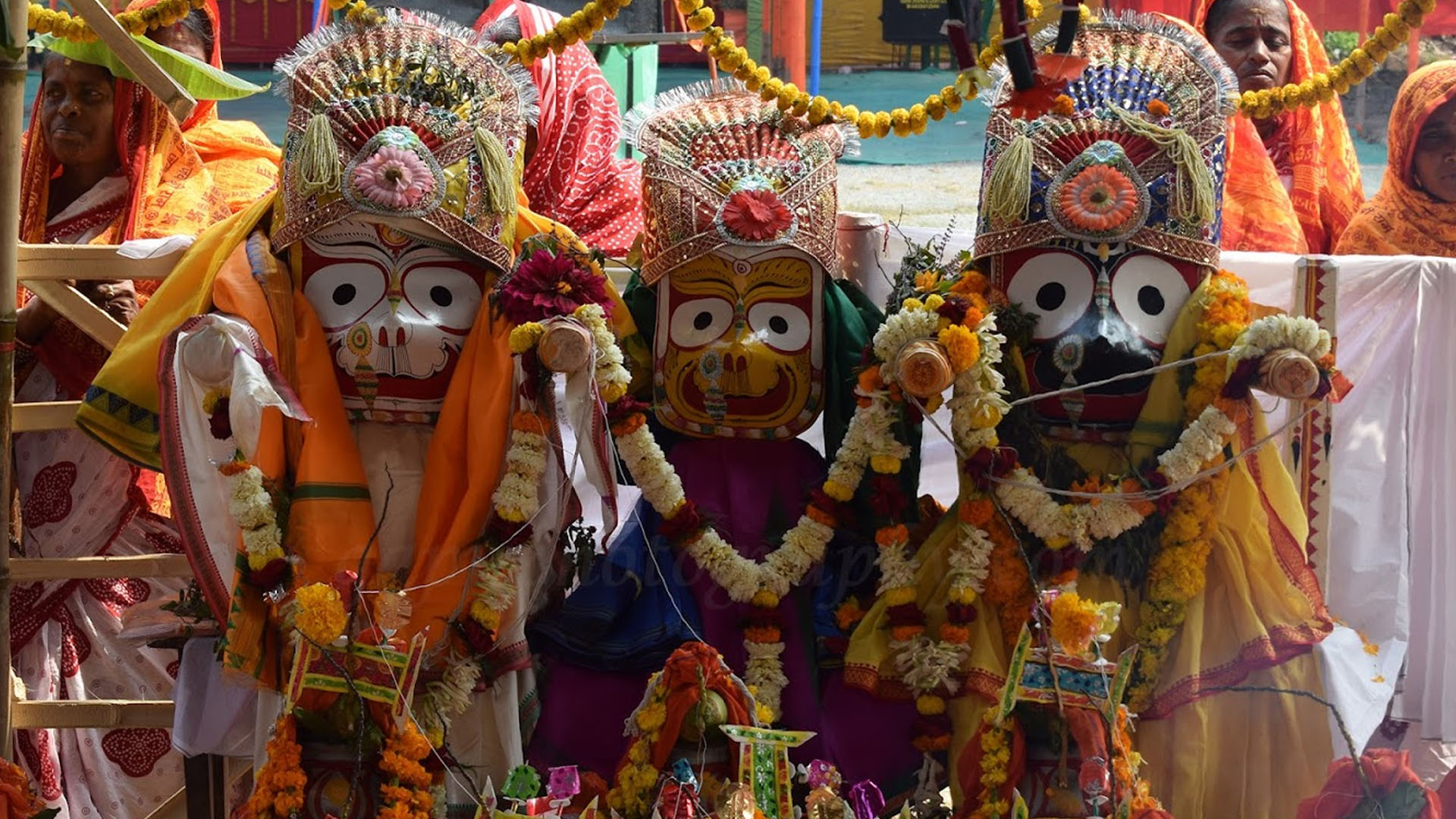
Jagannath Temple at Sabarang, about 20 km from Bhadrak town in Odisha, is a quieter cousin of the great Puri temple, dedicated to Jagannath, Balabhadra and Subhadra and following Puri’s rituals on a smaller, calmer scale. It suits devotees who want the Jagannath tradition without Puri’s crowds, and travellers who want a working village temple rather than a monument.
Key Highlights
- Jagannath Temple, Sabarang stands about 20 km from Bhadrak town in northern Odisha.
- The temple honours Jagannath with his brother Balabhadra and sister Subhadra, as at Puri.
- Daily rituals and festivals follow Puri’s traditions, adapted to a smaller village temple.
- Ratha Yatra, the chariot festival, is the temple’s biggest annual celebration.
- The founding date is not documented, and local tradition rather than records shapes its early history.
The Temple and Its Deities
The sanctum holds the familiar trio of Jagannath, Balabhadra and Subhadra, carved in the wooden idol tradition of the Jagannath cult. Balabhadra carries a special local meaning here: as the god linked with agriculture, his worship resonates in Bhadrak’s farming country, where the temple has long served as a spiritual centre for surrounding villages. Devotees come through the year for darshan, and the mood stays intimate, with space to sit, watch the rituals and take in the temple’s calm.
The architecture follows the Kalinga style of Odisha, with a towered sanctum, carved pillars and a courtyard that local listings describe as recently renovated and expanded. The carvings and the ordered layout reward a slow walk around the complex, and the temple’s setting among fields and village lanes keeps the visit grounded in everyday Odisha rather than a tourist precinct. Village shrines across the state share this Kalinga pattern, and the Metakani Temple in Subarnapur shows the same tradition in a goddess shrine rather than a Jagannath temple.
History and Legend
No reliable record fixes the Sabarang temple’s founding date, and that gap matters. An older web listing credits a 16th century origin under Bhoi patronage, but competing listings give no date at all, so this rewrite treats the early history as local tradition, not documented fact. What is certain is the temple’s long role as a centre of Jagannath worship in northern Odisha, carried by generations of village devotees.
Local lore also links the temple with the wider Jagannath story, including tales of saints and kings associated with the cult, and some accounts mention Chaitanya Mahaprabhu’s tradition in connection with Bhadrak’s devotion. Treat these as devotional stories rather than history. The deeper, verifiable story is the living one: a village temple that kept Puri’s ritual pattern alive at a local scale, and that has grown in popularity as Bhadrak’s pilgrim traffic has risen.
Rituals and Festivals
Daily worship
Daily worship runs from the morning opening of the doors, known as Dwara Phita, through the day’s offerings and arati, to the closing rite called Pahada at night. The sequence mirrors Puri’s pattern, and the evening arati, with conches and cymbals, is the most atmospheric time to visit. Visitors should dress modestly, remove footwear where required, and follow the priests’ guidance on photography inside the sanctum.
Ratha Yatra and other festivals
Ratha Yatra is the temple’s main festival, when the deities ride the chariot through Sabarang and crowds from nearby villages gather. Snana Purnima, Janmashtami and Kartik observances also fill the calendar, and the temple stays busiest on festival days and Sundays. If you want a quiet darshan, a weekday morning suits best; if you want the full festive energy, plan around Ratha Yatra and arrive early.
Best Time to Visit
October to March gives the most comfortable weather for a Bhadrak trip, with cooler days for temple visits and village walks. The monsoon months turn the countryside green but bring heavy rain and humid days. Festival dates shift with the Hindu calendar, so check the year’s Ratha Yatra date before planning a festival visit.
How to Reach Jagannath Temple, Sabarang
By Air
Biju Patnaik International Airport at Bhubaneswar is the nearest major airport, roughly 130 km from Bhadrak. From the airport, a train or taxi covers the onward journey to Bhadrak town.
By Train
Bhadrak railway station, on the Howrah to Chennai main line, is the nearest railhead, about 20 km from Sabarang. Trains from Bhubaneswar, Cuttack, Kharagpur and Kolkata stop at Bhadrak, and from the station a taxi or auto rickshaw reaches the temple in about 30 to 40 minutes.
By Road
By road, Bhadrak town connects to the temple village by local roads, and the drive from Bhadrak takes about 30 to 40 minutes. Buses from Bhubaneswar and Cuttack reach Bhadrak, and hiring a taxi for the day gives the most flexibility, especially if you plan to combine Sabarang with other Bhadrak sights.
Entry Fee and Timings
There is no entry fee for darshan at Jagannath Temple, Sabarang, as with most village temples in Odisha. The temple opens early in the morning and closes at night after the final rite, with a midday break typical of Odisha temples. Timings shift on festival days, so confirm locally if you plan a festival visit.
Nearby Places to Visit
Bhadrak town offers markets, the Bhadrakali temple tradition and the district’s agricultural landscape. Travellers building an Odisha temple route can continue to the Gojabayani Temple in Kendrapara, another village shrine with its own local following.
Bhadrak town itself is worth an hour before or after the temple, with its busy bazaars, sweet shops and the river landscape that shapes the district’s farming life. The town is a working district centre, not a tourist hub, so expect local prices and plain facilities.
Planning a route across districts helps, since Odisha’s village temples sit far apart and rural buses run infrequently. A hired taxi for the day removes the worry of return transport and lets you stop at village markets along the way.
Further afield, the Mahavir Hanuman Temple in Khordha shows how varied Odisha’s village temples are, with Hanuman devotion at its centre. Pilgrims with more time often extend the trip to Puri itself, to see the great temple whose rituals Sabarang follows.
Travel Tips for Sabarang
Dress modestly and carry a cloth bag for footwear, since temple shoe stands are basic. Visit on a weekday morning for a quiet darshan, and keep festival days for the full experience rather than a quick stop.
Carry cash for offerings and local transport, and pair Sabarang with Bhadrak town sights to make the 20 km trip worthwhile. Respect the sanctum rules on photography, and avoid loud conversation inside the temple.
Travellers extending the temple route north and west can add the Naganatheswar Temple in Dhenkanal, another Shiva shrine with its own local legend. It pairs well with Sabarang for a two district circuit of living village temples.
Frequently Asked Questions
Where is Jagannath Temple, Sabarang located?
Jagannath Temple, Sabarang is located at Sabarang village, about 20 km from Bhadrak town in Bhadrak district, Odisha. The nearest railway station is Bhadrak, on the Howrah to Chennai line, and a taxi or auto rickshaw covers the last stretch in 30 to 40 minutes. Bhubaneswar airport is the nearest major airport.
Which deities are worshipped at Sabarang temple?
The Sabarang temple worships Jagannath with his elder brother Balabhadra and sister Subhadra, the same trio honoured at Puri. Balabhadra holds special local meaning as a god linked with agriculture in Bhadrak’s farming region. Devotees visit through the year for darshan and blessings.
What is the history of Jagannath Temple, Sabarang?
The founding date of Jagannath Temple, Sabarang is not documented, and its early history rests on local tradition rather than records. The temple has served for generations as a centre of Jagannath worship in northern Odisha, following Puri’s rituals on a smaller scale. Treat older claims about its exact origin as tradition, not established history.
When is Ratha Yatra celebrated at Sabarang?
Ratha Yatra is celebrated at Sabarang temple each year on the Hindu calendar date shared with Puri’s festival, usually in June or July. The deities ride the chariot through the village, drawing crowds from nearby areas. Check the year’s exact date before travelling, and arrive early on festival day.
Is there an entry fee at Jagannath Temple, Sabarang?
There is no entry fee for darshan at Jagannath Temple, Sabarang. The temple opens early in the morning and closes at night after the final rite, with a midday break typical of Odisha temples. Donations and offerings are voluntary, and festival days may change the timings.
How is Sabarang temple different from Puri temple?
Sabarang temple follows Puri’s rituals and honours the same deities, but on a village scale with far smaller crowds. The visit feels intimate, with space for quiet darshan and a close view of daily worship. Puri remains the great temple of the tradition, while Sabarang suits travellers who want the same devotion in calmer surroundings.
Plan Your Visit
Come on a weekday morning for a peaceful darshan, stay for the evening arati if you can, and pair Sabarang with Bhadrak town to make the trip count.
Weather Jagannath Temple
[location-weather id="5549"]