
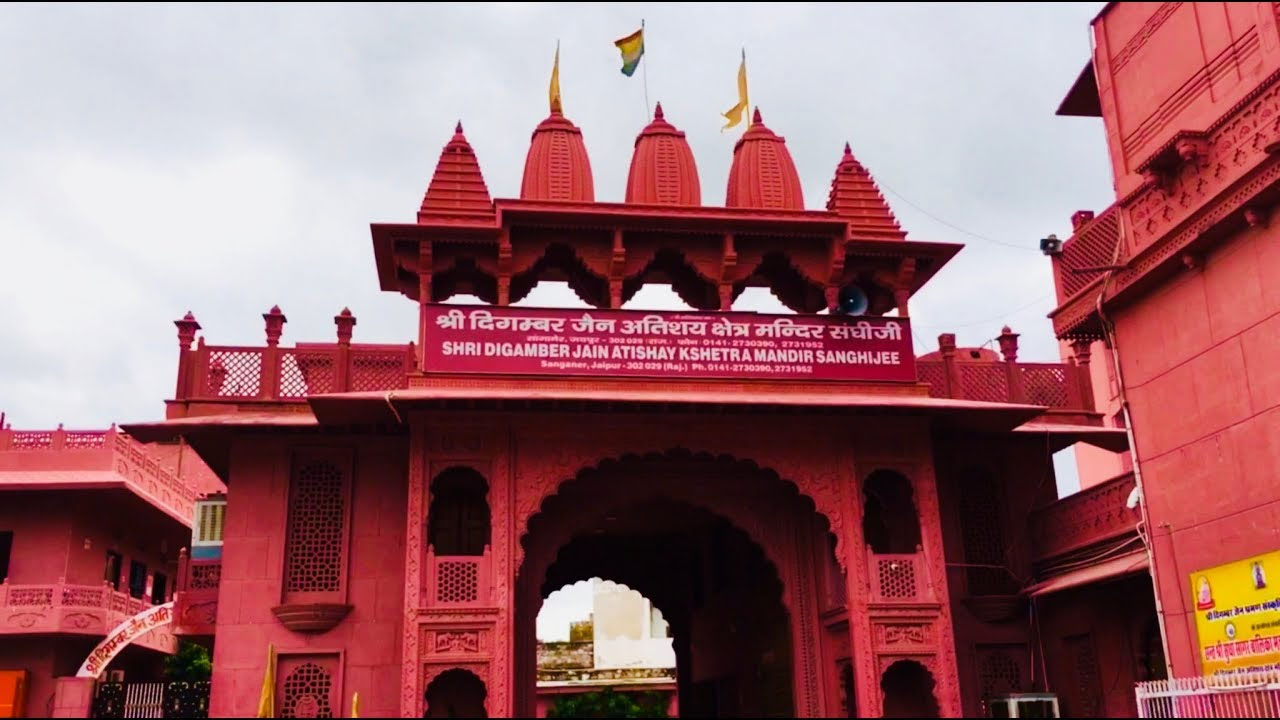
Looking for one of the most important Jain pilgrimage sites near Jaipur? The Shri Digamber Jain Temple at Sanganer — known locally as Sanghiji — is about 14 km south of Jaipur city on NH-12, the Kota–Jaipur road. This towering red-stone temple is an Atishaya Kshetra, a place associated with miracles in the Digamber Jain tradition, and its principal deity is Lord Adinath (Rishabh Dev), the first of the 24 Tirthankaras. The principal idol is traditionally believed to be around 4,000 years old. Entry is free, the temple opens early and stays open late every day, and with a dharamshala and bhojanalaya on campus, it works as a half-day trip from anywhere in Jaipur.
Key Highlights
- Shri Digamber Jain Temple, or Sanghiji, is an Atishaya Kshetra (miracle site) of the Digamber Jain tradition, located in Sanganer about 14 km south of Jaipur on NH-12.
- The seven-storey red-stone temple rises in eight shikharas; its final phase was completed in the 10th century CE, as an inscription of Vikram Samvat 1011 on one of the toranas records.
- Lord Adinath (Rishabh Dev), the first Tirthankara, is the principal deity; devotees believe the idol is some 4,000 years old, and the inner shrine also holds an idol of Lord Parshwanath with seven serpent hoods.
- The temple’s famous atishaya is its underground ancient shrine: only a bal-yati (celibate since childhood) Digamber saint may enter and bring its idols out for limited periods of darshan.
- Entry is free and the temple generally stays open from around 5:30 AM to 10:00 PM daily; the campus has a rest house (25 general and 15 deluxe rooms) and the Shri Adinath Bhojanalaya for meals.
Why Sanghiji Is Special: History and Architecture
Sanganer sits on the southern edge of Jaipur, a town known for block printing and Jain devotion. The Shri Digamber Jain Atishaya Kshetra Mandir, Sanghiji, is the jewel of the town — an old temple built in phases, the last of them completed in the 10th century AD, according to an inscription of VS 1011 on one of the pylons (toranas).
The seven-storey shikhara cluster
The most striking feature of Sanghiji is its height. The temple rises to seven storeys, and eight tall shikharas (pinnacles) climb skyward from the main body — a silhouette you can spot from a distance across Sanganer.
The underground shrine and the miracle (atishaya)
Hidden beneath the visible temple is an ancient small shrine, traditionally said to be guarded by yakshas (devas). The belief is that only a bal-yati — a Digamber saint celibate since childhood — may enter it and bring its idols out for darshan, and only for a limited, pre-decided period, after which they are placed back under auspicious signs.
Idols, carvings and the inner shrine
As you enter the inner temple you reach a large stone-built shrine with three pinnacles, its carving a feast for the eyes. In the middle sits a beautiful idol of Lord Parshwanath with seven serpent hoods, flanked by two more Parshwanath idols, with many other attractive idols around the complex.
Darshan Timings and Entry Fee
Entry to the Shri Digamber Jain Temple is free for all visitors. The temple generally opens early in the morning — around 5:30 AM — and stays open till about 10:00 PM every day.
How to Reach Shri Digamber Jain Temple
The temple stands on Jain Mandir Road at Dada Gurudev Nagar, Sanganer, Jaipur 303902, roughly 13–14 km south of central Jaipur.
By Air
Jaipur International Airport is at Sanganer itself, only about 2.5 km from the temple. A taxi or auto-rickshaw from the airport takes about 10–15 minutes and costs roughly ₹150–₹300 depending on the vehicle.
By Train
The nearest railway station is Sanganer railway station, from where taxis, tempos, city buses and auto-rickshaws are easily available. Most visitors arrive via Jaipur Junction, about 10–14 km away; the ride to Sanganer takes 30–45 minutes.
By Road
From the Jaipur bus stand (Sindhi Camp) city buses run to Sanganer, and city bus no. 201 connects Ajmeri Gate, Sanganer Gate and Narayan Singh Circle to Sanganer (routes and numbers change over time, so confirm at the bus stand).
Best Time to Visit Sanganer
October to March is the best season — cool mornings and clear skies. July–September brings greenery and fewer crowds.
Festivals and the Annual Gathering
The big date on Sanghiji’s calendar is the annual gathering on the second Sunday of Ashwin, when devotees converge from across the country. Mahavir Jayanti and the ten-day Daslakshan are also observed with special pujas.
Things to Do Around the Temple
Sanganer rewards visitors who linger a little. The town is famous for hand-block printed textiles — Sanganer prints are known for delicate floral patterns in many colours on a white base — and the Kagazi Mohalla keeps alive the craft of handmade paper.
Travel Tips for Visitors
Dress modestly — covered shoulders and knees are expected in the temple — and remove your footwear before entering the sanctum area. Many visitors report that photography is not permitted inside the temple, so take your exterior shots from the courtyard and keep the camera away once you step into the inner shrine.
Nearby Places to Visit
Sanghiji sits on Jaipur’s southern corridor, easy to pair with the city’s other temples. The Govind Dev Ji Temple in the City Palace complex and the Sun Temple on Galta Hill cover Jaipur’s spiritual circuit, while the Akshardham Temple near Vaishali Nagar offers a grand modern-temple contrast. The monkey-populated Galtaji Temple sits in the same eastern hills as the Sun Temple, and the hilltop Moti Dungri Temple is another easy add-on. East of the city, Kanota Dam makes a quiet evening stop.
Frequently Asked Questions
Where exactly is the Shri Digamber Jain Temple located?
The temple — locally called Sanghiji — is at Jain Mohalla, Sanganer, Jaipur 303902, on the NH-12 (Kota–Jaipur road), about 13–14 km south of central Jaipur. The full address is Shri Digamber Jain Atishaya Kshetra Mandir Sanghiji, Jain Mandir Road, Dada Gurudev Nagar, Sanganer.
Which deity is worshipped at the Sanganer Jain Temple?
The principal deity is Lord Adinath (Rishabh Dev), the first of the 24 Tirthankaras of Jainism. Devotees traditionally believe his idol is around 4,000 years old. The inner shrine also houses a striking idol of Lord Parshwanath with seven serpent hoods, with two more Parshwanath idols on either side.
What are the temple timings, and is there an entry fee?
Entry is free for all visitors. The temple is generally open daily from around 5:30 AM to about 10:00 PM. Timings can shift on festival days and during the annual gathering, so it is sensible to confirm locally before visiting on a special occasion.
Why is Sanghiji called an Atishaya Kshetra?
An Atishaya Kshetra is a place associated with miracles. At Sanghiji, the atishaya is the ancient temple in the underground portion of the complex: tradition holds that only a bal-yati (a Digamber saint celibate since childhood) may enter it and bring its idols out for darshan, and only for limited, pre-decided periods.
How do I reach the temple from Jaipur city?
By road is easiest: city buses (including bus no. 201 from Ajmeri Gate, Sanganer Gate and Narayan Singh Circle) run to Sanganer, and a taxi or auto-rickshaw takes 30–45 minutes from the city centre. The nearest railway station is Sanganer station, while Jaipur Junction is 10–14 km away. Jaipur International Airport is in Sanganer itself, only about 2.5 km from the temple.
Is photography allowed inside the temple?
Many visitors report that photography is restricted inside the temple’s inner shrine. You can photograph the exterior, the shikharas and the courtyard freely, but keep the camera away once you enter the sanctum — and follow the notice boards on the day of your visit.
Weather Shri Digamber Jain Temple
[location-weather id="5549"]