
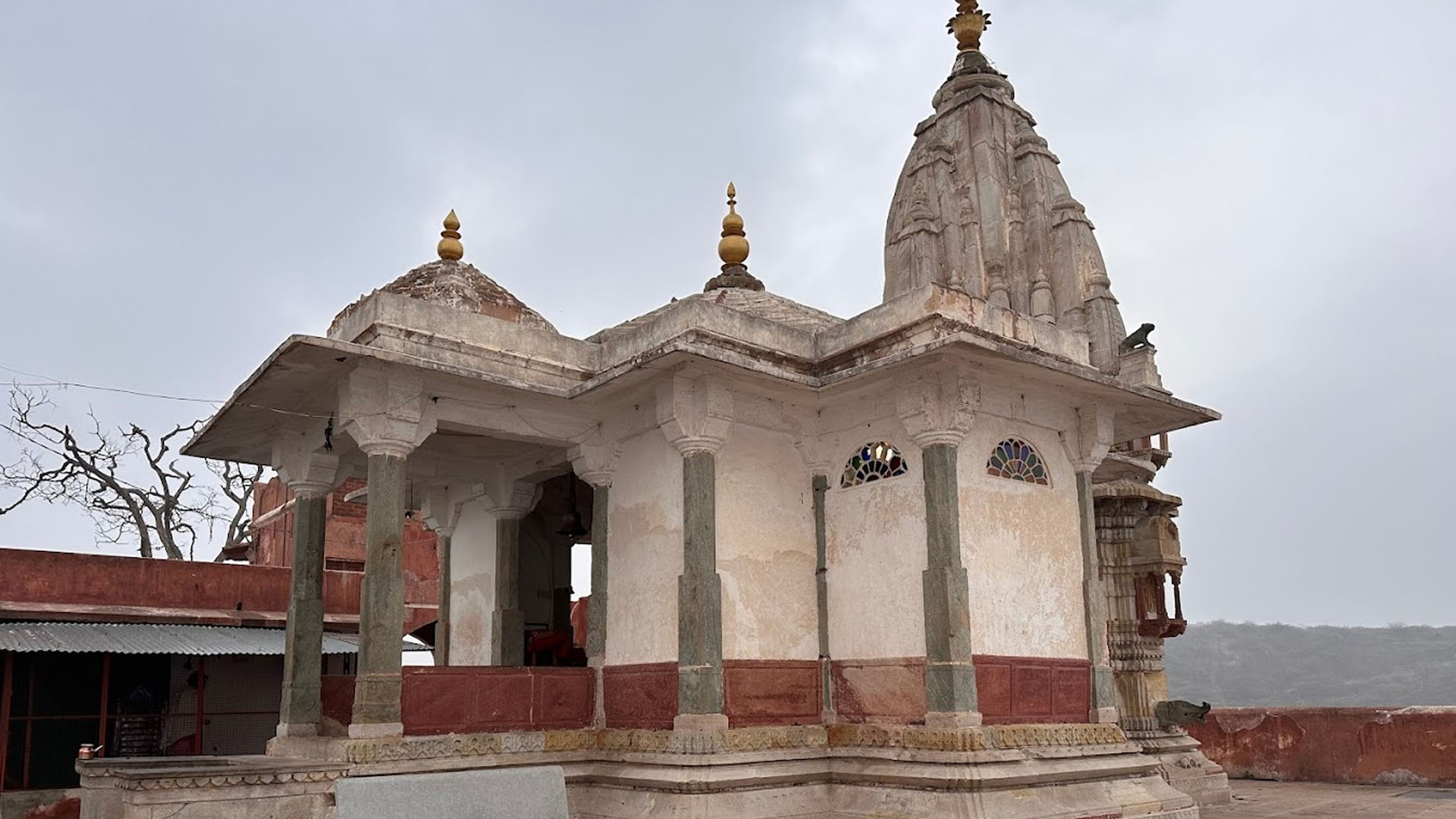
The Sun Temple (Surya Mandir) in Jaipur is a hilltop Hindu temple dedicated to the Sun God, standing on the eastern Aravalli hills near Galta Gate. Built in 1734 under Maharaja Sawai Jai Singh II, it is known for its fort-like stone architecture and the sweeping view it offers over the Pink City — which is why most visitors come here at sunrise or sunset. Entry is free.
Key Highlights
- Where it is: Galta Gate, on the eastern hills of Jaipur, next to the Galta Ji (Monkey Temple) complex — roughly 4–5 km from Jaipur Junction railway station and about 12–13 km from Jaipur International Airport.
- When to go: Early morning for sunrise or late afternoon for sunset; October to March is the most comfortable season for the uphill walk.
- Cost: There is no entry fee, and photography is allowed inside the complex.
- Timings: Generally open from around 5 AM to 7 PM, though several sources note a midday break (roughly 12 noon to 4 PM); expect variations on festival days.
- Good to know: The temple sits atop a hill, so the last stretch is a walk uphill. Come down before dark — locals advise against lingering after sunset.
History of the Sun Temple
The Sun Temple is tied to the early history of Jaipur itself. It was built in 1734, not long after Sawai Jai Singh II founded the new city, by his minister Diwan Rao Kripa Ram. Jaipur’s original plan drew on the Sthapatya Veda, the ancient Indian science of architecture, and the temple was deliberately placed on the eastern side of the walled city — the side of the rising sun.
Before independence, the temple held a special place in the royal calendar. The Jaipur royal family worshipped the Sun idol on Surya Saptami, when the deity was taken out in a grand chariot procession to Choti Chaupad for public viewing, with a guard of honour from the Jaipur State army. A smaller version of this procession is still organised at the temple on Surya Saptami.
One local story colours the temple’s history. The shrine is said to have once housed an eight-inch Ashtadhatu (eight-metal alloy) statue of the Sun God; according to local accounts it was stolen in 1979, and since then a picture and symbol of the deity is worshipped in its place.
Architecture of the Surya Mandir
The temple stands on a projecting platform on the hill, built in stone masonry and lime in the style of the period. The grand entrance gate resembles the gateway of a royal mansion, and the thick outer walls give the complex a mini-fortress feel — from a distance, it can look more like a small fort than a temple.
Inside, the complex holds multiple shrines: the main one dedicated to the Sun God, and a Shiva shrine at the rear. Government researchers have reportedly found that fine wall carvings lie hidden beneath layers of lime whitewash, with plans for experts to uncover them — the temple’s walls may still be hiding their original ornamentation.
Sun Temple Jaipur Timings and Entry Fee
Entry to the Sun Temple is free — there is no ticket or entry fee of any kind. Cameras are allowed inside the complex, so you can photograph both the architecture and the views.
Timings vary across sources. Most travel guides describe the temple as open daily from roughly 5 AM to 7 PM, with a midday closure between about 12 noon and 4 PM; some list the evening darshan window as 4 PM to 6:30 PM. Expect shifts on festival days, so confirm locally before a special visit.
Shoes must be removed at the entry gate, as is standard at places of worship in India.
How to Reach the Sun Temple
The temple is at Galta Gate on Galta Ji Road, on the eastern edge of Jaipur. The last approach is a hill climb — taxis and auto-rickshaws take you to the base of the hill or to the Galta Ji temple area, from where you walk up to the Sun Temple.
By Air
Jaipur International Airport is roughly 12–13 km from the Sun Temple. Take a prepaid taxi or an app-based cab to Galta Gate; the drive takes around 30–40 minutes depending on traffic.
By Train
Jaipur Junction, the nearest major station, is roughly 4–5 km away. Auto-rickshaws, taxis, and app-based cabs from the station take about 15–20 minutes to reach the base of the hill.
By Road
Head for Galta Gate on the eastern side of Jaipur and follow Galta Ji Road uphill. Parking is available near the base of the hill and around the Galta Ji temple complex. The final stretch to the Sun Temple is on foot — the path is paved but climbs steadily, so wear comfortable walking shoes and carry water.
Best Time to Visit
October to March is the best season for the Sun Temple. Winter mornings and evenings are pleasant for the climb, and the skies are usually clear — which matters because the views are half the reason people come. The monsoon months (July to September) can make the hill path slippery, and summers make midday visits genuinely uncomfortable, so in April to June stick to the early morning or evening slots.
Time of day matters as much as the season. The temple draws its biggest crowds at sunrise, when devotees come for Surya Namaskar and morning aarti, and again in the evening for the sunset over the city. Midday is the quietest — and the hottest — window.
What to See and Do Here
The main draw, after the temple itself, is the view. From the hilltop you get a panoramic sweep over Jaipur — the Pink City’s old walled area below and the Aravalli hills on the horizon. Sunrise is the most divine moment of the day: devotees perform Surya Namaskar and the light hits the city at its best. Sunset is the photographer’s slot, when the sky over the Pink City turns golden.
The trails around the Galta hills are popular with walkers, hikers, and cyclists, with several routes leading to vantage points over the city. Many visitors pair the Sun Temple with the Galtaji Temple complex just below it, famous for its natural springs and the monkeys that give it its nickname.
Places to Visit Near the Sun Temple
The Sun Temple works well as part of a day of temple-hopping in Jaipur. Apart from the Galtaji Temple next door, you can combine it with the Govind Dev Ji Temple in the City Palace complex, the marble Akshardham Temple, and the hilltop Moti Dungri Temple dedicated to Lord Ganesha. The old city’s markets are also close by if you want to pair a morning visit with some shopping.
Travel Tips for Visiting the Sun Temple
- Come down before dark. The temple is on a forested hill, and local priests and guides advise against staying after sunset. Stick to sunrise and late-afternoon visits.
- Dress modestly and remove your shoes at the entry gate; photography is permitted inside.
- Carry water and wear walking shoes. The final approach is an uphill walk with little shade.
- Combine it with Galta Ji. The two temples sit on the same hill stretch — most visitors see both in one trip, starting early to catch the morning light at the Sun Temple.
Frequently Asked Questions
Where is the Sun Temple located in Jaipur?
The Sun Temple (Surya Mandir) is located at Galta Gate on Galta Ji Road, on the eastern Aravalli hills of Jaipur, next to the Galta Ji (Monkey Temple) complex. It is roughly 4–5 km from Jaipur Junction railway station and about 12–13 km from Jaipur International Airport.
Is there an entry fee for the Sun Temple in Jaipur?
No, there is no entry fee. Entry to the Sun Temple is free for everyone, and cameras are allowed inside the complex.
What are the timings of the Sun Temple in Jaipur?
The temple is generally open daily from around 5 AM to 7 PM. Several sources note a midday break between roughly 12 noon and 4 PM, and timings may vary on festival days and special occasions.
When was the Sun Temple in Jaipur built?
The Sun Temple was built in 1734 by Diwan Rao Kripa Ram, a minister of Maharaja Sawai Jai Singh II, the founder of Jaipur. It was placed on the eastern side of the walled city in keeping with the ancient architectural principles on which Jaipur was planned.
What is the best time to visit the Sun Temple in Jaipur?
The best time is early morning at sunrise or in the late afternoon before sunset, when the views over the Pink City are at their finest and the hill climb is most comfortable. The winter season, from October to March, is the most pleasant overall.
Which places can be visited near the Sun Temple?
The Galta Ji (Monkey Temple) complex is right next door and is the natural combination with the Sun Temple. Other nearby options include the Govind Dev Ji Temple, Akshardham Temple, Moti Dungri Temple, and the markets of the old walled city.
Weather Sun Temple
[location-weather id="5549"]