

Facts about Jaipur surprise even regular visitors to Rajasthan. The Pink City was planned on a grid in 1727, painted pink in 1876, and still runs on that 300-year-old layout today. These ten facts cover its forts, its UNESCO listings, and the quirks that make it unlike any other Indian city.
Key Highlights
- Founded on 18 November 1727 by Maharaja Sawai Jai Singh II, Jaipur is India’s first planned city, laid out in nine sectors on Vastu Shastra lines.
- The old city was painted pink in 1876 to welcome the Prince of Wales, and the colour has stayed ever since.
- Jaipur holds two UNESCO listings: Jantar Mantar (2010) and the historic walled city (2019).
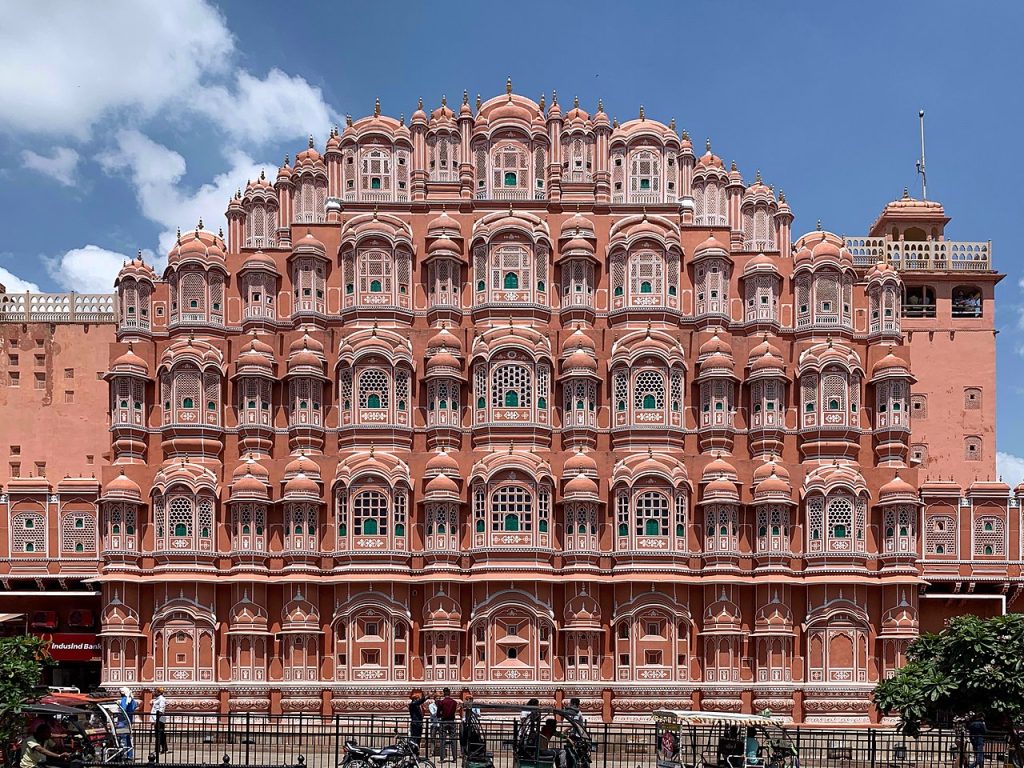
- Hawa Mahal, built in 1799, has 953 windows, while Amer Fort, built in 1592, is older than the city itself.
- Best months are October to March. Jaipur Junction is about 3 km from the old city; the airport is about 14 km away.
10 Interesting Facts About Jaipur
1. India’s First Planned City
Jaipur was founded on 18 November 1727 by Maharaja Sawai Jai Singh II, who moved his capital here from Amber, about 11 km away, because the old capital had run short of space and water. The architect Vidyadhar Bhattacharya laid the city out on a grid based on Vastu Shastra, dividing it into nine rectangular sectors called chowkris. Two sectors held the palace and state buildings and seven held the public. A wall with seven gates ringed the plan, and most of it is still visible today.
2. Why It Is Called the Pink City
The pink wash dates to 1876, when Maharaja Sawai Ram Singh II ordered the old city painted pink to welcome Albert Edward, the Prince of Wales, on his visit to India. Pink was taken as the colour of hospitality, and the paint job was meant to impress a royal guest. The city later kept the look through local building rules, so the old quarter still shows the same rose-tinted facades that gave Jaipur its nickname.
3. Two UNESCO World Heritage Listings
Jaipur has not one but two UNESCO listings. Jantar Mantar, the stone observatory, was inscribed in 2010. Then, on 6 July 2019, the historic walled city itself joined the World Heritage list, recognised for its planned grid, its gates, and its living craft traditions.
4. Hawa Mahal and Its 953 Windows
Hawa Mahal, the Palace of Winds, was built in 1799 by Maharaja Sawai Pratap Singh. Its five-storey facade holds 953 small windows, called jharokhas, which let the women of the royal household watch street processions without being seen. The same openings pull air through the building and keep the rooms cool. Entry costs about Rs 50; hours are roughly 9 AM to 7 PM.
5. Amer Fort Is Older Than the City
Amer Fort, also spelt Amber Fort, was built in 1592 by Raja Man Singh I, more than a century before Jaipur was founded. Its red sandstone and marble halls include the Sheesh Mahal, the Hall of Mirrors, the Ganesh Pol gateway, and Diwan-i-Aam, all set above Maota Lake. The fort sits about 11 km from the city centre and takes half a day to see. Close by, the Jagat Shiromani Temple in Jaipur is a quiet stop most visitors walk past on their way up to the fort.
6. Jantar Mantar and the Giant Sundial
Jantar Mantar was built by Jai Singh II between 1727 and 1734 as a set of nineteen masonry instruments for tracking the sun, moon, and stars with the naked eye. The largest of them, the Samrat Yantra, is one of the biggest stone sundials in the world and can still tell the local time to within a couple of minutes. It stands next to the City Palace.
7. Jaigarh Fort and the Jaivana Cannon
Jaigarh Fort was built in 1726 by Jai Singh II on Cheel ka Teela, the Hill of Eagles, to guard Amer Fort below. Its main claim to fame is the Jaivana cannon, described as one of the largest wheeled cannons in the world. It also gives a fine view over Amer and draws far smaller crowds than its neighbour.
8. Asia’s Largest Circular Park, Locals Say
Jawahar Circle, on the southern edge of the city, is claimed by locals to be Asia’s largest circular park built on a traffic island. The park holds a musical fountain, a jogging track, and a food court. Its main draw is Patrika Gate, a brightly painted gateway modelled on Hawa Mahal and one of the most photographed spots in Jaipur. The claim is a local one, but the park is large by any standard.
9. One Corner of the Golden Triangle
Jaipur forms the third corner of India’s Golden Triangle with Delhi and Agra, the circuit most first-time visitors to North India follow. Delhi sits about 268 km to the north, and the three cities are linked by highway and rail, which is why Jaipur sees visitors all year round. The triangle framing also explains the city’s hotel and transport setup: it is built for travellers passing through on a three-city loop. Readers planning the Delhi leg can start with these interesting facts about Delhi.
10. The World’s Largest Free Literary Festival
Every January, Jaipur hosts the Jaipur Literature Festival, widely described as the world’s largest free literary festival. The first edition was held in 2006, and it has since grown into a five-day event that draws novelists, poets, historians, and musicians from around the world. Entry is free, but hotel prices climb during festival week, so book early.
How to Reach Jaipur
By Air
Jaipur International Airport is about 14 km from the city centre. It handles flights from Delhi, Mumbai, Bengaluru, and other Indian cities, plus a few international routes. Prepaid taxis and app cabs run from the terminal to the old city in about 30 to 45 minutes depending on traffic.
By Train
Jaipur Junction is the main station, about 3 km from the old city. Trains from Delhi take around four to five hours, and the Shatabdi and Vande Bharat services are the fastest options. Pick a morning train for a full day in the city.
By Road
Delhi is about 268 km away by NH48, roughly a five-hour drive. Sindhi Camp is the main intercity bus stand, with state and private buses to Delhi, Agra, Udaipur, and Jodhpur. Within the city, the metro, autos, and app cabs cover the old city and the fort area. The Galtaji Temple in Jaipur, known for its natural springs and monkeys, is an easy half-day trip by auto.
Best Time to Visit Jaipur
October to March is the best time to visit Jaipur, when daytime temperatures sit in the low to mid 20s and the forts are comfortable to walk. April to June is hot, with afternoons often crossing 40 degrees, while July to September brings monsoon rain and humidity.
January is pleasant but busy during the literature festival. December mornings can be foggy, which sometimes delays trains.
Planning a Longer Stay in Jaipur
Two or three days cover the main sights at a relaxed pace: one day for the old city and Hawa Mahal, one for Amer, Jaigarh, and Nahargarh, and a third for markets and temples. The Jaipur tourism guide lists places to stay and day trips from the city.
Frequently Asked Questions
Why is Jaipur called the Pink City?
Jaipur is called the Pink City because its old quarter was painted pink in 1876, when Maharaja Sawai Ram Singh II ordered the colour to welcome the Prince of Wales. Later building rules kept the look, so the old city still shows rose-tinted facades today.
Who founded Jaipur and when?
Maharaja Sawai Jai Singh II founded Jaipur on 18 November 1727 and named it after himself. He moved his capital from Amber, about 11 km away, because it had run short of space and water. The architect Vidyadhar Bhattacharya planned the new city on a grid based on Vastu Shastra.
Why was Jaipur built as a planned city?
Jai Singh II wanted a new capital laid out in an orderly way, with separate sectors for the palace, temples, markets, and homes. The grid followed Vastu Shastra, divided the city into nine sectors, and ringed it with a wall and seven gates. That plan is still visible today.
What is Hawa Mahal famous for, and how many windows does it have?
Hawa Mahal is famous for its five-storey facade of 953 small windows, built in 1799 so royal women could watch street life without being seen. The windows also pull air through the palace and keep it cool, which is why it is called the Palace of Winds.
Which Jaipur monuments are UNESCO World Heritage Sites?
Jantar Mantar was listed by UNESCO in 2010, and the historic walled city was inscribed as a World Heritage City on 6 July 2019. Jantar Mantar is a stone observatory built by Jai Singh II, while the city listing covers the planned grid, gates, and craft traditions.
What is the best time to visit Jaipur?
October to March is the best time to visit Jaipur, with daytime temperatures in the low to mid 20s. April to June is very hot, and July to September brings monsoon rain. January is pleasant but busy during the literature festival week.
Conclusion
Jaipur rewards travellers who look past the pink paint and read the plan underneath it. Start with Amer Fort and Hawa Mahal, then spend a day walking the old city grid that Jai Singh II drew in 1727.
Weather
[location-weather id="5549"]