
Delhi packs more history into one city than most countries manage in a lifetime. These facts about Delhi cover its eight cities, its three UNESCO sites, the metro that moves millions each day, and the food lanes that never sleep. Read them before you plan a trip, and the capital will make far more sense when you arrive.
Key Highlights
- Delhi is the National Capital Territory of India, spread over 1,484 sq km along the Yamuna River.
- The city has been built and rebuilt seven times, from Indraprastha to New Delhi.
- Three UNESCO World Heritage Sites stand here: the Red Fort, Qutub Minar, and Humayun’s Tomb.
- The Delhi Metro opened in 2002 and now runs to more than 300 stations.
- October to March is the best time to visit, with cool days and clear skies.
10 Interesting Facts About Delhi
1. Delhi has been built and rebuilt at least seven times
Delhi is not one city but a stack of cities. Tradition links the first of them to Indraprastha, the Pandava capital of the Mahabharata, near present-day Purana Qila. After that came the Sultanate cities, then Shahjahanabad, the Mughal capital Shah Jahan built in the 1640s, and finally British New Delhi. Historians usually count seven cities, though some lists run to eight.
2. Delhi and New Delhi are not the same thing
When the British moved India’s capital from Calcutta to Delhi in 1911, they built a new imperial city south of the old walled city. Sir Edwin Lutyens and Sir Herbert Baker designed its wide avenues, roundabouts, and grand government buildings, and New Delhi was formally inaugurated in 1931. After Independence in 1947, New Delhi stayed the capital of free India while Old Delhi kept its Mughal character.
3. It became a Union Territory in 1956
Delhi became a Union Territory on 1 November 1956. The 69th Constitutional Amendment in 1991 re-designated it the National Capital Territory, with an elected assembly of its own. Parliament, the Supreme Court, Rashtrapati Bhavan, and the Prime Minister’s Office all stand within its borders, which is why every major decision in the country passes through this city.
4. Three UNESCO World Heritage Sites stand in one city
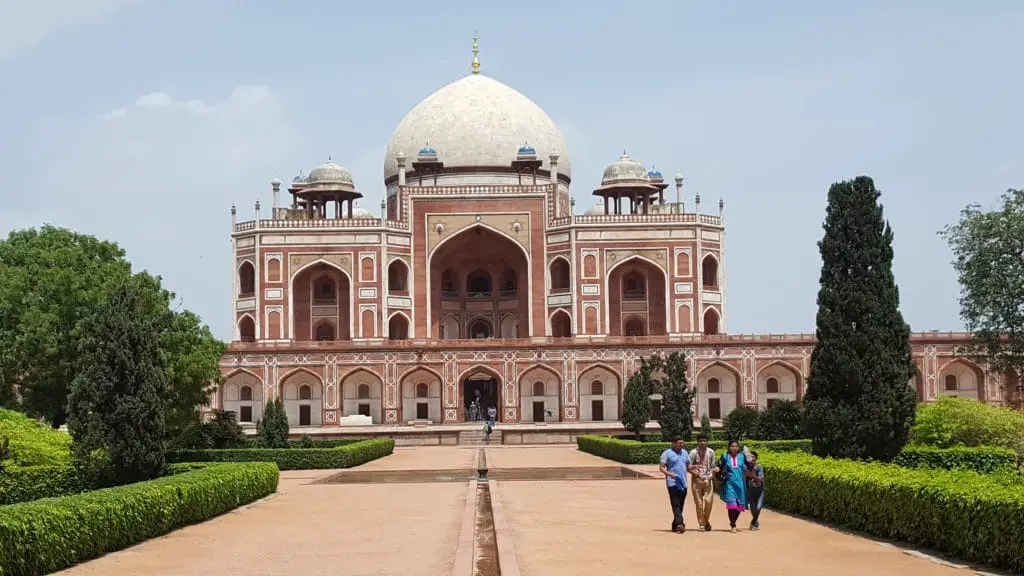
Delhi holds three UNESCO World Heritage Sites: the Red Fort, Qutub Minar, and Humayun’s Tomb. The Red Fort, built by Shah Jahan in the 1640s, is where the Prime Minister hoists the flag every Independence Day. The Qutub Minar, begun in 1193, rises about 73 metres and is among the tallest brick minarets in the world. Humayun’s Tomb, completed around 1572, was India’s first garden tomb and set the pattern for the Taj Mahal.
5. The Yamuna shaped the city, and still defines it
Delhi grew on the west bank of the Yamuna, about 160 km south of the Himalayas. The Delhi Ridge, a 1.5 billion-year-old spur of the Aravalli Range, runs through the city and rises to 318 metres at Bhatti Mines.
6. The Delhi Metro changed how the city moves
Before the metro, crossing Delhi meant long hours in traffic. The Delhi Metro opened in 2002 and has grown into one of the largest networks in the world, with more than 300 stations. Around 6.5 million people ride it on a typical day, which keeps an estimated 6 lakh vehicles off the roads.
7. Delhi is home to Asia’s largest spice market
Khari Baoli, in Old Delhi near the Red Fort, is one of the largest spice markets in Asia. Its lanes have sold chillies, cardamom, saffron, and dried fruit for centuries, and the smell of spices reaches you before the shops come into view. The lanes also serve parathas, kebabs, and chaat from recipes passed down for generations. Butter chicken, now served across the world, was created in a Delhi restaurant, Moti Mahal, in the 1950s.
8. Over 30 million people live in the wider Delhi region
The 2011 Census counted about 1.67 crore people inside the National Capital Territory. The wider metropolitan region, which pulls in Faridabad and Gurgaon in Haryana and Ghaziabad, Noida, and Meerut in Uttar Pradesh, holds more than 30 million people, making it the largest urban region in India. People from every state live and work here, and you can hear dozens of languages on a single metro ride.
9. Delhi is one of the greenest big cities in India, and one of the most polluted
Delhi holds two records that sit awkwardly together. About 20 percent of its area is forest and tree cover, and Asola Bhatti Wildlife Sanctuary, about 32 sq km on the Southern Ridge, is the city’s only wildlife sanctuary, home to more than 300 bird species, nilgai, and jackals. At the same time, Delhi ranks among the most polluted capitals in the world. Winter smog, fed by vehicle exhaust, construction dust, and crop burning in nearby states, can push air quality into the severe range between October and December.
10. The city has survived every crisis thrown at it
Delhi has faced invasions, the fall of empires, and the Partition of 1947, which remade its population almost overnight as refugees arrived from Punjab. Each time, the city absorbed the shock and rebuilt. As of 2026, Delhi is still adding new layers, and that is why it rewards travellers who look past the traffic.
How to Reach Delhi
Delhi is one of the easiest Indian cities to reach.
By Air
Indira Gandhi International Airport, about 16 km southwest of central Delhi, connects the city with the rest of India and the world. The Airport Express metro reaches New Delhi Railway Station in about 20 minutes.
By Train
New Delhi, Old Delhi, and Hazrat Nizamuddin are the main stations, with trains from every part of the country. Book through IRCTC well ahead for sleeper and AC classes, especially for travel between October and March. The metro connects all three stations to the rest of the city.
By Road
National highways link Delhi with Jaipur (about 280 km), Agra (about 230 km), and Chandigarh (about 250 km). State buses, private Volvos, and self-drive cars all work well, but allow extra time for traffic at the city borders. Inside the city, the metro and app cabs are faster than a private car for most trips.
Best Time to Visit Delhi
October to March is the best time to visit Delhi. Days are cool and clear, which suits walking through the Red Fort, Humayun’s Tomb, and the lanes of Old Delhi. December and January can be foggy, and morning flights and trains sometimes run late, so keep your first day flexible. Avoid April to June, when temperatures cross 45 degrees, and note that July to September brings monsoon rain and humidity.
Planning Your Delhi Trip
Three full days cover the main sights: one day for Old Delhi (Red Fort, Jama Masjid, Chandni Chowk, Khari Baoli), one for New Delhi (India Gate, Rashtrapati Bhavan area, Humayun’s Tomb, Qutub Minar), and one for the Lotus Temple, Akshardham, and the museums. Dress modestly for temples and mosques, remove shoes where asked, and confirm photography rules inside monuments before you shoot. Delhi also works as a base for onward trips: Agra and the Taj Mahal are a morning train away, and Lucknow’s Chhota Imambara is an overnight train ride east. Travellers who like fact-led city guides can read our facts about Jaipur before planning the next leg.
Plan your trip around the cool months, use the metro, and give the old city a full day: it will repay the effort.
Frequently Asked Questions
Is Delhi the same as New Delhi?
No. New Delhi is the purpose-built administrative enclave inside the larger National Capital Territory of Delhi. New Delhi holds the government buildings and the capital’s official functions, while Delhi covers the whole territory, including Old Delhi and the wider city. People use the two names loosely, but on paper they are different areas.
What is Delhi most famous for?
Delhi is most famous for its layered history, its monuments, and its food. The Red Fort, Qutub Minar, Humayun’s Tomb, India Gate, and the lanes of Old Delhi draw most first-time visitors. Its street food, from Chandni Chowk parathas to Khari Baoli spices, is as much a reason to come as the monuments.
How many UNESCO World Heritage Sites are in Delhi?
Delhi has three UNESCO World Heritage Sites: the Red Fort, Qutub Minar, and Humayun’s Tomb. The Archaeological Survey of India also lists about 175 monuments in the city as nationally protected, so the UNESCO three are only the best-known part of a much longer list.
What is the best time to visit Delhi?
October to March is the best time to visit Delhi, with cool days and clear skies that suit sightseeing on foot. December and January can bring fog and smog, so check the air quality index before you travel. Avoid the April to June heat, when temperatures often cross 45 degrees.
How many days are enough for Delhi?
Three full days are enough for the main sights: one day for Old Delhi, one for New Delhi’s monuments, and one for temples and museums such as Akshardham and the Lotus Temple. Add a fourth day if you want a slower pace, a food walk, or a day trip to Agra.
What is the best way to get around Delhi?
The Delhi Metro is the best way to get around the city. It opened in 2002, covers more than 300 stations, and connects the airport, the main railway stations, and most monuments. App cabs and auto-rickshaws work for short trips, but the metro beats road traffic at almost every hour.
Weather
[location-weather id="5549"]