
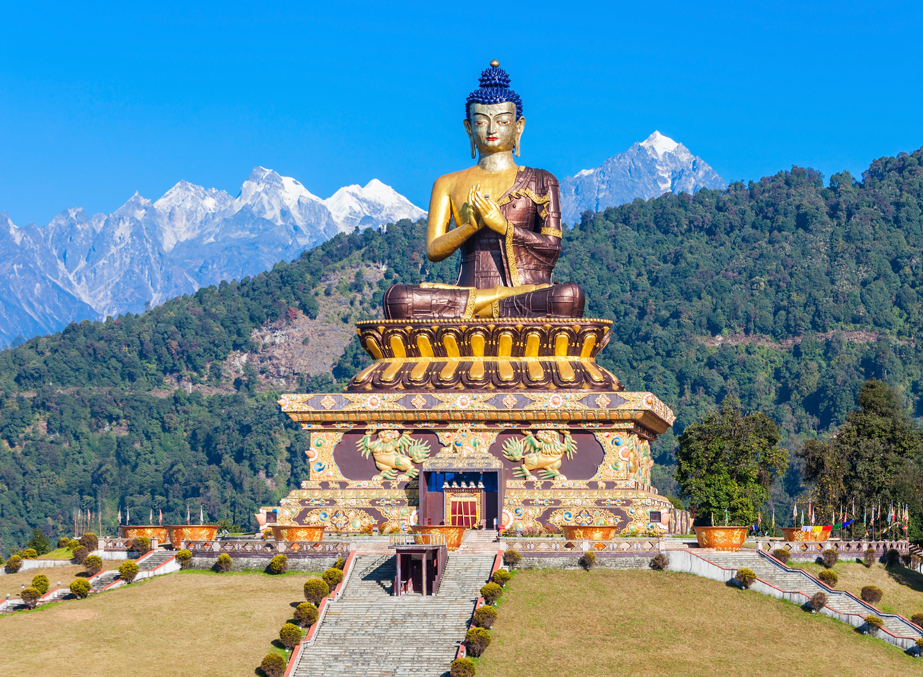
If you are planning a trip to the northeast and want to go beyond the postcard views, the historical monuments in Sikkim are where the state truly opens up. These centuries-old monasteries, royal ruins, coronation sites and museums carry the story of a Himalayan kingdom that guarded its Buddhist traditions, crowned its kings and, in 1975, merged with India. This guide covers the top 10 monuments worth your time — their history, what to see, how to reach them, and practical tips for visiting.
Key Highlights
- Sikkim’s historical monuments span nearly four centuries, from the 1641 Tashiding Monastery and the 1642 Norbugang coronation throne to the 1945 Do-Drul Chorten.
- Rumtek Monastery, about 24 km from Gangtok, is the largest monastery in Sikkim and the seat of the Karmapa of the Karma Kagyu school of Tibetan Buddhism.
- Dubdi Monastery at Yuksom, built in 1701, is the oldest in the state — reached by a 30–40 minute uphill trek.
- Rabdentse, the second capital of the Kingdom of Sikkim from 1670 to 1814, is protected by the Archaeological Survey of India and offers Kanchenjunga views.
- March to May and October to November are the best months to visit, when skies are clear and monastery festivals are in full swing.
Top 10 Historical Monuments in Sikkim
1. Rumtek Monastery, Gangtok
Rumtek tops any list of historical monuments in Sikkim. Set on a hilltop about 24 km from Gangtok, it is the largest monastery in the state and the seat of the Karmapa of the Karma Kagyu school. First built in the mid-1700s, it was rebuilt in the 1960s after the Karmapa’s exile from Tibet. The prayer hall is lined with murals, thangkas and a grand golden stupa, and the complex includes a monastic college and a small museum. Arrive for morning or evening prayers. For a wider look at the state, see our guide to the famous places in Sikkim.
Reach: taxis/shared cabs from Gangtok (45 min). Entry: generally free; photography inside the prayer hall is restricted.
2. Pemayangtse Monastery, Pelling
Founded in 1705 by Lama Lhatsun Chempo, Pemayangtse belongs to the Nyingma, Tibetan Buddhism’s oldest school. It stands near Pelling in West Sikkim, with Kanchenjunga on the horizon on clear mornings. The three-storeyed monastery is known for its wooden carvings and a seven-tiered wooden sculpture of Zangdog Palri, the heavenly palace of Guru Rinpoche, on the top floor. Ancient scriptures and wall paintings fill the lower halls; visit during the annual Cham festival.
Reach: about 115 km west of Gangtok; base yourself in Pelling. Entry: a nominal ticket.
3. Dubdi Monastery, Yuksom
Dubdi (“retreat”) is the oldest monastery in Sikkim, founded in 1701. It sits on a forested ridge above Yuksom, reached by a 30–40 minute uphill walk. The stone-built monastery holds statues, manuscripts and paintings going back centuries, and it played a part in the coronation of Sikkim’s first king. Like the gompas of the trans-Himalaya — see our notes on the monasteries of Ladakh — Dubdi shows how Buddhism travelled these valleys long before roads did.
Reach: trek up from Yuksom town; local guides available. Best time: March–May and October–November.
4. Tashiding Monastery, West Sikkim
Built in 1641 on a hilltop between the Rathong and Rangeet rivers, Tashiding is considered one of the holiest monasteries in Sikkim. Prayer flags fly from every chorten. During the Bumchu festival a sacred pot of water is opened before devotees, and the water level is read as a forecast of the coming year’s fortune.
Reach: roughly 40 km from Pelling by road. Entry: free.
5. Rabdentse Ruins, near Pelling
The Rabdentse Ruins are the remains of the second capital of the Kingdom of Sikkim (1670–1814), protected by the Archaeological Survey of India. A shaded trail leads past moss-covered palace walls, chortens and stone foundations, with boards explaining the old capital’s layout. From the upper terrace you get sweeping valley views and, on clear days, Kanchenjunga.
Reach: short drive from Pelling, then a 15–20 minute forest walk. Entry: a small ASI ticket.
6. Coronation Throne of Norbugang, Yuksom
In 1642, three lamas crowned Phuntsog Namgyal here as the first Chogyal (king) of Sikkim, and the stone throne of that ceremony still stands in a sacred grove at Norbugang Park. Beside it rises the Norbugang Chorten, built to mark the coronation, among ancient trees and the footprint stones of the three lamas. It is history you can literally stand on. Read more in our interesting facts about Sikkim.
Reach: Yuksom town, West Sikkim — an easy walk from the market. Entry: free.
7. Enchey Monastery, Gangtok
Just 3 km above Gangtok’s town centre, Enchey is over 200 years old and the easiest heritage stop in the capital. Established by the tantric master Lama Druptob Karpo, it has a distinctive Chinese-pagoda style and enshrines the guardian deities Khangchendzonga and Yabdean. Each year it hosts the Cham dance festival of masked ritual dances.
Reach: short taxi ride from anywhere in Gangtok. Entry: free.
8. Do-Drul Chorten, Gangtok
Built in 1945 by Trulshik Rinpoche, head of the Nyingma order, the Do-Drul Chorten is Sikkim’s most important stupa. Its golden dome rises above 108 prayer wheels. Inside are sacred relics and religious texts, including the Dorje Phurba and the Kangyur. It sits next to the Namgyal Institute of Tibetology — a natural half-day pair.
Reach: near Deorali, Gangtok. Entry: free.
9. Tsuklakhang Palace (Royal Chapel), Gangtok
The Tsuklakhang Palace was the residence of the Chogyal, the former king of Sikkim; its royal chapel hosted coronations and royal weddings. Dating to the late 1800s, it recalls that Sikkim was an independent kingdom until 1975. Parts remain restricted, but the chapel areas hold fine Buddhist scriptures and ritual objects. For another royal tradition, see the Khandapada Palace and Jagannath Temple in Odisha.
Reach: near Ridge Park, Gangtok. Note: it may close during special events — check locally.
10. Namgyal Institute of Tibetology, Gangtok
End your heritage trail at the Namgyal Institute of Tibetology in Deorali — part museum, part research centre, established in the late 1950s. It displays rare thangkas, ancient manuscripts, statues, coins and ritual objects from the Himalayan Buddhist world. Sacred-art lovers may also like the Konark Sun Temple Museum in Odisha.
Reach: Deorali, Gangtok — a short taxi ride from town. Timings: generally 10 am–4 pm; closed Sundays and holidays. Entry: nominal; extra for cameras.
How to Reach Sikkim
By Air
Pakyong Airport is about 35 km from Gangtok but has limited flights. Most travellers fly into Bagdogra Airport in West Bengal, roughly 125 km away, and take a taxi or shared cab to Gangtok — a 4 to 5 hour drive.
By Train
New Jalpaiguri (NJP) is the nearest major railway station, well connected to Delhi, Kolkata and Guwahati. From NJP, Gangtok is about 145 km by road (4–5 hours); taxis and shared jeeps wait outside the station.
By Road
National Highway 10 links Siliguri to Gangtok. State buses, private taxis and shared jeeps run regularly, and most monument-hopping within Sikkim — Gangtok to Pelling to Yuksom — is done by hired car, the most flexible option for 2026 travellers.
Best Time to Visit Sikkim’s Monuments
March to May and October to November are the best months. Spring brings rhododendrons and clear mountain views; autumn brings crisp blue skies after the monsoon. Winter is cold but atmospheric, with festivals like Losar, Bumchu and the Cham dances. Avoid June to September, when landslides can disrupt hill roads.
Travel Tips
Carry warm layers even in summer — evenings at altitude turn cold fast. Keep cash handy; remote monasteries and small shops may not accept cards or UPI. Inside monasteries, remove shoes where asked, keep your voice low, and switch off the flash. Hire a local guide: the legends of Norbugang and Tashiding come alive only when told well. Foreign nationals need a Protected Area Permit for parts of Sikkim; border areas like Nathu La need permits for everyone — arrange them through a registered operator. Respect Sikkim’s green ethos — India’s first fully organic state (2016).
Frequently Asked Questions
Which is the most famous historical monument in Sikkim?
Rumtek Monastery is the most famous. Located about 24 km from Gangtok, it is the largest monastery in Sikkim and the seat of the Karmapa of the Karma Kagyu school of Tibetan Buddhism.
Which is the oldest monastery in Sikkim?
Dubdi Monastery at Yuksom, founded in 1701, is the oldest monastery in Sikkim. It belongs to the Nyingma school and is reached by a 30–40 minute uphill trek through forest.
What is the history of the Coronation Throne of Norbugang?
In 1642, three lamas crowned Phuntsog Namgyal as the first Chogyal (king) of Sikkim on a stone throne at Norbugang in Yuksom. The throne, the adjacent Norbugang Chorten and the surrounding sacred grove still mark the spot where the Kingdom of Sikkim was founded.
Is there any UNESCO World Heritage site in Sikkim?
Yes. Khangchendzonga National Park was inscribed in 2016 as India’s first “mixed” World Heritage site, recognised for both its natural and cultural significance. The park’s sacred landscapes are closely tied to the Buddhist heritage of the region.
What is the best time to visit the historical monuments of Sikkim?
March to May and October to November offer the best weather and open mountain views. Winter suits festivals like Losar, Bumchu and the Cham dances; avoid the June–September monsoon because of landslides.
How many days are enough to cover Sikkim’s top monuments?
Plan at least 5 to 6 days. Spend two days around Gangtok (Rumtek, Enchey, Do-Drul Chorten, Tibetology Institute, Tsuklakhang Palace), two days in West Sikkim (Pelling, Pemayangtse, Rabdentse), and a day or two in Yuksom (Dubdi, Norbugang) — with buffer time for mountain road travel.
Weather
[location-weather id="5549"]