
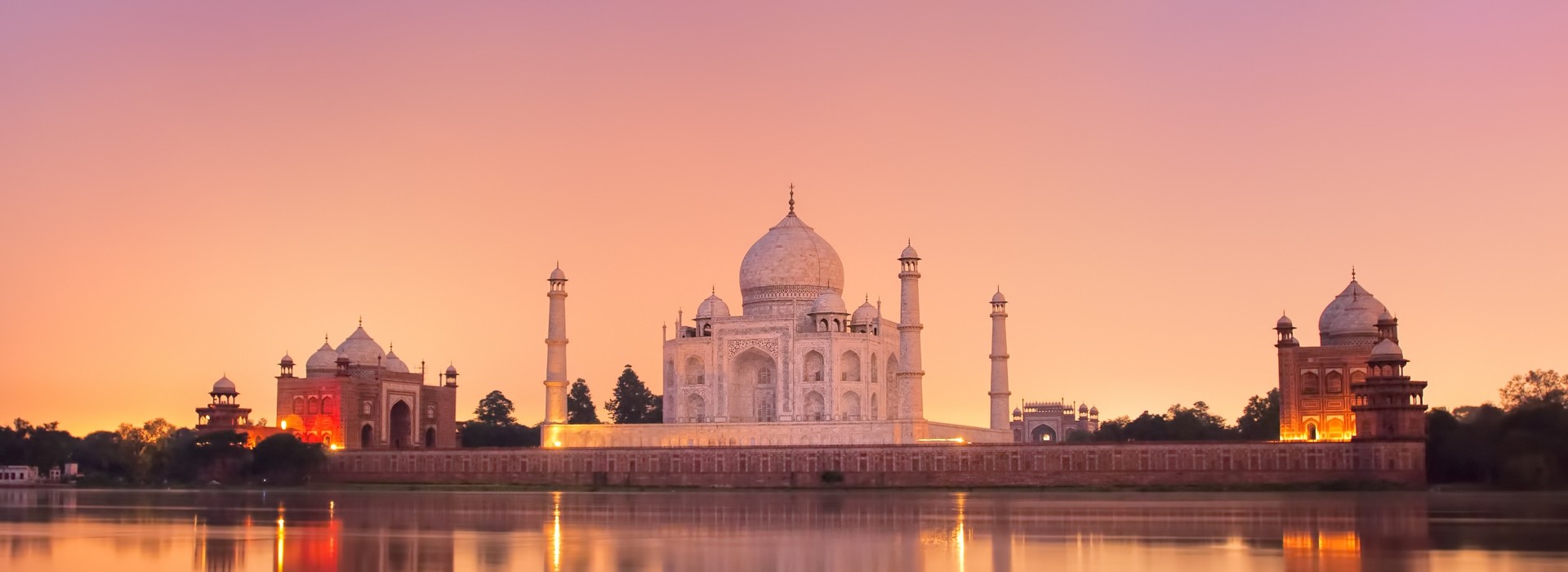
A Taj Mahal tour is the classic way to see India’s most famous monument: a sunrise visit to the marble mausoleum in Agra, usually combined with Agra Fort and a sunset view from Mehtab Bagh across the Yamuna. Most tours run same-day from Delhi or overnight in Agra, and a good tour comes down to timing, tickets and the order of stops.
Key Highlights
- The Taj Mahal is a marble mausoleum built by Shah Jahan for Mumtaz Mahal, on the Yamuna’s south bank in Agra.
- Entry costs ₹50 (Indian), ₹1,100 (foreign) and ₹540 (SAARC/BIMSTEC), with a ₹200 main-mausoleum add-on.
- The monument is closed every Friday, and ticket windows open an hour before sunrise and close 45 minutes before sunset.
- October to March is the best season, with sunrise the best time of day for light and smaller crowds.
- Same-day Delhi tours run by car on the Yamuna Expressway or by Gatimaan Express in about 100 minutes each way.
Why the Taj Mahal Still Stops Travellers
Commissioned in 1632 by Shah Jahan for Mumtaz Mahal, the main mausoleum was completed around 1648 and the full complex by 1653. It is built of white Makrana marble, inlaid with pietra dura floral work, and set in a Charbagh garden of four quarters. The dome rises about 73 metres, and the four minarets, roughly 40 metres tall, tilt slightly outward by design.
The tombs in the main chamber are cenotaphs; the real graves lie in a crypt below, closed to the public. More than 20,000 workers are traditionally credited with the build, and the timeline is unsettled: guides give 17, 20 or 22 years depending on whether they count the mausoleum alone or the whole complex.
Two popular stories are lore, not history: the Black Taj Mahal, a supposed black-marble twin across the river, has no archaeological support, and the tale of 1,000 elephants hauling marble is a storyteller’s number. The monument needs no embellishment.
Which Taj Mahal Tour Type to Choose
The same-day Delhi tour by car is the most common option: the Yamuna Expressway takes 3 to 4 hours each way, so the day is long but flexible. The Gatimaan Express same-day tour is faster, about 100 minutes each way, and suits travellers who prefer a fixed schedule.
A sunrise tour is best for photographers and for anyone who wants the monument at its quietest: arrive at the gate before dawn for the first hour’s light. An overnight or two-day Agra tour is the most relaxed option, adding Agra Fort, Mehtab Bagh at sunset and the Baby Taj without rushing.
The Golden Triangle tour, Delhi to Agra to Jaipur over three or more days, is the right frame for a first trip to north India, putting the Taj Mahal in context with Delhi’s sights and Jaipur’s forts and palaces. For the wider picture, our guide to India tourism facts and statistics puts Agra among the country’s most visited destinations.
Taj Mahal Tickets, Timings and Rules
From the official tajmahal.gov.in ticketing page: ₹50 for Indian visitors, ₹1,100 for foreign visitors, ₹540 for SAARC and BIMSTEC visitors. The main mausoleum costs an extra ₹200 for all, taking totals to ₹250, ₹1,300 and ₹740. Children under 15 enter free. Discounts claimed by some guides do not appear on the official page.
The Taj Mahal is closed every Friday. On open days, ticket windows open an hour before sunrise and close 45 minutes before sunset, and visiting hours run from 30 minutes before sunrise to 30 minutes before sunset. Night viewing runs five nights a month around the full moon, except Fridays and during Ramadan, from 8:30 PM to 12:30 AM in 30-minute batches. Guides report a cap of about 400 a night, but prices vary and are absent from the official page, so book through official channels.
Photography is not allowed inside the main mausoleum, and drones are prohibited. The last stretch to the gates is on foot or by electric shuttle. Allow 2 to 3 hours inside, and carry water in the warmer months.
How to Reach Agra
By Air
Agra Airport is about 12 km away, with limited flights. Most travellers arrive via Delhi airport, about 220 km away, and continue by road or train.
By Train
The Gatimaan Express takes about 100 minutes and is the fastest rail option. Other trains, including the Shatabdi Express, also connect the cities, and Agra Cantt is the main station.
By Road
The Yamuna Expressway connects Delhi and Agra in 3 to 4 hours by car. Private cars and coaches are the standard same-day choice. Local traffic near the monument can be slow, so build in buffer time.
Best Time to Visit the Taj Mahal
October to March is the best season: pleasant days, usually clear skies, and the marble at its best in soft winter light. Sunrise is the best time of day, with thinner crowds, warm light and a calm the midday hours never have.
December and January fog can hide the dome until late morning. Summer, April to June, runs above 40°C; book the earliest slot and finish by late morning. February adds the Taj Mahotsav festival, a ten-day cultural fair.
What to Combine with the Taj Mahal
Agra Fort, about 2.9 km away, is the essential second stop: a red sandstone fort-palace where Shah Jahan was imprisoned by Aurangzeb, with Taj views from its balconies. Itimad-ud-Daulah, the Baby Taj about 6.7 km away, is a smaller jewel-box tomb whose pietra dura work foreshadows the Taj itself. Mehtab Bagh across the Yamuna is the sunset viewpoint, and Akbar’s Tomb at Sikandra, about 14.8 km away, adds a third Mughal layer.
Fatehpur Sikri, the abandoned Mughal capital, is the classic full-day extension, though published distances disagree between about 37 km and 41 km, so confirm the route with your driver. Travellers who want more Agra depth can read our guide to Agra tour facts, Taj Mahal timings and the best time to visit.
One day, in order: Taj at sunrise, Agra Fort before lunch, Baby Taj in the afternoon, Mehtab Bagh at sunset.
Agra’s markets reward an hour after the monuments: marble inlay workshops and petha sweet shops.
Mughal architecture lovers heading east can read our guide to Chhota Imambara in Lucknow, another 19th-century monument built in the Mughal tradition.
With a second day, the gardens and riverfront beyond Mehtab Bagh offer quieter walks.
Golden Triangle travellers continuing to Jaipur will find the city’s temple and palace circuit a natural next chapter. Our guide to Galtaji Temple in Jaipur covers the monkey temple complex in the Aravalli hills outside the city.
Practical Tips for a Taj Mahal Tour
Book tickets online from the official site, and arrive at the gate before your slot: security checks take time. Wear comfortable shoes, since the walk from the shuttle drop to the main platform is longer than most visitors expect. Carry water and sun protection, and keep bags small.
Use a licensed guide at the gate or through your operator: one hour covers symmetry, inlay and river setting, leaving free time for the gardens. On a same-day Delhi tour, confirm the return time before entering.
A Taj Mahal tour works best unrushed: sunrise entry, Agra Fort before lunch, Mehtab Bagh at sunset if you stay overnight. Book the Gatimaan Express or an early car, and check the Friday closure.
Frequently Asked Questions
Is the Taj Mahal closed on Friday?
Yes, the Taj Mahal is closed every Friday, all year. On open days, ticket windows open an hour before sunrise and close 45 minutes before sunset, with visiting hours from 30 minutes before sunrise to 30 minutes before sunset. Avoid booking a same-day Delhi trip on a Friday.
How much does a Taj Mahal ticket cost?
A Taj Mahal ticket costs ₹50 for Indian visitors, ₹1,100 for foreign visitors and ₹540 for SAARC and BIMSTEC visitors, per the official tajmahal.gov.in ticketing page. The main mausoleum costs an extra ₹200 for all categories. Children under 15 enter free.
What is the best time to visit the Taj Mahal?
October to March is the best time to visit, and sunrise is the best time of day: soft light, thinner crowds, comfortable temperatures. December and January fog can delay the sunrise view, while summer above 40°C makes midday visits punishing. Book the earliest slot if you must visit in summer.
How do I get from Delhi to Agra for a Taj Mahal tour?
The fastest way is the Gatimaan Express train, about 100 minutes each way. By road, the Yamuna Expressway takes 3 to 4 hours each way. Same-day tours use either option; overnight tours avoid the return journey. Agra Airport is about 12 km away, but most travellers arrive via Delhi.
Which Taj Mahal tour type should I choose?
Choose a sunrise tour for photography and quiet: the first hour has the best light and thinnest crowds. Choose a same-day Gatimaan tour for speed, a same-day car tour for flexibility, an overnight tour for Agra Fort, Mehtab Bagh and the Baby Taj without rushing, and a Golden Triangle tour for a first trip to north India.
Can I see the Taj Mahal at night?
Night viewing runs five nights a month around the full moon, except Fridays and during Ramadan, from 8:30 PM to 12:30 AM in 30-minute batches. Guides report a cap of about 400 a night, but prices vary and are absent from the official page. Book through official channels.
Weather
[location-weather id="5549"]