
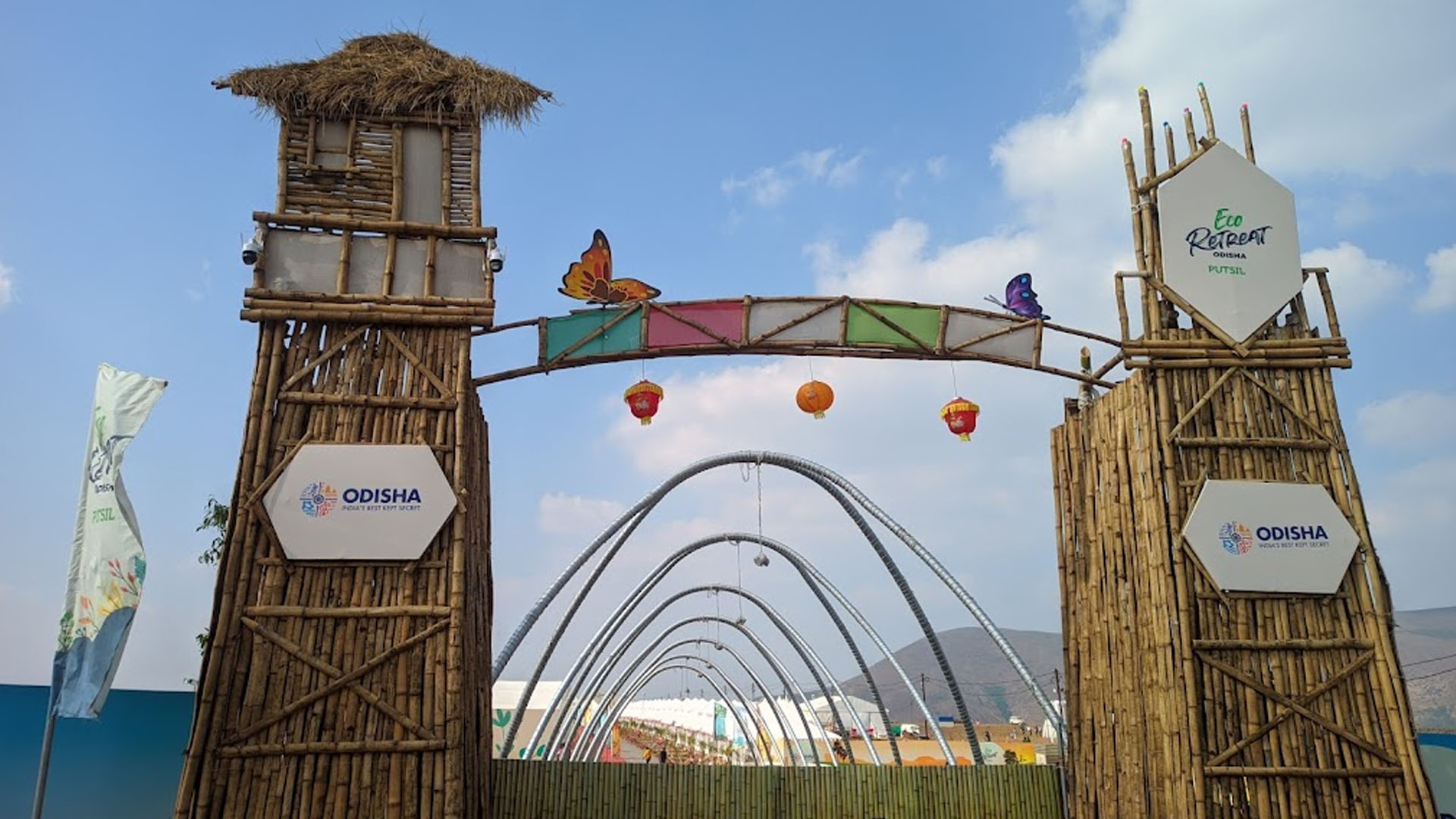
Putsil Mountain Point Koraput is a hill viewpoint and eco-tourism retreat in Odisha’s Koraput district, often called the “Switzerland of Odisha” for its rolling meadows, layered ridges and a valley that fills with mist on winter mornings. Barely a kilometre from Pendajam village and roughly 40 km from Koraput town, this broad Eastern Ghats plateau offers a 360-degree sweep of hills, coffee gardens and waterfalls
Key Highlights
- Sweeping hill-valley views: Putsil’s flat-topped plateau overlooks layer upon layer of Eastern Ghats ridges around Koraput.
- Winter “carpet of clouds”: On clear, cold winter mornings the valley floor below the viewpoint fills with mist, lying under a sea of cloud.
- Eco Retreat glamping: The Odisha Tourism Department runs an annual winter Eco Retreat at Putsil with tented stays, a watchtower, treks and cultural programmes.
- Easy access: About 40 km from Koraput town and 21 km from Sunabeda by road, Putsil works as a day trip or a relaxed overnight stop on a Koraput circuit.
- Tribal highlands all around: The route passes coffee plantations, seasonal waterfalls and Gadaba and Paraja tribal villages along the route.
What Makes Putsil Mountain Point Special
Putsil is not a single peak but a broad highland plateau. Local reports put its elevation at roughly 1,300 metres above sea level, and its flat-topped ridges look out over the Eastern Ghats in every direction.
Between November and February, cold air settles into the valley overnight, and travellers who reach the viewpoint just after sunrise often find the valley below hidden under a thick blanket of fog — the famous carpet of clouds. Winter is also picnic season: families from Koraput, Jeypore and Sunabeda drive up on weekends, while the rest of the year Putsil stays quiet, a favourite with trekkers, birdwatchers and photographers.
How to Reach Putsil Mountain Point
Koraput town is the natural base. The drive via Semiliguda and Sunabeda passes coffee estates and tribal hamlets — allow extra time for the winding final stretch.
By Air
The nearest airport is Jeypore Airport, roughly 70 km away — a small regional airport operating short hops to and from Bhubaneswar and Visakhapatnam under the government’s regional connectivity scheme. Schedules on these small sectors change often, so verify timings first. For wider connectivity, Visakhapatnam International Airport, about 200 km away, has regular flights to most Indian metros, with a four-to-five-hour drive via the Araku ghats.
By Train
The nearest major railhead is Koraput Railway Station, about 40–45 km from Putsil, linked to Bhubaneswar, Visakhapatnam, Kolkata and Jagdalpur — overnight trains such as the Hirakhand Express make Bhubaneswar an easy start. The smaller Similiguda station, roughly 22 km away, serves the scenic Vizianagaram–Kirandul line from Visakhapatnam. Taxis and buses connect both stations to Sunabeda and Putsil.
By Road
By road, Putsil is about 1 km from Pendajam, 21 km from Sunabeda and 40 km from Koraput town — roughly an hour to ninety minutes via NH-26. Buses and shared jeeps run between Koraput, Semiliguda and Sunabeda, but a taxi or your own vehicle is far better for the final stretch. From Visakhapatnam it is roughly 200 km (about four and a half hours); from Bhubaneswar around 500 km, best done overnight with a break at Koraput.
Best Time to Visit Putsil Mountain Point
October to February is the best time to visit Putsil Mountain Point. Post-monsoon skies are clear, winter mornings deliver the carpet of clouds, and the seasonal Eco Retreat operates in these months. March to June is quieter with good visibility. The monsoon (June to September) turns the valley deep green and swells the seasonal waterfalls, but ghat roads can be slippery and mist can cut visibility — drive carefully and carry rain gear.
Things to Do at Putsil Mountain Point
Sunrise and sunset. The plateau’s open ridges face both east and west. Arrive before dawn for the cloud-valley effect at sunrise; sunset brings long golden light across the ridges.
Ridge walks and nature trails. Gentle trails run along the plateau through meadows and forest patches. Local guides can lead short ridge walks or longer jungle trails where hornbills and butterflies are spotted in season.
Photography and stargazing. Layered ridgelines, morning mist and valley villages make Putsil a fine photography spot; on clear winter nights the plateau is excellent for stargazing.
Winter picnics and camping. Putsil is among the region’s most popular winter picnic spots. Campers should carry warm clothing — winter nights at this altitude get genuinely cold.
Adventure sports at Deomali. Paragliding and hang-gliding trials have been held at nearby Deomali, Odisha’s highest peak. Check with local operators for the current season’s availability before counting on a flight.
The Putsil Eco Retreat
Every winter the Odisha Tourism Department sets up the Putsil Eco Retreat on the plateau — a seasonal glamping camp that has become the region’s flagship winter attraction. It typically runs from mid-November to February with around 25 tents, a watchtower, guided treks, yoga, bonfires and cultural programmes by local artists.
Bookings go through the official Eco Tour Odisha portal; the 2026 season’s dates and tariffs are announced a few weeks before winter opens and vary by package. Even without an overnight stay, the watchtower and cultural programmes are worth timing your visit around — just confirm the operating dates for the current winter before you travel.
Nearby Places to Visit in Koraput
Putsil fits neatly into a two- or three-day Koraput circuit:
Deomali (about 35 km north). At 1,672 metres, Deomali is the highest peak in Odisha, with a motorable road near the summit and famous sunrise views.
Duduma Waterfalls. One of Odisha’s most spectacular waterfalls, plunging down the Machkund river in a horseshoe gorge on the Odisha–Andhra border — most powerful just after the monsoon.
Kolab Dam and Botanical Garden. Roughly 18 km from Koraput town, the Kolab reservoir offers boating, picnic lawns and a botanical garden — an easy half-day add-on.
Tribal Museum, Koraput. The Tribal Museum at Pujariput, Koraput is the best introduction to the region’s indigenous cultures — art, crafts, musical instruments and daily life.
Gupteswar Cave Temple. A revered Shiva shrine inside a limestone cave deep in the forest, reached by a short woodland climb.
Balda Cave and Hill Station. The Balda Cave, Pond and Hill Station pairs a cave, a still pond and hilltop viewpoints known for their sunsets.
Sunabeda and coffee country. Sunabeda, 21 km from Putsil on the main route, is the gateway town; the Sunabeda HAL Museum is a quirky stop, and the surrounding estates grow Koraput’s famous shade-grown Arabica coffee.
Mauli Maa Temple, Manyamkonda. The Mauli Maa Temple at Manyamkonda is an important Shakti shrine in the Koraput hills for travellers adding a pilgrimage stop to the circuit.
For the coast end of an Odisha trip, see our guides to Chandipur Sea Beach and Paradeep Sea Beach.
Travel Tips for Putsil Mountain Point
- Start early. The carpet-of-clouds effect is a morning phenomenon — leave Koraput or Sunabeda well before sunrise in winter.
- Carry warm layers and cash. Winter mornings on the plateau are cold, and the last stretch has few ATMs — fill fuel at Koraput or Sunabeda and carry enough cash for taxis, food and small purchases.
- Pack food and water. Carry water and snacks — eateries near the viewpoint are limited and seasonal.
- Respect tribal villages. Ask before photographing people, buy coffee and handicrafts directly from villagers, and stick to marked trails.
- Drive ghat roads carefully. The winding climb is scenic but narrow in places — avoid night driving and slow down in mist.
Frequently Asked Questions
Where is Putsil Mountain Point and how far is it from Koraput town?
Putsil Mountain Point is in the Koraput district of Odisha, about 1 km from the village of Pendajam and 21 km from Sunabeda. It lies roughly 40 km from Koraput town — a drive of about one to one and a half hours via Sunabeda and the Pottangi hills.
What is the best time to visit Putsil Mountain Point?
October to February is best: winter mornings bring the famous carpet of clouds, the weather suits trekking and picnics, and the Eco Retreat operates in these months. March to June is quieter with good visibility, while the monsoon (June to September) is lush but can make ghat roads slippery.
What are the nearest airport and railway station to Putsil?
The nearest airport is Jeypore Airport, about 70 km away, handling small regional flights; Visakhapatnam International Airport, about 200 km away, offers wider connections. The nearest major railway station is Koraput Junction, roughly 40–45 km away, with the smaller Similiguda station about 22 km away.
What is the Eco Retreat at Putsil and how do I book a stay?
The Putsil Eco Retreat is an annual winter glamping camp run by the Odisha Tourism Department, usually from mid-November to February. It offers around 25 tented stays on the plateau, a viewing watchtower, guided treks, yoga, bonfires and cultural programmes. Book through the official Eco Tour Odisha portal; the 2026 season’s dates and tariffs are announced shortly before winter begins.
Can I do paragliding at Putsil Mountain Point?
Paragliding is not a regular commercial activity at Putsil itself, but paragliding and hang-gliding trials have been held at nearby Deomali, Odisha’s highest peak. Check with local operators at Deomali for the current season’s availability before your trip.
Which places can I combine with Putsil on a Koraput trip?
Putsil combines well with Deomali, Duduma Waterfalls, the Kolab Dam, the Tribal Museum at Koraput, Gupteswar Cave Temple, Balda Cave and the Sunabeda coffee estates — a comfortable two- to three-day Koraput circuit.
Weather Putsil Mountain Point
[location-weather id="5549"]