
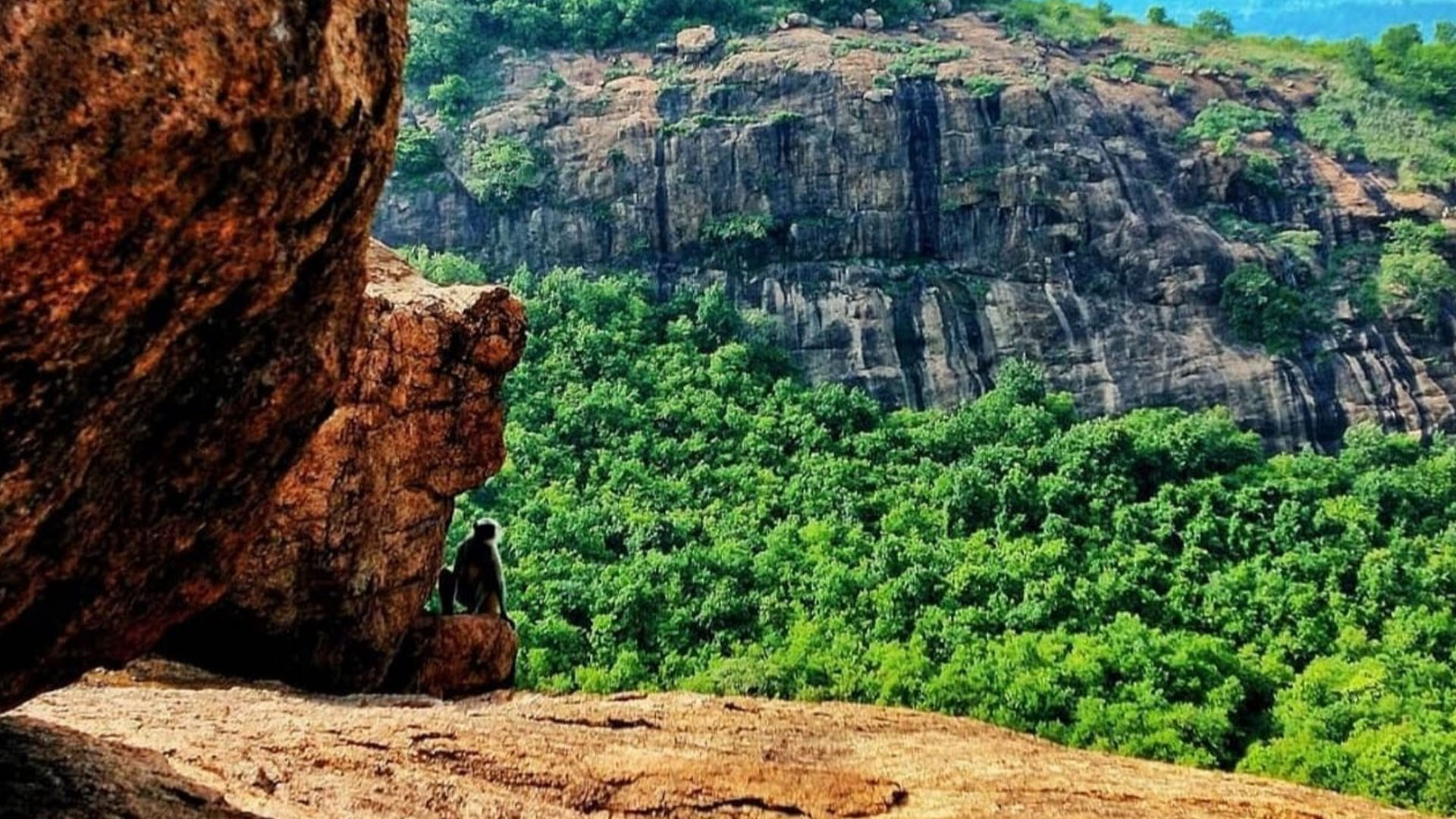
Podagada Hill Station sits 11 km from Umerkote in Nabarangpur district, a quiet hill fort that once served as the capital of the Nala dynasty. Forest trails, old stonework and a small clutch of temples share one steep ridge, so a single morning here covers history, views and a short trek. This guide sets out what to see, how to reach the site and when to go.
Key Highlights
- Nala dynasty capital, traditionally identified as Pushkari, with a 4th to 6th century CE fort.
- July 2026 survey by the National Monuments Survey of India recorded its temples, stones and caves.
- Punjisil waterfall, about 5 km away, fits the same morning.
- Shrines to Bhairava stand on and around the hill.
- Umerkote, 11 km away, is the base; Jeypore station is roughly 110 km.
The Nala Dynasty and Podagada’s Past
Podagada stands in Bhandariguda Gram Panchayat in Umerkote Block, about 78 km from Nabarangpur town and 11 km from Umerkote. The hill holds the remains of a fortified Nala dynasty settlement, from the 4th to 6th centuries CE, when the Nalas ruled the Bastar, Koraput and Kalahandi region. Broken pillars, pottery and gateway traces still lie on the slopes.
Three Nala kings are named in the record: Arthapati, Bhavadatta and Skandavarman. Skandavarman’s stone inscription at Podagada records him settling people again in the deserted city of Pushkari and building a Vishnu temple there. It is the strongest written link between the hill and the Nala court.
The Pushkari link is not settled. Older scholarship, including historian G. Ramdas, who surveyed the site in the middle of the last century, treats Podagada as Pushkari. Later research places Pushkari at Garhdhanora in Bastar district, Chhattisgarh. So Podagada is traditionally identified as Pushkari, and the debate is part of the visit. A group of 34 memorial stones found in the region points to old military struggles here.
What to See at Podagada
The fort is the main sight, and it rewards a slow climb. The Upper Fort Hill, known as Uppergarh, holds the clearest remains: broken sculpture, carved stone and old walling. Look for the stone slab staircase and the gateway traces on the way up.
Fresh attention came in July 2026, when a team from the National Monuments Survey of India visited after a letter to the President of India from Dr Kailash Chandra Behera of the Podagada Sebayat Charitable Trust. The team recorded the Gunduru Bhairava Temple, Uppergarh, the Elephant-Binding Stone (Hatibandha), the Lekhani Stone, rice-pounding pits, the Gadi Maa Temple, Devara Paika’s bow, the Kala Bhairava Temple, the Yogi Cave and the Twelve Stone Chariot Wheels, plus the Twelve-Armed Goddess near the Durdani Temple and an inscription at B.S. Padar.
The king’s ceremonial sword and shield are kept at the Chauria Temple, and sculptures from the site sit in a small local museum, so ask locally before you climb. The collection is modest, and it sets the carvings on the hill in context. For more on the region’s tribal art, stop at the Tribal Museum at Pujariput in Koraput, which frames the craft and culture of these hills.
Punjisil Waterfall, About 5 km Away
Punjisil waterfall sits about 5 km from Podagada, and it is the easiest addition to the trip. The fall runs best after rain, when the stream fills and the rocks turn green. Pair it with the fort in a single morning from Umerkote.
Bhairaba Temple and the Hill Shrines
Shrines to Bhairava stand on and around the hill, and sources disagree on whether the main shrine sits at the foot or at the summit, so expect more than one shrine. The shrines honour Lord Shiva in his Bhairava form, and pilgrims visit through the year. The Gunduru Bhairava Temple and the Kala Bhairava Temple, both recorded in the July 2026 survey, are the two to ask for by name.
Trekking and Nature
Forest trails wind from the base through deciduous forest to the fort remains, and the walk suits beginners fit for a steady climb. Birdlife, butterflies and valley views open up as the path rises. Start early, wear shoes with grip, and carry water.
The walk is short, so it pairs well with a longer stay in the southern Odisha hills. For a full forest break after Podagada, head for Belghar Nature Camp in Kandhamal, where the forest stay is the point of the trip. Podagada gives history on a forested hill; Belghar gives deep forest and a slower pace.
How to Reach Podagada
Umerkote is the base. It lies 11 km from Podagada, and buses, autos and hired cars run from the town. Allow a full day from a station or airport.
By Air
The nearest airport listed by local guides is Biju Patnaik International Airport in Bhubaneswar, about 408 km away by road. Most visitors fly there and travel on by train or road, or break the journey with a night stop.
By Train
Nabarangpur town has no railway station, despite what older guide pages claim. The nearest station is Jeypore, roughly 110 km from Podagada via Umerkote, though the exact distance is not published. Jeypore has trains on the Koraput to Jagdalpur to Visakhapatnam line, and buses cover the Jeypore to Umerkote stretch in about three hours.
By Road
By road, Umerkote is the practical base, with its bus stand 11 km from the hill. Buses from Nabarangpur town and Jeypore reach Umerkote, and a local bus, auto or hired car covers the last stretch. Drive in daylight, since evening transport is thin.
Best Time to Visit Podagada
October to March is the best time to visit, when the weather is cool and dry and the trails are firm. The monsoon turns the forest green, but the stone steps get slippery. The dry months also suit the coast, so travellers who want a beach finish can head for Bateswar sea beach and temple in Ganjam after the hills.
Where to Stay Near Podagada
Stay in Umerkote to be close to the hill: it is 11 km away and has budget hotels and homestays. Nabarangpur town, about 78 km away, has more choice and works if you are touring the district.
Do not expect resorts or campsites at the hill itself. Podagada is a day trip site, with simple town hotels and homestays. A night in Umerkote with an early start is the simplest plan.
Travel Tips for Podagada
Local listings quote opening hours of roughly 10 am to 5 pm, though some give 6 pm, so treat the timing as indicative for an open hill site. No entry fee is published for Podagada, so do not rely on a figure from an old guide. Carry cash, water and snacks.
Respect the shrines and the local tribal communities, and take your litter back, since the site has no formal upkeep. With an extra day, the coast makes a good next stop: Dagara sea beach in Balasore offers a quiet stretch of sand after the hills.
Conclusion
Podagada is worth the trip for the Nala history alone, and the forest walk and waterfall make it a full morning out. Base yourself in Umerkote, climb early, and add Punjisil waterfall before you head back. Go in the cool months, and you will see the site at its best.
Frequently Asked Questions
How far is Podagada from Umerkote and Nabarangpur town?
Podagada is 11 km from Umerkote and about 78 km from Nabarangpur town. Umerkote is the practical base, with its bus stand 11 km from the hill, while Nabarangpur town suits travellers touring the wider district. Allow extra time for the last stretch.
What is the Nala dynasty connection with Podagada?
Podagada is traditionally identified as Pushkari, the capital of the Nala dynasty, which ruled this region in the 4th to 6th centuries CE. Skandavarman’s inscription records him settling people again in the deserted city and building a Vishnu temple. The identification is contested, so treat it as the traditional view, not settled fact.
Which is the nearest railway station to Podagada?
Jeypore is the nearest railway station, roughly 110 km from Podagada via Umerkote. Nabarangpur town has no railway station, despite what older guide pages claim. The exact distance is not published, so treat the figure as approximate, and allow about three hours by bus from Jeypore to Umerkote.
Is there an entry fee for Podagada Hill Station?
No entry fee is published for Podagada in any source checked, so no fee can be stated with confidence. Local listings quote indicative opening hours of roughly 10 am to 5 pm, though some give 6 pm. Treat both as guidance for an open hill site, and carry cash in case local charges apply.
What did the July 2026 heritage survey find at Podagada?
A team from the National Monuments Survey of India recorded temples, stones and caves across the site in July 2026. Its inventory includes the Gunduru Bhairava Temple, Uppergarh, the Hatibandha stone, the Lekhani Stone, rice-pounding pits, the Kala Bhairava Temple, the Yogi Cave and the Twelve Stone Chariot Wheels. Sculptures from the site are held in a small local museum.
When is the best time to visit Podagada?
October to March is the best time to visit Podagada, when the weather is cool and dry and the trails are firm. The monsoon makes the forest green but leaves the stone steps slippery, so climb with care if you go then. Summer is hot, so start early and carry extra water.
Weather Podagada Hill Station & Fort
[location-weather id="5549"]