
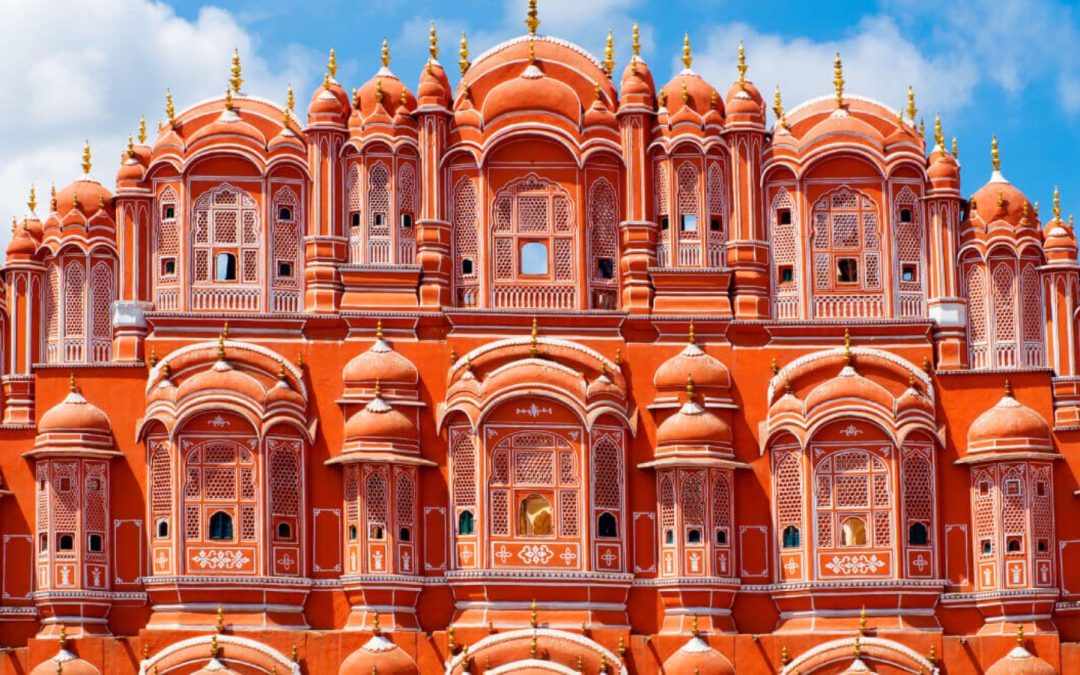
The best places to visit in Rajasthan are Jaipur, Udaipur, Jodhpur and Jaisalmer, with Pushkar, Ranthambore, Mount Abu, Kumbhalgarh, Bundi and Chittorgarh rounding out a first trip. This guide covers all ten, with what to see in each, the best time to go, and how to join them into one route.
Key Highlights
- Ten destinations that define Rajasthan: Jaipur, Udaipur, Jodhpur, Jaisalmer, Pushkar, Ranthambore, Mount Abu, Kumbhalgarh, Bundi and Chittorgarh.
- Jaipur has two UNESCO sites, Amber Fort and Jantar Mantar, and the Hawa Mahal with 953 windows.
- Best time to visit is October to March, with dry days of 18 to 28 degrees in the peak season.
- A first trip takes 5 to 7 days for Jaipur, Jodhpur and Udaipur, and 10 to 14 days for the full circuit with Jaisalmer and Pushkar.
- Rajasthan has six UNESCO-listed hill forts, the highest count of any Indian state.
1. Jaipur, the Pink City
Most Rajasthan trips begin in Jaipur. Maharaja Jai Singh II founded it in 1727 as India’s first planned city, and the walled old town was painted terracotta pink in 1876 to welcome the Prince of Wales.
Amber Fort is the main sight, a hilltop complex of courtyards, mirrored halls and elephant gateways overlooking Maota Lake. Hawa Mahal, with its honeycomb facade of 953 windows, once let royal women watch street life unseen. The City Palace, Jantar Mantar and Jal Mahal fill out the old city.
Jaipur’s temples are worth a morning of their own. Galtaji Temple, east of the city in a narrow valley, is a complex of temples and sacred water tanks where monkeys roam freely, so it is often called the Monkey Temple.
Two more temples sit inside the city itself. Moti Dungri Temple, dedicated to Lord Ganesha, stands on a small hill near the City Palace, and the climb is short.
Plan two to three days for Jaipur. That covers the fort, the palaces, the old city bazaars and a temple morning. The Kalki Temple, in the old city, is a small stop that fits into a walking tour of the lanes around the City Palace.
2. Udaipur, the City of Lakes
Udaipur is often called the most romantic city in India, and the claim holds up at sunset. The city is built around Lake Pichola, with the City Palace rising over the water and the Aravalli hills framing the view. The Lake Palace, now a hotel, sits on an island in the middle of the lake.
Take the sunset boat ride on Lake Pichola. The City Palace itself, one of the largest palace complexes in the country, needs two to three hours, and the Crystal Gallery and the vintage car museum are the two extras worth the ticket.
3. Jodhpur, the Blue City
Jodhpur takes its nickname from the indigo-painted houses that spread out below Mehrangarh Fort, one of India’s largest and most imposing forts. The fort sits on a rocky hill above the old town.
Inside the fort, the museum holds royal palanquins, arms and miniature paintings. Jaswant Thada, the white marble memorial below the fort, is the quiet counterpoint. Umaid Bhawan Palace, part hotel and part museum, shows the last great palace built by a princely state.
Allow two days. One day covers the fort and the old city, and the second takes in Mandore Gardens, Rao Jodha Desert Rock Park and the blue lanes themselves.
4. Jaisalmer, the Golden City
Jaisalmer rises from the Thar Desert in yellow sandstone, and its fort glows gold at sunset. The Jaisalmer Fort is one of the few living forts in the world, with families, shops and temples still inside its walls, and it is a UNESCO World Heritage Site.
The real draw is outside the city: the Sam Sand Dunes, about 40 km away, offer camel safaris, jeep safaris and overnight desert camping under some of the clearest night skies in India.
Allow two to three days. One day for the fort and the old city, and a second for the dunes and a desert night.
5. Pushkar
Pushkar is a small town built around a sacred lake, and it feels very different from the fort cities. The Brahma Temple here is one of the very few temples in the world dedicated to Lord Brahma.
The Pushkar Camel Fair, held in November, is the town’s big event. Traders bring thousands of camels and horses, and the fair adds folk music, dance and a carnival atmosphere to the town.
Pushkar sits about 15 km from Ajmer, and most visitors stop here on the way between Jaipur and Udaipur.
6. Ranthambore National Park
Ranthambore is the best place in Rajasthan to see a Bengal tiger in the wild, and it is one of the most famous tiger reserves in India. The park spreads around a 10th-century fort in the forest.
Safaris run in the morning and afternoon from October to April, and the October to April window is also the best time for sightings. Book the safari and the stay well ahead, because permits sell out in the peak season, and choose a registered operator or book through the forest department’s own system.
Allow one to two days, with two safaris if you can.
7. Mount Abu
Mount Abu is the only hill station in Rajasthan, and it is the escape the state offers from its own summer heat. The Dilwara Temples, Jain temples carved in white marble, are the main reason to come, and the carving inside is among the finest in India.
Nakki Lake, the town’s centre, suits an evening boat ride and a walk around the shore.
Mount Abu works from March to June, when the plains are hot, and again from September to November. Allow one to two days.
8. Kumbhalgarh
Kumbhalgarh Fort has the second-longest wall in the world, 36 km of it, after the Great Wall of China. The fort sits in the Aravalli hills, and the wall runs over the ridges around it. It is a UNESCO World Heritage Site, and it is the fort where Maharana Pratap was born.
The climb to the top is steep but the view over the hills is the reward. Kumbhalgarh is less visited than the big forts, so it stays quiet even in the peak season.
9. Bundi
Bundi is the hidden gem of Rajasthan, and it is the town to choose if you want the state without the crowds. The Taragarh Fort rises over the town, and the stepwells below it, Raniji ki Baori and others, are among the finest in India.
The lake, the stepwells and the palace need a full day, and the town is small enough to cover on foot.
10. Chittorgarh
Chittorgarh Fort is the largest fort in India, a walled city on a hill that covers 700 acres. The Vijay Stambh, the Tower of Victory, rises nine storeys over the fort, and the Kirti Stambh, the Tower of Fame, stands nearby. The fort is linked to the legend of Rani Padmini and to the jauhar, the mass self-immolation of Rajput women.
Allow a full day. The fort is large, and a vehicle is the practical way to cover it, since the sights are spread across the hill.
Best Time to Visit Rajasthan
The best months to plan a trip in 2026 are October to March, when the days are dry and the daytime temperature sits between 18 and 28 degrees across the desert outposts and the lake cities. December and January are the coolest and the busiest, and hotel prices peak in those months.
April to June is hot, with desert temperatures crossing 40 degrees, and most travellers avoid it. The monsoon, July to September, brings rain to the south and east of the state. For the full picture, including month-by-month detail, see our guide to the best time to visit Rajasthan.
How to Plan Your Rajasthan Trip
Start with the circuits. The Eastern Heritage Triangle covers Jaipur, Ajmer and Pushkar. The Southern Lake Country covers Udaipur, Mount Abu and Chittorgarh. The Western Desert Belt covers Jodhpur, Jaisalmer and Bikaner. A standard first trip takes 5 to 7 days for Jaipur, Jodhpur and Udaipur by express train or road, and 10 to 14 days for the full circuit with Jaisalmer and Pushkar added.
For the rest, hire a car with a driver for the whole trip, which is the most flexible way to cover the distances between cities. For airports, trains and road routes, see our guide on how to reach Rajasthan.
Our list of things to do in Rajasthan adds the experiences, from desert camps to lake cruises, that turn the sightseeing into a trip.
Travel Tips for Rajasthan
Book forts and safaris ahead in the peak season, especially Ranthambore permits and desert camps at Jaisalmer. Dress for the sun: a hat, sunscreen and a water bottle are essential even in winter, because the desert sun is strong by midday.
Respect the dress code at temples and palaces, and remove shoes where asked. Bargain in the bazaars, but do it with a smile. The first price is rarely the last one, and a polite haggle is part of the experience.
Conclusion
Start with Jaipur, Udaipur, Jodhpur and Jaisalmer, add Pushkar and Ranthambore if you have the days, and save Mount Abu, Kumbhalgarh, Bundi and Chittorgarh for a second trip. Book the October to March window, and the state will do the rest.
Frequently Asked Questions
Which are the top places to visit in Rajasthan for a first trip?
Jaipur, Udaipur, Jodhpur and Jaisalmer are the easiest starting points for a first trip. Add Ranthambore if wildlife matters to you, or Pushkar if you want a smaller-town stop. Together these six cover forts, lakes, desert and temples in one route.
How many days are enough for Rajasthan?
Five to seven days cover Jaipur, Jodhpur and Udaipur by express train or road. Ten to fourteen days cover the full circuit with Jaisalmer and Pushkar, and a day each for Ranthambore and Mount Abu. Less than five days means choosing two cities and doing them properly.
What is the best time to visit Rajasthan?
The best time to visit Rajasthan is October to March, when the days are dry and the temperature sits between 18 and 28 degrees in the peak season. November is a good pick, with the Pushkar Camel Fair and pleasant weather. April to June is very hot, especially in the desert.
Which is the most beautiful city in Rajasthan?
Udaipur is usually called the most beautiful, for its lakes, palaces and Aravalli setting. Jaipur is the grandest, Jodhpur has the best fort view, and Jaisalmer has the most striking setting in the desert. Each city wins on a different count, so the answer depends on what you value.
Is Rajasthan safe for tourists?
Rajasthan is generally safe for tourists, including solo travellers and families, and the tourist cities have a long history of hosting visitors. Use the usual care: book registered transport, keep valuables out of sight in crowds, and confirm safari and camp prices before paying. Dial 112 in an emergency.
What should I not miss in Rajasthan?
Do not miss Amber Fort in Jaipur, the sunset boat ride on Lake Pichola in Udaipur, Mehrangarh Fort in Jodhpur, and a desert night at the Sam Sand Dunes near Jaisalmer. A tiger safari in Ranthambore and the Pushkar Camel Fair in November are the two extras worth planning a trip around.