
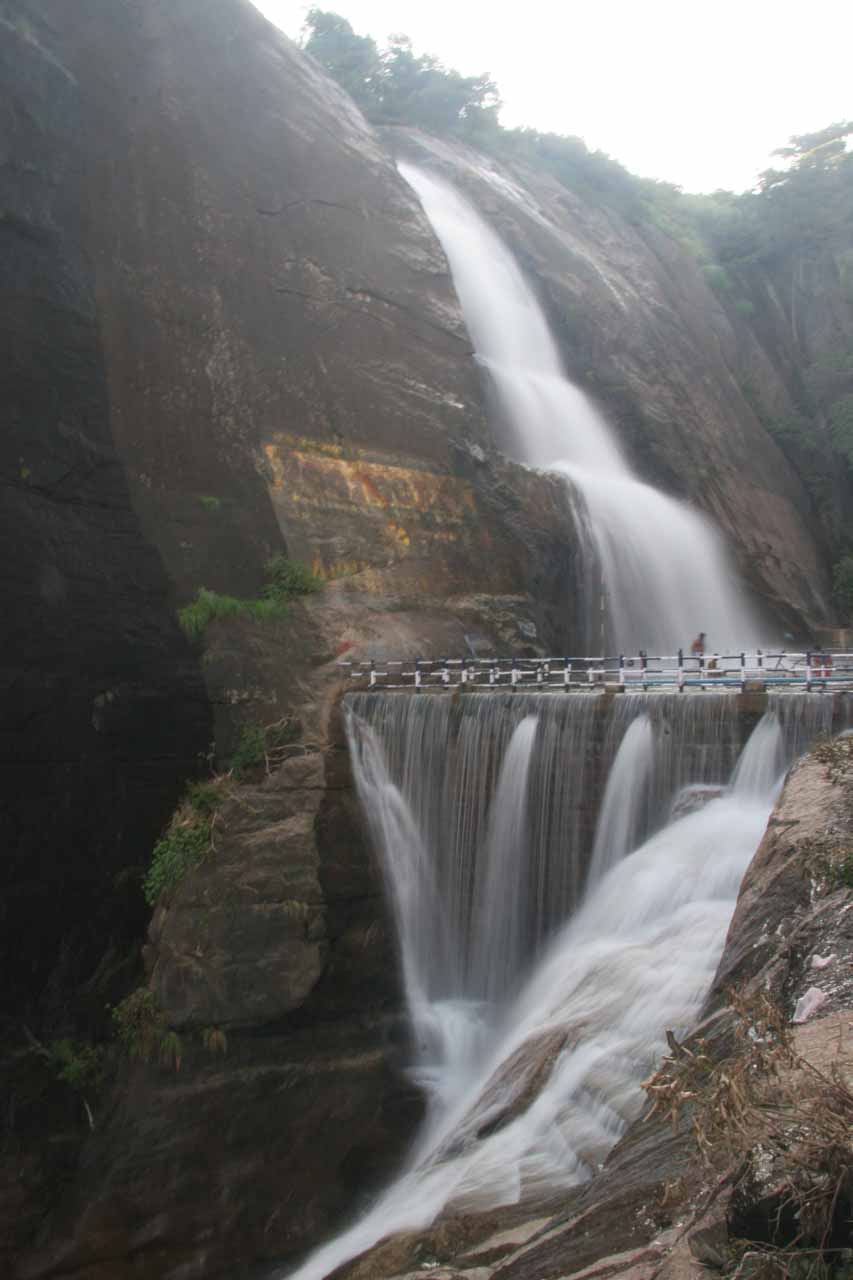
India has hundreds of waterfalls, but a small set draws the crowds year after year. This guide covers the most popular waterfalls in India, ten falls chosen for height, volume, setting and ease of visit, with the practical details you need to plan each one.
Key Highlights
- Ten falls across eight states, from Jog in Karnataka to Nohkalikai in Meghalaya.
- Nohkalikai (340 m) is the tallest plunge waterfall in India; Chitrakote is the widest.
- Best season is the monsoon and post-monsoon, from July to October, when rivers run full.
- Most falls charge a small entry fee; a few need forest permits or a jeep for the last stretch.
- Pair a waterfall with a nearby town stay, since most falls sit 30 to 100 km from the nearest city.
The 10 Most Popular Waterfalls in India
1. Jog Falls, Karnataka
Jog Falls drops 253 metres down the Sharavathi River in Shimoga district, and it is the second-highest plunge waterfall in India. The river splits into four streams, Raja, Rani, Roarer and Rocket, which fall together into a deep gorge. The viewpoint from the opposite bank gives the full picture, and the falls run strongest from July to October. Stay in Shimoga town or Sagara for the visit.
2. Dudhsagar Falls, Goa
Dudhsagar means sea of milk, and the name fits when the Mandovi River pours 310 metres down four tiers on the Goa-Karnataka border. The railway bridge that crosses the fall is part of the view, and the pool at the base is a popular swimming spot in the dry months. Reach it by jeep from Colem or by the forest trek, both of which close during heavy monsoon rain. More on the routes here: Dudhsagar Waterfall in Goa.
3. Nohkalikai Falls, Meghalaya
Nohkalikai drops about 340 metres from a clifftop near Cherrapunji, which makes it the tallest plunge waterfall in India. The water falls into a pool that turns blue in winter and green in summer, and the viewpoint sits a short walk from the parking area. Local legend says the fall is named for Likai, a woman who jumped from the cliff in grief. Cherrapunji is one of the wettest places on earth, so carry rain gear even in the dry months.
4. Athirappilly Falls, Kerala
Athirappilly is the largest waterfall in Kerala and the one most often called the Niagara of India. The Chalakudy River drops about 24 metres over a rock face nearly 100 metres wide in Thrissur district, and the spray fills the forest below. The falls sit inside a forested reserve, so you walk a paved path from the ticket counter to the viewpoints. The Vazhachal fall, a smaller cascade, lies a short drive away.
5. Chitrakote Falls, Chhattisgarh
Chitrakote is the widest waterfall in India. The Indravati River spreads about 300 metres across a horseshoe-shaped cliff in Bastar district during the monsoon, and the roar carries across the valley. It is also called the Niagara of India, and the comparison holds in full flow. Visit between July and October, and stay in Jagdalpur town, about 40 km away.
6. Hogenakkal Falls, Tamil Nadu
Hogenakkal sits on the Kaveri River at the Karnataka-Tamil Nadu border, where the river drops through a gorge of dark carbonatite rock. Coracle boat rides take visitors close to the base, and the ride is the reason most people come. The falls are open through the year, but coracles stop when the river runs high in the monsoon. The area is also known for fish cooked on the riverbank.
7. Kempty Falls, Uttarakhand
Kempty is the easiest fall on this list to reach. It sits about 15 km from Mussoorie on the road to Yamunotri, and the water drops in steps into a pool where visitors wade and bathe. The site is busy through summer, so arrive early if you want quiet water. The ropeway from the road gives a view over the whole cascade, and stalls along the path sell tea and snacks.
8. Courtallam Falls, Tamil Nadu
Courtallam is a group of nine falls in the Tirunelveli district hills, and locals call it the spa of the south. The water runs through forests of medicinal herbs, and people have bathed here for generations in the belief that it eases skin and nerve complaints. The main fall is the busiest, while Five Falls and Old Courtallam nearby stay quieter. The season runs from June to September with the southwest monsoon.
9. Shivanasamudra Falls, Karnataka
Shivanasamudra is where the Kaveri splits into two falls, Gaganachukki and Bharachukki, on either side of a rocky island near Mysuru. The two streams drop about 90 metres into a deep gorge, and the viewpoints on both banks give different angles. The site also has a place in history: one of Asia’s first hydroelectric power stations was built here in 1902. Visit from July to October, and pair it with a day trip from Mysuru.
10. Dhuandhar Falls, Madhya Pradesh
Dhuandhar sits on the Narmada River at Bhedaghat near Jabalpur, where the river forces through a narrow gap and drops about 30 metres. The name means smoke cascade, because the spray rises like smoke from the gorge. The marble rocks at Bhedaghat, white and pink cliffs on both banks, make the setting unusual, and boat rides run between them when the river is calm. The cable car across the gorge gives the best view.
Best Time to Visit Waterfalls in India
The monsoon and the months just after it, from July to October, are the best time to visit the most popular waterfalls in India in 2026. Rivers run at full volume, the falls are at their widest, and the forests around them turn green. That is also when crowds peak at the famous falls, so visit on weekdays if you can.
Winter, from November to February, suits travellers who prefer calmer water and clearer viewpoints. The falls are thinner, but the pools are safe for a dip and the paths are dry. Summer is the weakest season for most falls, except perennial ones like Jog and Athirappilly.
How to Plan a Waterfall Trip
Pick one region rather than chasing falls across the country. The Western Ghats cover Jog, Dudhsagar, Athirappilly and Shivanasamudra in one arc; the northeast covers Nohkalikai and the Cherrapunji falls; central India covers Chitrakote and Dhuandhar. Two or three falls in one region make a good four-day trip.
Book stays in the nearest town, since most falls have no hotels at the site. Shimoga for Jog, Colem or Mollem for Dudhsagar, Cherrapunji or Shillong for Nohkalikai, Chalakudy for Athirappilly, Jagdalpur for Chitrakote, and Jabalpur for Dhuandhar. Check the last stretch before you go: some falls need a forest jeep, a short trek or a boat, and those links close in heavy rain. For more waterfall ideas, see our guide to beautiful waterfalls in India.
Travel Tips for Waterfall Visits
Wear shoes with grip, since the rocks near every fall are wet and slippery, and keep phones and cameras in a waterproof pouch. Do not swim in pools without a local guide’s word, because currents below a fall can be strong even when the surface looks calm. Carry cash for entry tickets, parking and coracle rides, as many falls have no card machines. Odisha has its own waterfall country too: the Brahman Kund waterfall in Bangriposi, the Khandadhar waterfall and nature camp, the Rajgiri waterfall in Nayagarh and the Kapadgadi waterfall in Mayurbhanj all reward a monsoon visit.
Frequently Asked Questions
Which is the most popular waterfall in India?
Jog Falls in Karnataka is the most visited waterfall in India, drawing about a million visitors a year. Dudhsagar in Goa and Athirappilly in Kerala follow close behind, thanks to easy access and their place on the main tourist circuits.
Which is the tallest waterfall in India?
Nohkalikai Falls in Meghalaya, at about 340 metres, is the tallest plunge waterfall in India. Kunchikal Falls in Karnataka drops further in tiers, at about 455 metres, but Nohkalikai is the tallest fall where the water drops in a single plunge.
What is the best time to visit waterfalls in India?
July to October is the best time to visit waterfalls in India. The monsoon fills the rivers, and the falls run at their widest and loudest. Winter from November to February is the second-best season, with calmer water and dry walking paths.
Which waterfall is called the Niagara of India?
Athirappilly Falls in Kerala is the best-known Niagara of India, named for its broad, powerful curtain of water. Chitrakote Falls in Chhattisgarh is also called the Niagara of India, because of its width and horseshoe shape in full flow. Both names come from travel writing, not from any official title.
Is Dudhsagar Falls open throughout the year?
Dudhsagar Falls is open through the year, but the jeep route and the forest trek close during heavy monsoon rain, usually from June to September. The best months to visit are October to December, when the fall still runs strong and the routes are open.
Do I need a ticket to visit waterfalls in India?
Most popular waterfalls charge a small entry fee and a parking fee, usually between Rs 20 and Rs 100 per person. A few, like Dudhsagar and Athirappilly, add forest or jeep charges. Carry cash and an ID, and check the timings at the counter before you start the walk.
Start with the season, not the fall. Pick July to October for full flow, choose one region, and book your stay in the nearest town.
Weather
[location-weather id="5549"]