
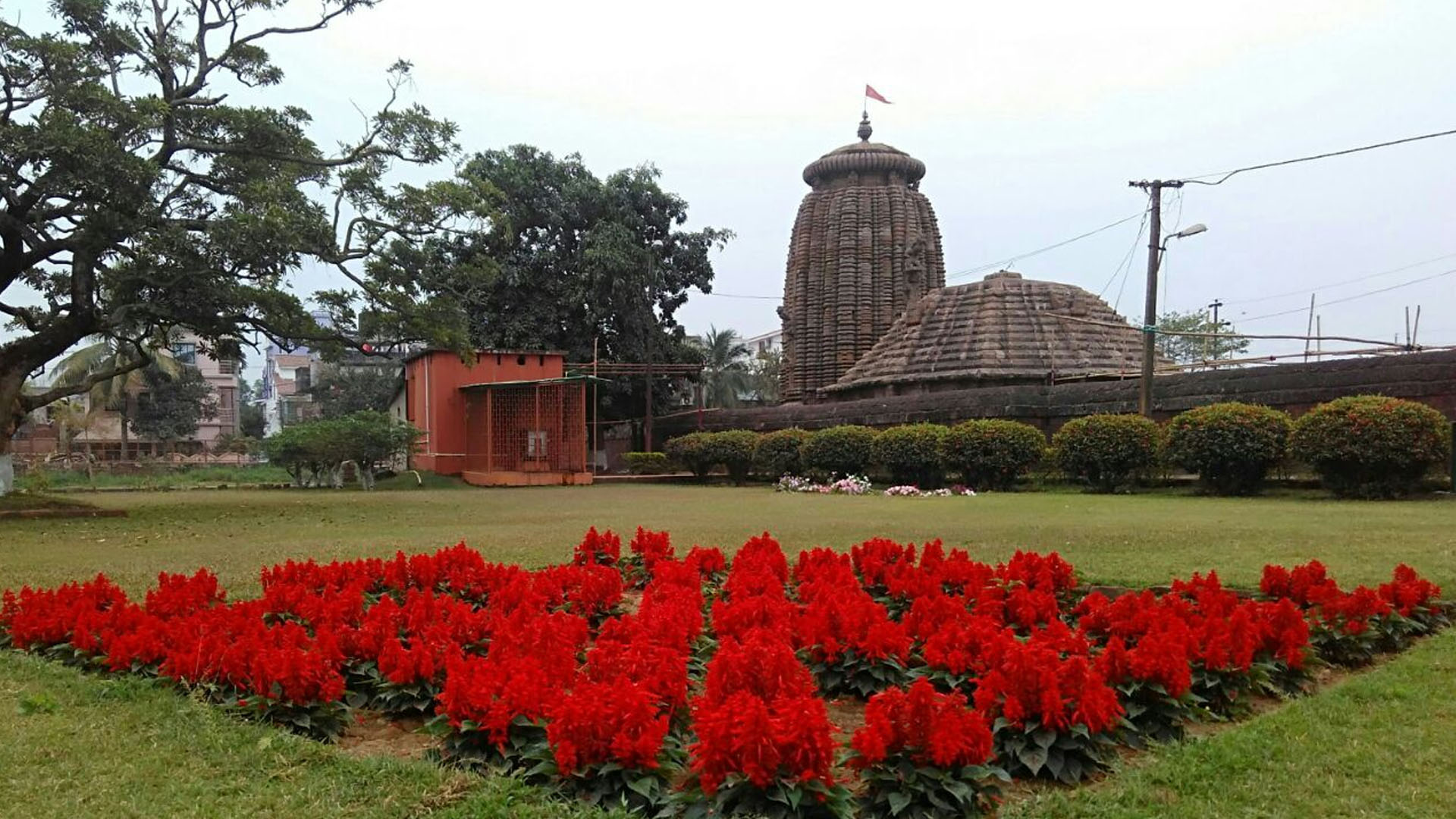
Megheswar Temple Bhubaneswar is a 12th century Shiva shrine on Tankapani Road in Odisha’s capital, known for its carved rekha tower, its Ganga period inscription and its calm, uncrowded courtyard. It is one of the finest small temples in the city for visitors who want old stonework without the crowds of the big shrines.
Key Highlights
- A 12th century Shiva temple in Bhubaneswar, built in the mature Kalinga style of Odisha.
- Named for Megheswar, the “Lord of the Clouds”, with the Shiva linga enshrined in the sanctum.
- Built at the instance of Svapnesvara, brother-in-law of Ganga King Rajaraja, in the reign of Anangabhima (1192 to 1195).
- Rekha vimana and pidha jagamohana on a sapta ratha plan, with carved panels of deities and mythological scenes.
- On Tankapani Road, about 1.5 km from Ravi Talkies square towards the Daya river, and counted among the city’s Astasambhu Shiva shrines.
History: correcting the old account
An earlier version of this post dated the temple to the 7th century and credited a merchant named Megheswar with building it. The inscription evidence points elsewhere. According to the inscription on the premises, the temple and the water tank near it came into existence at the instance of Svapnesvara, brother-in-law of the Ganga King Rajaraja, during the reign of Rajaraja’s brother Anangabhima, dated 1192 to 1195. Most modern guides therefore place the temple in the 12th century, under the Eastern Gangas, and that is the dating used here.
The name itself is straightforward: Megha means cloud, and Ishwar means lord, so Megheswar is the Lord of the Clouds, a fitting name for Shiva in an agrarian region where rain decides the harvest. Some listings also mention a noblewoman named Mahalaxmi in connection with the temple, but the inscription account of Svapnesvara is the best documented origin, and it is the one to trust.
Architecture: Kalinga work at small scale
Megheswar Temple shows the Kalinga style in compact form. The vimana, the tower over the sanctum, follows the rekha order, rising in a curving profile, while the jagamohana, the assembly hall in front, follows the pidha order of stepped tiers. The plan is sapta ratha, with seven projections articulating the walls, and the outer surfaces carry carved panels of deities, apsaras, floral motifs and mythological scenes.
The scale is modest, which is part of the appeal. The temple stands about 15.5 metres high, and the whole complex can be taken in slowly in under an hour. Look for the carved pillars, including snake deity motifs noted by visitors, and the sculpted lingam and yoni pitha in the sanctum. The stone floor around the temple heats up in strong sun, so morning and late afternoon visits are more comfortable than midday.
What to notice in the carvings
Slow down at the outer walls, because the carving rewards a careful look. The panels mix deities, apsaras and floral work with scenes from mythology, and the sapta ratha plan means the wall surface keeps shifting as you walk around the shrine, catching light differently at each projection. The rekha tower above the sanctum is the classic curving spire of the Kalinga style, while the stepped pidha roof of the jagamohana in front gives the complex its layered silhouette. Together they show why Bhubaneswar earned its temple city name: even a small shrine like this one carries the full grammar of the style, executed at a scale you can study in a single visit.
Inside, the focus narrows to the sanctum and its sculpted lingam and yoni pitha. Visitors often note the carved pillars with snake deity motifs, a detail that rewards looking up as well as around. Photography is best in the morning, when low light rakes across the carvings and the courtyard is still quiet.
Spiritual significance and festivals
The temple is a living shrine, not a monument alone. Daily worship continues at the sanctum, and the courtyard fills during festivals. Local listings mention Maha Shivaratri as the main festival, along with Magha Saptami and Janmashtami celebrations in and around the temple. The temple is also counted among the Astasambhu, the eight revered Shiva shrines of Bhubaneswar, which makes it a natural stop on a Shiva temple circuit of the city.
Visit during the morning or evening arati for the fullest experience: lamps, chanting and a small, devoted crowd rather than a tourist rush. Dress modestly, remove shoes where required, and ask before photographing inside the sanctum.
Best time to visit
September to February is the most comfortable season, with winter the peak period for temple touring in Bhubaneswar. The temple can be visited at any time of year, but summer afternoons are hot on the open stone, and the monsoon months bring humidity and sudden showers. Early morning visits combine good light for the carvings with cooler temperatures.
Entry fee and timings
There is no entry fee. Timings are commonly listed as 4:00 am to 8:00 pm daily, though some guides give core visiting hours of 6:00 am to 8:00 pm. Treat 4:00 am to 8:00 pm as the working range and confirm locally if you plan a very early visit, since priest routines can shift the opening slightly.
How to reach Megheswar Temple
By Air
Biju Patnaik International Airport in Bhubaneswar is the nearest airport, roughly 10 to 12 km away by road, with flights from Delhi, Kolkata, Mumbai, Hyderabad, Bengaluru and other major cities. From the airport, take a taxi or auto rickshaw to Tankapani Road.
By Train
Bhubaneswar railway station is the nearest major station, about 6 to 7 km away, with trains from across India. From the station, take an auto rickshaw or taxi towards Tankapani Road and Ravi Talkies square.
By Road
The temple stands on Tankapani Road, leading from Ravi Talkies square towards the Daya river, about 1.5 km from the square. City buses, autos and taxis all serve the road, and the temple is easy to combine with other Bhubaneswar sights in a single outing.
Nearby places to visit
Megheswar Temple sits within Bhubaneswar’s temple city, so the obvious companions are its fellow shrines. The Ananta Vasudeva Temple in Bhubaneswar is the city’s best known Vishnu shrine, and the Baitala Temple is another early stone shrine with a distinctive semi-cylindrical roof. The ISKCON Temple in Bhubaneswar offers a contrasting modern complex for the same afternoon.
For a change of pace, Ekamra Kanan Botanical Gardens gives a green break between temples, and a day trip to the Konark Sun Temple, about 65 km away, completes the classic Bhubaneswar to Konark temple route.
Travel tips
Allow one to two hours, visit early or late to avoid hot stone floors, and carry water in summer. Photography of the exterior carvings is rewarding in morning light. Keep the visit quiet and unhurried: this is a neighbourhood shrine with daily worship, and its calm is the main reason to come.
Frequently Asked Questions
Where is Megheswar Temple located?
Megheswar Temple is on Tankapani Road in Bhubaneswar, Odisha, about 1.5 km from Ravi Talkies square towards the Daya river. It lies in the Megheswar Colony area, within the city’s old temple zone, and is easy to reach by auto or taxi.
When was Megheswar Temple built?
Megheswar Temple was built in the 12th century under the Eastern Gangas. Its inscription records that it came into existence at the instance of Svapnesvara, brother-in-law of Ganga King Rajaraja, during the reign of Anangabhima, dated 1192 to 1195, and that is the dating used here.
What does the name Megheswar mean?
Megheswar means Lord of the Clouds, from Megha (cloud) and Ishwar (lord). The name links Shiva to rain and fertility, a natural association in Odisha’s farming landscape, where a good monsoon decides the harvest for the whole region each year.
What are the temple timings?
Megheswar Temple is commonly listed as open daily from 4:00 am to 8:00 pm, with some guides giving core visiting hours of 6:00 am to 8:00 pm. There is no entry fee, and early morning or evening arati is the best time to experience daily worship.
What is the best time to visit Megheswar Temple?
September to February is the best time to visit Megheswar Temple, when Bhubaneswar’s weather is cooler and drier. Winter mornings give the best light for the carvings and the most comfortable conditions for walking the stone courtyard, so plan an early visit.
Which temples can I combine with Megheswar Temple?
Combine it with the Ananta Vasudeva Temple and Baitala Temple in Bhubaneswar, both nearby early shrines, and with the ISKCON Temple for a modern contrast. A longer day trip can add the Konark Sun Temple, about 65 km from the city.
Megheswar Temple is a small shrine with a well documented past and some of the finest carving in Bhubaneswar’s temple quarter. Go early, read the stonework slowly, and pair it with the city’s other Shiva shrines for a full morning of temple touring.
Weather Megheswar Temple
[location-weather id="5549"]