
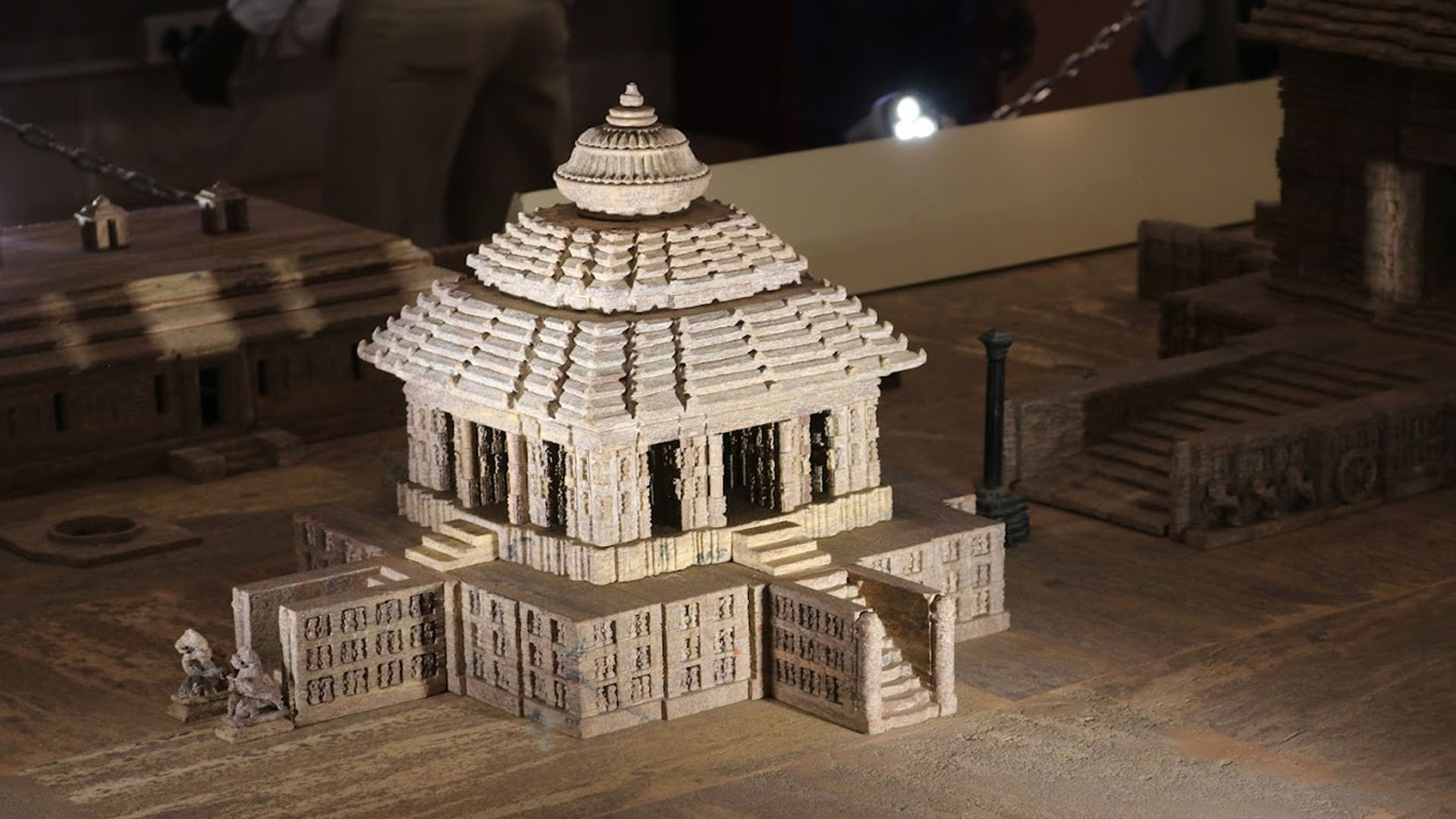
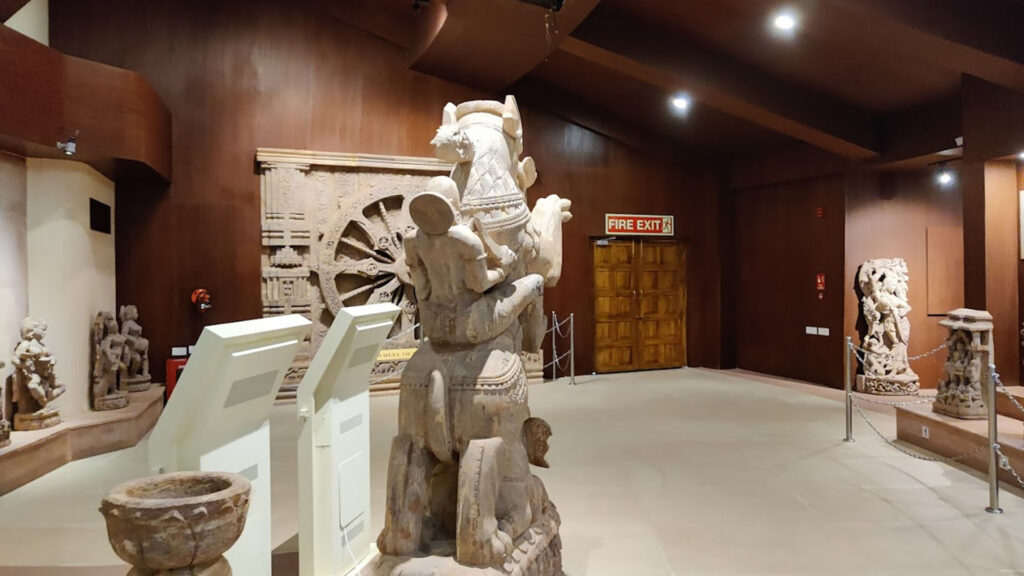
Most visitors walk straight past one of Konark’s best experiences. The Konark Sun Temple Museum — officially the Archaeological Survey of India (ASI) Archaeological Museum — sits on the northern side of the Sun Temple complex and holds the sculptures that could not stay on the temple itself: fallen lintels, rescued carvings and fragments recovered during clearance and restoration work. Established in 1968, its four galleries display around 260 antiquities, from a reconstructed khandolite chariot wheel to the famous Gaja Vyala and panels of the king’s troop. Entry costs a nominal few rupees, the museum is open 10 am to 5 pm (closed Fridays), and you need about an hour. The smartest move, regulars will tell you, is to visit the museum before the temple — the carvings make far more sense when you’ve met them up close first.
Key Highlights
- ASI Archaeological Museum on the north side of the Sun Temple complex, Konark — established in 1968, a short walk from the temple.
- Four galleries with around 260 antiquities: the reconstructed khandolite chariot wheel, Surya images, the Gaja Vyala, apsaras, salabhanjikas, and the king’s troop panels.
- Open 10:00 am to 5:00 pm, closed on Fridays; entry is a nominal ₹5–20 (confirm at the gate, as figures vary).
- About an hour inside the museum; half a day if combined with the Sun Temple — visit the museum first for context.
- Easy to reach — roughly 63–65 km from Biju Patnaik International Airport, Bhubaneswar and about 35 km from Puri railway station; combine with Chandrabhaga Beach (~3 km) and Astaranga Beach (~30 km).
About the Konark Sun Temple Museum
The museum exists because of rescue work. As the 13th-century Sun Temple was cleared, excavated and conserved over the decades, carved stones that had fallen or could no longer be kept on the monument were brought together — and in 1968 the Archaeological Survey of India gave them a permanent home in this museum, built on the northern side of the temple complex. Think of it as the temple’s storehouse of memory: what you see here is original temple sculpture, displayed at eye level, with labels you can actually read.
The museum’s corridor adds another layer — photographs of archaeological monuments across Odisha that trace the evolution of Odishan temple architecture, so you leave understanding not just what Konark is, but where it sits in the state’s building tradition.
The Four Galleries: What You’ll See
Gallery I — 62 Antiquities
The opening gallery sets the tone with a sandstone image of Surya, the sun god himself, and a painstakingly reconstructed khandolite chariot wheel — the stone from which Konark itself was carved. Look for the incarnations of Lord Vishnu, wedding scenes, and stone sculptures of Hindu gods and goddesses arranged so you can study details the temple’s height keeps out of reach.
Gallery II — 108 Antiquities
The largest gallery centres on a reconstructed temple wall — a full section of carved masonry reassembled indoors, which lets you appreciate the density of Konark’s ornament without craning your neck. Around it: cult objects including dikpalas (directional guardians) and celestial nymphs, a gigantic crocodile head, a drummer figure, and stone panels of flora and fauna.
Gallery III — 45 Objects
This is the gallery of graceful bodies: celestial nymphs (apsaras), a Surya Narayana image, the powerful Gaja Vyala (the lion-upon-elephant composite beast), panels of the king with his troop, salabhanjikas (tree-nymph brackets), swans with garlands, and the erotic and sensual figures Konark is famous for — presented here as the art-historical record they are.
Gallery IV — 45 Artifacts
The most recently added gallery holds some of the museum’s most dramatic pieces: a roaring lion, the startling figure of a man tied by an elephant’s trunk, part of a Surya image, erotic couples, and panels showing the king witnessing dance performances — a window into the court’s ceremonial life.
Don’t Miss the Auditorium Film
Before or after the galleries, sit in the museum auditorium for the short heritage film (about 20–25 minutes) on the story and legends of the temple’s construction. Regulars rate it as one of the best-value half-hours in Konark — it ties the scattered sculptures into one narrative.
Entry Fee and Timings
Timings: The museum is open 10:00 am to 5:00 pm, closed on Fridays. Plan to arrive by 3:30–4:00 pm at the latest so you aren’t rushed through the last gallery.
Entry fee: Sources disagree on the exact figure — it is reported anywhere between ₹5 and ₹20 per person, with children up to 15 often free — so treat the fee as nominal and confirm at the gate on the day. (Don’t confuse this with the Sun Temple’s own ticket: ₹40 for Indians/SAARC nationals and ₹600 for foreign nationals, with a separate charge for the sound-and-light show.)
How to Reach the Konark Sun Temple Museum
By Train
The nearest major railway station is Puri, about 35 km away, with trains from across India. From Puri, Konark is an easy taxi or bus ride of under an hour.
By Air
The nearest airport is Biju Patnaik International Airport, Bhubaneswar, roughly 63–65 km away. From the airport, hire a taxi or take a bus to Konark via Bhubaneswar or Puri.
By Road
Konark is well connected by state-run and private buses and taxis from both Bhubaneswar and Puri. The museum is a short walk from the Sun Temple parking area — follow the signs to the ASI museum on the complex’s northern side. Driving from Puri takes under an hour on good roads.
Best Time to Visit
October to March is the ideal window — pleasant weather for walking between the museum, the temple and the beach. If your dates allow, early December is special: the Konark Dance Festival (December 1–5) is held on open-air stages near the temple, and the museum visit pairs beautifully with an evening of classical dance. Allow about an hour for the museum alone, or half a day for the museum-plus-temple combination.
Nearby Places to Visit
- Konark Sun Temple — adjacent; visit the museum first, then the temple, and the carvings will read like a familiar story.
- Chandrabhaga Beach — about 3 km east; a wide, clean beach famous for its sunrise views.
- Ramachandi Temple — a serene riverside shrine on the way toward Puri.
- Astaranga Sea Beach, Puri — about 30 km away; a quieter beach escape.
- Swargadwar Sea Beach, Puri — if you’re basing yourself in Puri, this is the classic evening beach walk.
- Golden Beach, Puri (Blue Flag) — the certified-clean beach stretch, worth the detour.
- Maa Batamangala Temple, Puri — a revered goddess shrine often visited on the Konark–Puri circuit.
Travel Tips
- Museum before temple. This is the single best tip for Konark: the galleries give you the vocabulary — Surya, dikpalas, apsaras, the chariot wheel — to actually read the temple’s walls.
- Watch the film. The ~20-minute auditorium film on the temple’s construction legends is the best context-setting you can get.
- Confirm the fee at the gate. Published museum fees vary (₹5–₹20); carry small change.
- Photography: check the museum’s current photography policy at the entrance — rules for ASI museums change from time to time.
- Carry water and wear a cap — the walk between the museum, temple and parking is in the open sun.
- Dress modestly if you’re also visiting the temple’s sanctum areas, and keep Friday in mind: the museum is closed, so don’t build your Konark day around it.
Frequently Asked Questions
What are the opening hours of the Konark Sun Temple Museum?
The museum is open from 10:00 am to 5:00 pm and stays closed on Fridays. Arrive by mid-afternoon so you have a full hour for the four galleries and the auditorium film.
What is the entry fee for the museum?
Entry is nominal — reported between ₹5 and ₹20 per person, with children up to 15 often admitted free. Figures vary across sources, so confirm the current fee at the gate. This is separate from the Sun Temple’s own ticket (₹40 Indian/SAARC, ₹600 foreign).
How far is the museum from the Konark Sun Temple?
The museum stands on the northern side of the Sun Temple complex, a short walk from the temple itself — close enough to visit both in one trip, which is exactly what most visitors do.
What artifacts can I see inside the museum?
Around 260 antiquities across four galleries: a reconstructed khandolite chariot wheel, sandstone Surya images, a reconstructed temple wall, dikpalas and celestial nymphs, a gigantic crocodile head, the Gaja Vyala, apsaras, salabhanjikas, the king’s troop panels, a roaring lion, and the famous man-tied-by-an-elephant-trunk figure — plus a corridor of photographs tracing Odishan temple architecture.
Is photography allowed inside the museum?
Photography policies at ASI museums change from time to time, so check the current rules posted at the entrance before you start shooting. Outdoor photography around the complex is generally unrestricted.
Should I visit the museum before or after the Sun Temple?
Before. The museum gives you the context — the iconography, the chariot-wheel form, the stories behind the panels — that makes the temple’s carved walls dramatically more meaningful when you walk up to them afterwards. Allow about an hour for the museum and half a day for the combination.
Location for Konark Sun Temple Museum
Weather Konark Sun Temple Museum
[location-weather id="5549"]