
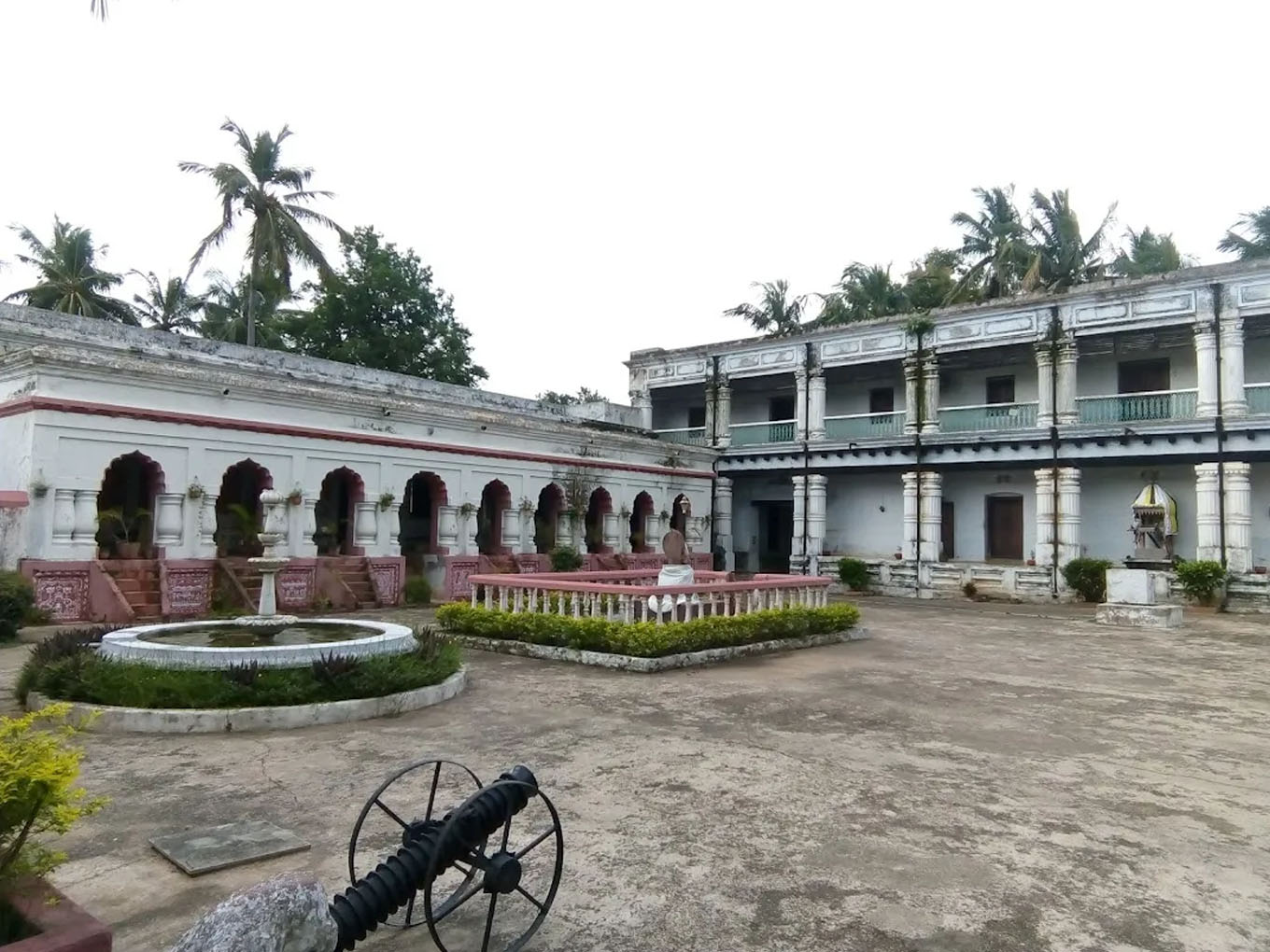
Khandapada Palace in Nayagarh district, Odisha, is the former home of the Baghel royal family, and the Jagannath Temple beside it is one of the few shrines where the wooden idols have never been replaced. The palace and temple stand side by side in the small town of Khandapada, about 30 km from Nayagarh town and 95 km from Bhubaneswar, and together they pack royal history and living ritual into a single half-day visit.
Key Highlights
- Khandapada Palace was the residence of the Baghel dynasty, rulers of the Khandapada Garhjat state founded in 1599.
- The Jagannath Temple holds wooden idols that, according to the royal family, have never undergone Nabakalebara, the ritual replacement of the idols.
- Rath Yatra in June or July is the biggest event of the year, when the town fills with devotees and cultural performances.
- The temple follows Kalinga architecture, built in pancharatha Rekha Deula style with Pidha Deula halls.
- An easy day trip from Bhubaneswar, 95 km away via NH-57, or from Nayagarh town, 30 km away.
History of Khandapada Palace and the Garhjat State
Khandapada was one of the 26 Garhjat states of Odisha, small states that kept their own rulers through the British period. The Garhjat state dates to 1599, when the Baghel dynasty established its rule here, and the present family represents its 16th generation, headed by Maharaja Shri Siddhartha Shekhar Singh Mardaraj.
The palace was built in the 19th century and served as the residence of the rulers and the administrative centre of the state, where decisions on governance, trade, and welfare were taken. After independence, the princely states merged into Odisha, but the palace and its temple stayed at the centre of the town’s identity. The family deity is Bauri Devi, and the royal temple deity is Lord Lakshmi-Narasimha. For a wider look at the state’s culture, see the guide to the people of Odisha.
Khandapada Palace: What to See
The palace is a lived-in heritage building, not a museum with ticket counters. Its value lies in its age, its wooden work, and its old-style construction, which show how a Garhjat court actually lived.
Architecture of the palace
The palace follows traditional Odisha building practice, with thick walls, wooden beams, and courtyards for ceremony and daily life. Rooms inside hold royal artefacts, old weapons, furniture, and portraits that trace the dynasty’s history.
Can you go inside the palace?
There is no official entry ticket, but entry is limited. Visitors may only be able to view the structure from outside, or they may need permission from the caretakers to step in. Ask politely at the gate, and accept the answer: the family still uses parts of the building, so access is a courtesy, not a right.
Jagannath Temple of Khandapada
The Jagannath Temple stands near the palace and is the spiritual heart of the town. It enshrines Lord Jagannath with Balabhadra and Subhadra, following the same ritual tradition as the great temple at Puri, on a smaller and more intimate scale. The presiding idol, called DadhiVamana, was brought from the temple at Tikiripada, according to local tradition.
Temple architecture
The temple is built in pancharatha Rekha Deula style, the curving tower form of Kalinga architecture, while the Jagamohana and Natamandapa halls are in Pidha Deula style, with stepped pyramidal roofs. The Archaeological Survey places the complex in the early 20th century, though the Jagannath tradition here is older. The wooden idols, as in Puri, have never undergone Nabakalebara, the ritual replacement of the idols: in Puri they are replaced every 12 to 19 years, while at Khandapada the same forms have been worshipped without replacement.
Rath Yatra at Khandapada
Rath Yatra, the chariot festival, is the biggest day in Khandapada’s calendar. It falls in June or July, and thousands of devotees gather as the deities are taken out in procession with cultural performances. The festival is smaller than Puri’s, which is its charm: you can stand close and watch the rituals. Arrive early and stay in Nayagarh town, since Khandapada has few places to stay.
Best Time to Visit Khandapada Palace and Jagannath Temple
October to February is the best time to visit, when the weather is pleasant for walking around the palace and temple. Summer is hot and the courtyards offer little shade, so avoid April to June unless you start early. The monsoon brings green surroundings with humidity and sudden showers. Winter is also the best season for waterfalls in Odisha, so pair the trip with the most popular waterfalls in India. If festivals are your reason for coming, plan for Rath Yatra in June or July, and check the exact date for 2026 before you travel.
How to Reach Khandapada Palace
Khandapada sits on the road between Nayagarh town and Kantilo. There are no direct trains or flights to the town, so the last stretch is always by road.
By air
The nearest airport is Biju Patnaik International Airport in Bhubaneswar, about 81 km away. From there, take a taxi or bus towards Nayagarh; the drive takes around two and a half hours.
By train
The nearest railway station is Nayagarh Town, about 17 km away, with trains from Bhubaneswar and other Odisha towns. From the station, take a bus or an auto-rickshaw to Khandapada.
By road
By road, Khandapada is about 30 km from Nayagarh town and around 95 km from Bhubaneswar via NH-57, a drive of 2.5 to 3 hours. Buses run from both cities, and the nearest bus stop is Khandapada itself, about 7 km from the old palace quarter known as Rajabaati. A private car or taxi is the most comfortable option.
Things to Do Around Khandapada
Rajgiri Waterfall and Rajagiri Hill Station
About 20 km from Khandapada town, Rajgiri Waterfall drops from a hilltop in the Khandapada Forest Range, and the climb to it is a 2 to 3 km trek through forest. The hill also holds small temples, including Gupteswar Kunda and Panchalingeswar Temple, and it is one of the best winter picnic spots in the district. Read the full guide to Rajgiri Waterfall before you go, since the last stretch has no proper road.
Sunamuhin Dam and Park
Sunamuhin Dam is a calm picnic spot with greenery and water views, close to Khandapada town, and a relaxed stop after the palace.
Kantilo and the Nilamadhava Temple
Kantilo, about 15 km away, is home to the Nilamadhava Temple on the banks of the Mahanadi, with its own Jagannath shrine from the 19th century.
Sidhamula and Odagaon
Sidhamula’s Gokulananda Temple sits on the banks of the Mahanadi and is known for its scenic setting, while Odagaon’s Raghunath Temple is an important religious site in the district. Both are short drives from Khandapada and fit a temple circuit of Nayagarh. For a wider look at the state, see the Odisha tourism overview.
Travel Tips for Khandapada
Stay in Nayagarh town or Bhubaneswar, since Khandapada itself has no major hotels. Nayagarh has lodges and budget hotels, while Bhubaneswar offers the full range and works as a base for a day trip. Small eateries serve food in Khandapada, but for more choice, eat in Nayagarh town. Dress modestly for the temple, remove footwear, and keep the visit quiet and respectful.
Nature lovers can pair the trip with Bhitarkanika National Park.
Frequently Asked Questions
Is Khandapada Palace open to tourists every day?
There is no fixed timing for tourists at the palace. Visitors can usually view it from outside, but going inside needs permission from the caretakers or local authorities. The Jagannath Temple beside it is open daily, generally from 6 am to 9 pm, so plan the palace visit in the morning when caretakers are around.
What is special about the Jagannath Temple at Khandapada?
The temple follows the same rituals as the Jagannath Temple in Puri, but its wooden idols have never undergone Nabakalebara, the ritual replacement of the idols. According to the royal family, the same idols have been worshipped continuously, which makes this small temple unusual among Jagannath shrines in Odisha.
When is Rath Yatra celebrated at Khandapada?
Rath Yatra is celebrated in June or July each year, when the deities are taken out in a chariot procession with cultural performances. It is the biggest festival in Khandapada and draws thousands of devotees. Check the exact date for 2026 before travelling, since the festival follows the Hindu lunar calendar.
How far is Khandapada from Bhubaneswar?
Khandapada is about 95 km from Bhubaneswar via NH-57, and the drive takes 2.5 to 3 hours by car or bus. The nearest airport is Biju Patnaik International Airport in Bhubaneswar, about 81 km away, and the nearest railway station is Nayagarh Town, about 17 km from Khandapada.
Is there an entry fee for Khandapada Palace or the temple?
No. The palace has no official entry ticket, though interior access needs permission, and the Jagannath Temple is free for all devotees. The only costs are travel, food, and stay, which makes Khandapada one of the cheapest heritage visits in Odisha.
What else can I visit near Khandapada?
Rajgiri Waterfall and Rajagiri Hill Station are about 20 km away, Sunamuhin Dam is a nearby picnic spot, and Kantilo’s Nilamadhava Temple sits on the Mahanadi about 15 km away. Sidhamula and Odagaon add two more temples to the circuit. Together they fill a full day from Nayagarh town or Bhubaneswar.
Khandapada Palace rewards travellers who like their history quiet and lived-in. Go for the temple in the morning, ask politely about the palace, and finish the day at Rajgiri Waterfall or at Kantilo.
Weather Khandapada Palace
[location-weather id="5549"]