
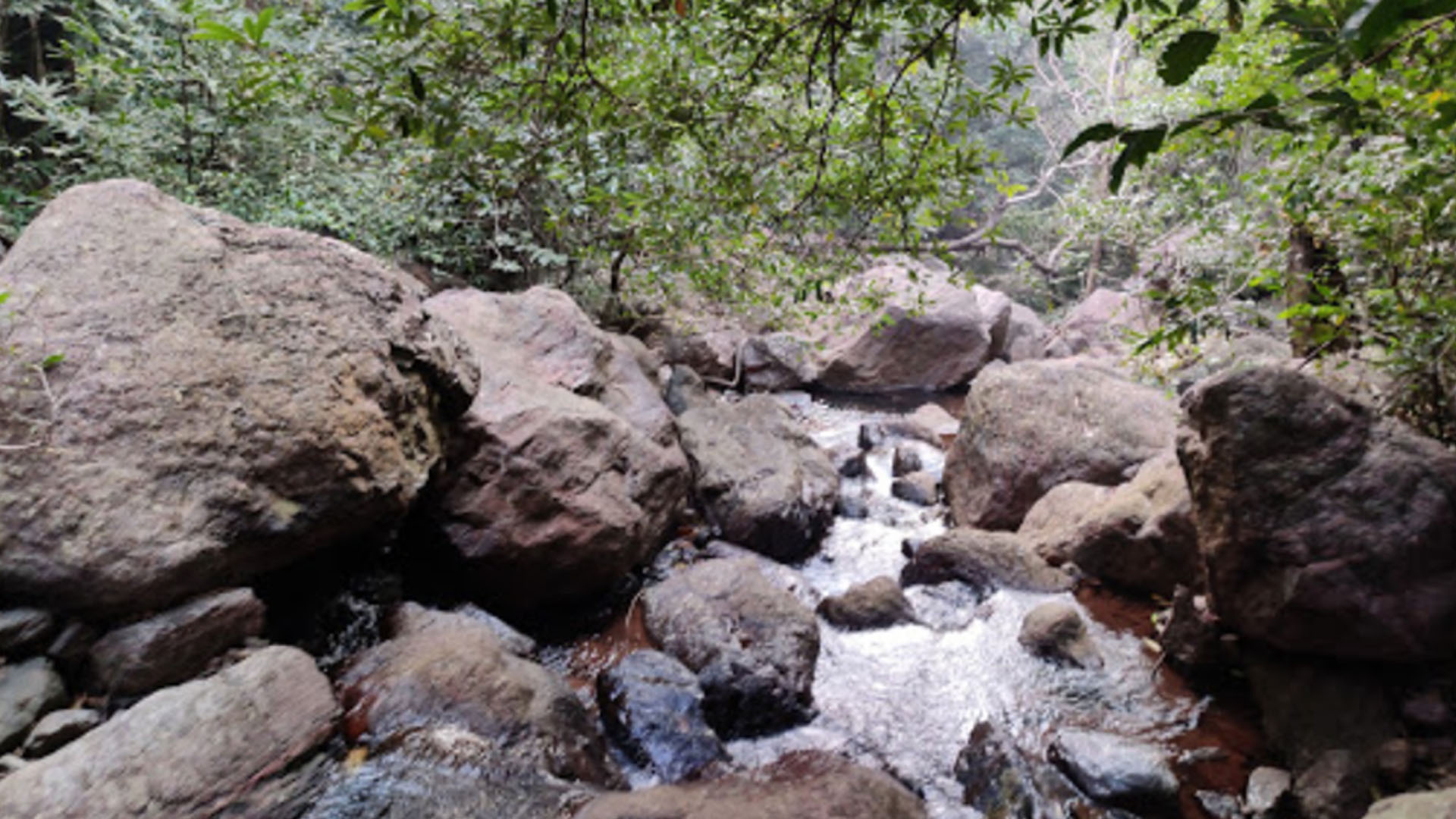
Khandadhar Nature Camp sits at the base of the 244 metre Khandadhar waterfall in Sundargarh district, roughly 100 km south of Rourkela. Run by the Odisha Forest Department, the camp lets visitors stay beside one of the tallest waterfalls in Odisha, with forest walks, viewpoints and a staircase trek to the top of the falls.
Key Highlights
- Khandadhar waterfall drops 244 metres in a single cascade on the Korapani Nala, making it the second highest waterfall in Odisha.
- The name comes from “Khanda” (sword) and “Dhara” (stream), because the falling water is said to look like a sword.
- The forest department nature camp at the base offers cottages and tents, with tariffs of roughly ₹3,000 to ₹4,500 per night on a full-board basis.
- October to February is the best time to visit, when the weather is pleasant and the flow is still strong.
- Rourkela is the nearest railhead and the practical base for the trip, about 2.5 hours away by road.
Khandadhar Waterfall: The Sword-Shaped Cascade
Khandadhar waterfall is a horse-tail cascade, which means the water keeps contact with the rock face as it falls. It drops from a forested ridge into a pool at the base, surrounded by sal forest. The falls stay perennial, fed by the Korapani Nala, but the volume changes sharply with the season. After the monsoon the cascade is at its widest, while in summer it narrows to a thinner ribbon.
Odisha has two waterfalls called Khandadhar: one in Sundargarh and one in Keonjhar. This guide covers the Sundargarh waterfall near Bonaigarh, the one with the nature camp at its base. A booking page or map pin showing Keonjhar is the other waterfall.
Local Pauri Bhuiya legend links the falls to goddess Kankala Devi, who is said to have eaten through the rock and released the water. The story is folklore rather than recorded history, but it adds cultural interest for travellers who enjoy the stories behind a landscape.
How to Reach the Falls and Camp
By Air
The nearest airport is Veer Surendra Sai Airport at Jharsuguda, about 144 km from the camp. From the airport, hire a taxi to Bonaigarh and on to the camp. Bhubaneswar’s airport is a longer alternative at roughly 280 km, or 6 to 7 hours by road.
By Train
Rourkela Junction is the nearest major railway station. Trains from Bhubaneswar, Kolkata, Delhi and other major cities stop at Rourkela. From the station, the road journey to the camp takes about 2.5 hours.
By Road
From Rourkela, take NH 143 south through Lahunipada towards Bonaigarh, then the local road to the camp gate. State buses run Rourkela to Bonaigarh, and auto-rickshaws cover the last stretch. A round-trip taxi from Rourkela costs roughly ₹2,500 to ₹3,500, varying with season and vehicle.
Best Time to Visit Khandadhar
October to February is the best window. The weather is cool, the forest is green after the rains, and the waterfall still carries good volume. It is also the most comfortable season for the trek and an overnight camp stay.
June to September brings the monsoon, when the falls are at their fullest. The trade-off is slippery trails, so this season suits visitors comfortable with rain and rough paths. March to May is hot, towards 38°C, and the flow thins. Summer visits are possible, but early mornings beat midday.
Things to Do at Khandadhar
The main activity is the staircase trek to the top of the falls. Several hundred steps climb through forest to a viewpoint above the cascade, and the walk takes most visitors 45 minutes to an hour each way. Carry water, wear gripped shoes, and start early.
At the base, a viewpoint and watchtower give a full view of the cascade, and on sunny mornings a rainbow often forms in the spray. The camp area suits picnics, and the forest is good for birdwatching and short walks. Evenings are quiet, with campfires and clear skies for stargazing.
Families with children will find a small children’s park near the camp. Do not assume swimming near the base pool is safe: currents and rock conditions change with the season, so follow the camp staff’s advice on the day.
Staying at the Nature Camp
The camp is an Odisha Forest Department eco-tourism property, so stays are simple and close to nature rather than luxurious. Options include eco cottages, concrete cottages and luxury tents. Indicative tariffs run from about ₹3,000 per night for an eco cottage to about ₹4,500 for a luxury tent, generally full-board, but confirm at booking.
Book in advance through the official Eco Tour Odisha portal, ecotourodisha.com, especially for weekends and the October to February season. The camp’s remoteness is part of its appeal, but it also means few alternatives nearby if the camp is full. Carry cash for small expenses, since card and network connectivity can be patchy.
Entry Fee and Timings
Sources differ on the entry fee and opening hours, so treat published figures as a guide only. Some listings describe entry as free, while others mention a nominal fee of around ₹15. Timings are generally daylight hours, roughly 6 AM to 6 PM. Check the current fee and hours on the Eco Tour Odisha portal before travelling, and arrive well before dark: the forest road is not one to drive late at night.
Places Near Khandadhar
Baneswar Shiva Temple at Bonaigarh is the closest stop of interest, a small temple town stop on the way to the falls.
Tensa Valley, about an hour’s drive away, is a quiet hill settlement known for its iron ore mines and green surroundings. Travellers who enjoy offbeat hill stations can read our guide to Tensa hill station near Rourkela before deciding whether to add it to the route.
Waterfall lovers can continue to Gudguda waterfall, roughly 60 km away.
Badal Giri waterfall in the Sundargarh region is another cascade worth the detour. Our guide to Badal Giri waterfall near Rourkela covers the approach and the best season for that cascade.
On the way back to Rourkela, Hanuman Vatika and Mandira Dam are easy stops.
If the trip extends towards Sambalpur, Debrigarh Wildlife Sanctuary offers a very different landscape of reservoir, forest and wildlife. Our guide to Debrigarh Wildlife Sanctuary in Sambalpur covers safaris, timings and stay options.
Travel Tips for Khandadhar
Start the trek early, carry at least a litre of water per person, and wear shoes with good grip. Steps are steep and slippery after rain. Food options beyond the camp are limited, so eat before the trek or carry snacks.
Mobile network is unreliable near the falls, so download offline maps for the Rourkela to Bonaigarh route before leaving town. Fuel up at Rourkela or Bonaigarh, and keep the return journey in daylight.
With an extra day, Ushakothi Wildlife Sanctuary in the Sambalpur region offers a quieter forest experience. Our guide to Ushakothi Wildlife Sanctuary explains what to expect from this less visited forest.
Khandadhar rewards travellers who like their waterfalls with a bit of effort attached. Book the camp in advance, trek early, and pair the falls with Tensa or Bonaigarh to make the drive from Rourkela pay off.
Frequently Asked Questions
How high is Khandadhar waterfall in Sundargarh?
Khandadhar waterfall in Sundargarh drops 244 metres (about 801 feet) in a single cascade, making it the second highest waterfall in Odisha after Barehipani. The name comes from “Khanda” (sword) and “Dhara” (stream), because the falling water is said to resemble a sword. Do not confuse it with the other Khandadhar waterfall in Keonjhar district.
How do I reach Khandadhar Nature Camp from Rourkela?
Khandadhar Nature Camp is roughly 100 km south of Rourkela, about 2.5 hours by road via NH 143 through Lahunipada to Bonaigarh. Rourkela Junction is the nearest railway station. State buses run from Rourkela to Bonaigarh, where auto-rickshaws cover the last stretch, or you can hire a round-trip taxi for roughly ₹2,500 to ₹3,500.
What is the best time to visit Khandadhar waterfall?
October to February is the best time to visit Khandadhar waterfall. The weather is cool, the forest is green after the monsoon, and the falls still carry a strong flow. June to September gives the fullest flow but slippery trails, while March to May is hot and the cascade thins. For the staircase trek and an overnight camp stay, the winter months are the most comfortable.
What is the entry fee and timing for Khandadhar?
Published sources disagree on the entry fee and timings for Khandadhar, so confirm before travelling. Some listings describe entry as free, while others mention a nominal fee of around ₹15, and timings are generally daylight hours, roughly 6 AM to 6 PM. The safest plan is to arrive in the morning and check the current fee and hours on the Eco Tour Odisha portal.
How do I book the Khandadhar Nature Camp?
Book the Khandadhar Nature Camp in advance through the official Eco Tour Odisha portal, ecotourodisha.com. Accommodation includes eco cottages, concrete cottages and luxury tents, with indicative tariffs of roughly ₹3,000 to ₹4,500 per night on a full-board basis. Book early for weekends and the October to February season, since the camp has limited rooms and few alternatives nearby.
Is the Khandadhar trek difficult?
The Khandadhar trek is moderately difficult rather than technical. Several hundred steps climb through forest to the viewpoint above the falls, taking most visitors 45 minutes to an hour each way. The steps are steep in places and slippery after rain, so wear gripped shoes, carry water and start early. Elderly visitors and small children may prefer the base viewpoint and watchtower instead.
Location for Khandadhar Nature Camp & Waterfall
Weather Khandadhar Nature Camp & Waterfall
[location-weather id="5549"]