
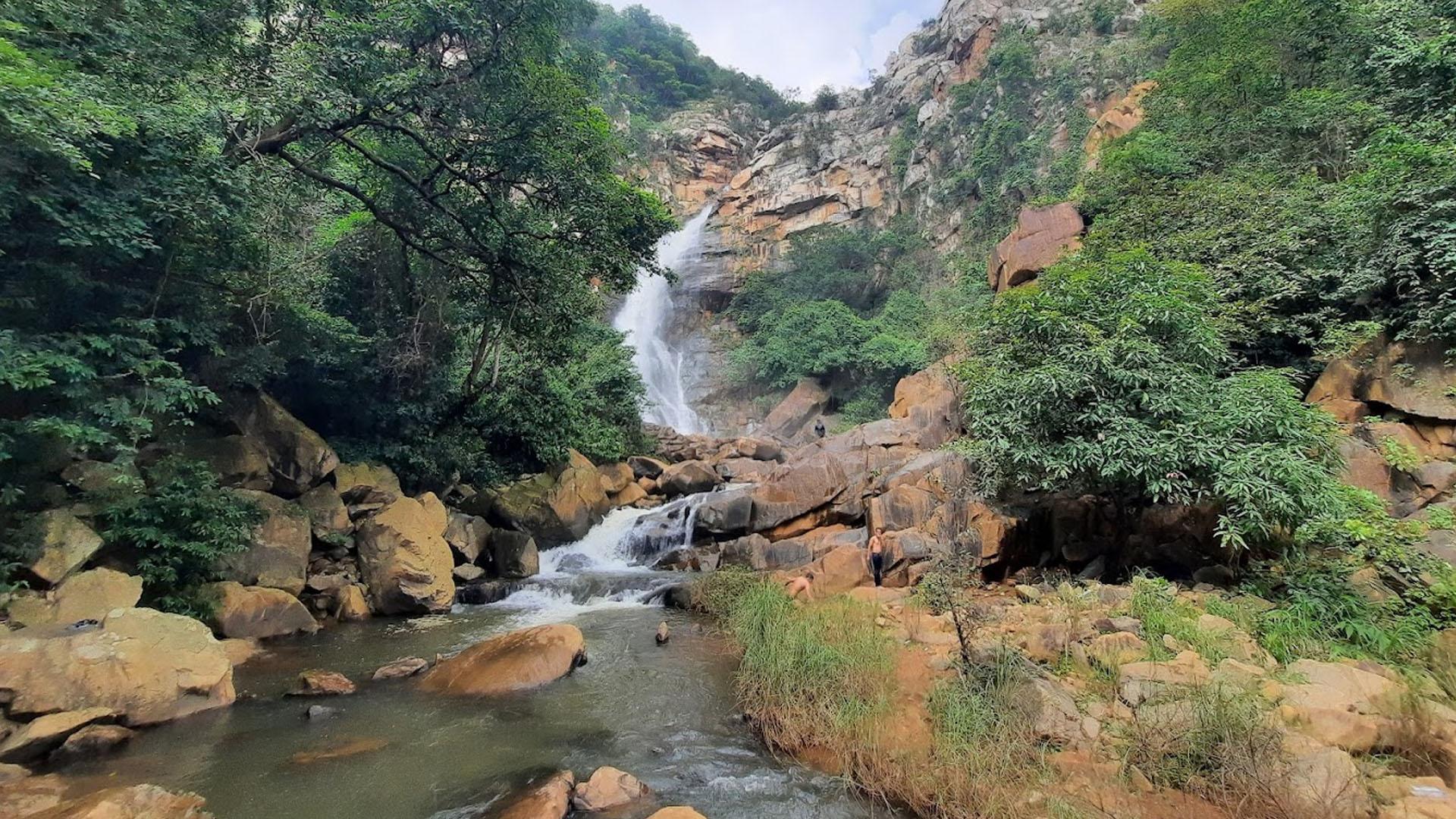
Khambeswari Waterfall sits near Kantamunda village in the Bamra-Gangpur forest of Sundargarh district, Odisha, about 77 km from Jharsuguda and roughly 110 km from Rourkela. A hilltop-spring-fed fall dropping around 150 feet through dense sal forest, it is reached by a short 2–3 km forest trek, and the nearest town with buses, trains and stays is Kuchinda–Jharsuguda.
Key Highlights
- What it is: a ~150-foot forest waterfall near Kantamunda village, Sundargarh district, reached by a 2–3 km forest trek.
- Best time to visit: October to March, with December–January as peak picnic season.
- Getting there: nearest railhead and airport is Jharsuguda (~77 km); last stretch is on foot only.
- Good to know: no entry fee and no facilities — carry food, water and cash; trek in a group, never alone.
- Combine it with: Badal Giri and Khandadhar waterfalls for a full Sundargarh circuit.
About Khambeswari Waterfall
Khambeswari is not the kind of waterfall that shows up on glossy tourism posters. Tucked into the Bamra-Gangpur forest range near Kantamunda village in Sundargarh district, it is a raw, forest-bound fall fed by springs on the hilltop. Locals say it takes its name from the Khambeswari temple of the village, and the fall is roughly 150 feet from crest to base — impressive enough that you hear it before you see it.
What makes it special is the setting rather than any infrastructure. There are no viewing platforms, no food stalls, no ticket counters. Just dense forest, a rocky climb, and water falling through the trees. That is exactly why trekking groups and nature photographers from Rourkela, Sambalpur and Jharsuguda keep it on their list.
If you are exploring the wider Sundargarh belt, this fall pairs well with other waterfalls in the district — the Badal Giri Waterfall near Rourkela and the Khandadhar Nature Camp and Waterfall make natural companions on the same trip.
How to Reach Khambeswari Waterfall
Getting here is an adventure in itself. The nearest settlement of any size is Kantamunda, and from there it is forest tracks rather than proper roads. Most visitors drive or hire a taxi to the village and then walk.
By Road
Khambeswari lies roughly 77 km from Jharsuguda, about 110–130 km from Rourkela (estimates vary by route), and around 102 km from Sambalpur. From Bhubaneswar it is a long haul of approximately 310 km, close to 7 hours of driving. A personal car or hired SUV is the only sensible option — public buses will get you to Kuchinda, about 25 km away, or Daitaripali, but the last stretch needs a private vehicle and then your feet.
By Train
The nearest major railway station is Jharsuguda Junction, around 77 km from the falls, well connected to Bhubaneswar, Kolkata, Ranchi and Raipur. From the station, hire a cab or taxi for the onward road journey.
By Air
The nearest airport is Veer Surendra Sai Airport at Jharsuguda, roughly 77 km away. Biju Patnaik International Airport in Bhubaneswar is the bigger gateway if you are flying in from elsewhere in India, with onward travel by train or road.
The Final Trek
From the road head near Kantamunda, expect a hilly trek of about 2–3 km through forest to reach the base of the falls. The trail is uneven and rocky in patches — this is the part that makes the trip unsuitable for small children, elderly travellers, or anyone with knee trouble.
Best Time to Visit Khambeswari Waterfall
October to March is the sweet spot. The monsoon fills the fall to its fullest, but the forest track gets slippery and genuinely risky, so most local groups prefer the post-monsoon and winter months. December and January are peak picnic season — the place fills with day-trippers, group feasts and local families cooking over fires. If you want the fall to yourself, aim for a weekday in November or February.
Summer visits are possible but the water thins out, and the forest heat makes the trek harder. For waterfall lovers planning wider Odisha itineraries, the same seasonal logic applies to spots like Patahara Waterfall in Keonjhar and Kapadgadi Waterfall in Mayurbhanj.
Things to Do at Khambeswari Waterfall
- Trek to the base: The 2–3 km forest walk is the main event — sal trees, bird calls, and the sound of the fall building as you approach.
- Photography: The fall through the forest canopy photographs beautifully in winter morning light. Carry a phone waterproof pouch; spray is heavy near the base.
- Picnic and day outings: Winter weekends see large groups arrive with packed food. There are no restaurants, so everything comes from home or Jharsuguda.
- Nature watching: The Bamra-Gangpur forest holds typical central-Indian dry-deciduous wildlife — langurs, peafowl, and plenty of butterflies after the rains.
- Temple visit: The village Khambeswari temple that gives the fall its name is worth a stop on your way in or out.
Nearby Attractions
Khambeswari works best as part of a Sundargarh circuit rather than a standalone destination.
- Badal Giri Waterfall — another Sundargarh district fall, closer to Rourkela and easier to reach. Read the full guide to Badal Giri Waterfall.
- Khandadhar Waterfall and Nature Camp — the famous Sundargarh-side Khandadhar is one of Odisha’s tallest falls and offers a proper nature camp stay. See Khandadhar Nature Camp and Waterfall.
- Ratnaganda Waterfall — in Nayagarh’s Dasapalla area, a good add-on if you are touring Odisha’s waterfalls more widely: Ratnaganda Waterfall.
- Rourkela city — about two hours away, with proper hotels, restaurants and the Hanuman Vatika and Vedvyas temple for an evening stop.
Entry Fee and Facilities
There is no documented entry fee or official ticketing at Khambeswari — the site has no formal gate or forest department counter. That said, carry some cash in small notes in case of local parking or village contributions. Facilities are essentially nil: no toilets, no shops, no drinking water, no mobile network in patches. Plan for a self-sufficient trip and carry everything back out with you.
For stays, look to Jharsuguda or Rourkela, where budget hotels run roughly ₹800–1,500 a night and mid-range options ₹2,000–3,500. There are no hotels or homestays near the waterfall itself.
Travel Tips for Khambeswari Waterfall
- Go in a group. This is a remote forest spot with no staff or facilities — never trek alone.
- Pack food and water. Bring at least 2 litres of water per person and packed meals; there is nothing to buy once you leave the main road.
- Wear proper footwear. The trail is rocky and uneven — sports shoes or trekking sandals with grip, not slippers.
- Skip the monsoon peak. July–September brings the fullest fall but also the riskiest trek and leeches.
- Leave early. Start the trek by 8–9 am so you are back at the road before dusk — there is no lighting anywhere on the trail.
- Check with locals. Ask in Kantamunda village about the trail condition on the day — villagers know it best.
FAQs About Khambeswari Waterfall
Where is Khambeswari Waterfall located?
Near Kantamunda village in the Bamra-Gangpur forest range of Sundargarh district, Odisha — about 77 km from Jharsuguda and roughly 110 km from Rourkela.
How do I reach Khambeswari Waterfall?
Drive to Kantamunda village (nearest railhead and airport: Jharsuguda, ~77 km), then trek about 2–3 km through forest. There is no proper motorable road to the fall itself.
What is the best time to visit Khambeswari Waterfall?
October to March, with December–January being peak picnic season. Avoid the height of the monsoon when the trail turns slippery.
Is there an entry fee for Khambeswari Waterfall?
No official entry fee or ticketing has been documented. Carry small cash anyway for parking or local contributions.
Can children visit Khambeswari Waterfall?
Not recommended for small children or elderly visitors — the final 2–3 km forest trek is uneven and rocky.
Are there hotels near Khambeswari Waterfall?
No. The nearest stays are in Jharsuguda or Rourkela, both roughly 1.5–2.5 hours away by road. If you are comparing waterfalls across the state, see our roundup of the most popular waterfalls in India.
Weather Khambeswari Waterfall in Kantamunda
[location-weather id="5549"]