
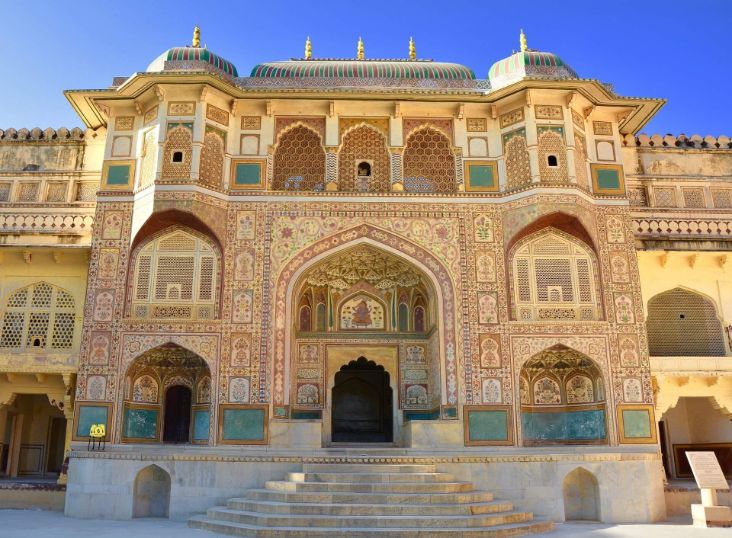
These facts about Rajasthan go beyond the postcard image of camels and sand dunes. Rajasthan is India’s largest state, a land of forts, palaces, desert and lakes, shaped by Rajput kings and desert traders. Here are ten facts that explain why the state draws millions of visitors, and what most first-time travellers get wrong about it.
Key Highlights
- Rajasthan is India’s largest state by area, covering 342,239 sq km, about 10.4 percent of the country.
- The state was formed on 30 March 1949 from princely states, and Jaipur is its capital.
- Six hill forts of Rajasthan are UNESCO World Heritage Sites, inscribed in 2013.
- Only the western part of Rajasthan is Thar Desert; the rest ranges from the Aravalli hills to lakes and farmland.
- Jaipur is the Pink City, Jodhpur the Blue City and Udaipur the White City, each named for its dominant building colour.
1. The Largest State in India
Rajasthan covers 342,239 sq km, making it the largest state in India by area, ahead of Madhya Pradesh. That size explains why a single Rajasthan trip needs planning: Jaisalmer in the far west and Bharatpur in the east are hundreds of kilometres apart, and the landscape changes completely between them. The state accounts for roughly 10.4 percent of India’s total geographical area, yet much of it is sparsely populated desert and scrub.
2. The Land of Kings, Formed in 1949
The name Rajasthan means the land of kings, and it fits: the state was formed on 30 March 1949 by uniting princely states ruled by Rajput dynasties. Jaipur, founded as a planned city and now the state capital, still shows that royal past in its palaces and old city walls. Travellers often start in Jaipur, and a quick read of facts about Jaipur helps make sense of the Pink City before you arrive.
3. The Thar Desert Covers Only the West
The Thar Desert, also called the Great Indian Desert, stretches across western Rajasthan and forms a natural border with Pakistan. Jaisalmer, the Golden City, rises from it in yellow sandstone, and desert safaris from Sam and Khuri are a rite of passage for visitors. But the common idea that all of Rajasthan is desert is wrong. Only the western districts, including Jaisalmer, Barmer, Bikaner and parts of Jodhpur, are true desert. The rest of the state has the Aravalli hills, lakes, forests and farmland.
4. Six Hill Forts Are UNESCO World Heritage Sites
Six hill forts of Rajasthan were inscribed as UNESCO World Heritage Sites in 2013: Chittorgarh, Kumbhalgarh, Ranthambore, Jaisalmer, Amber and Gagron. Each represents a different kind of Rajput military architecture, from desert forts to hilltop citadels to Gagron, a water fort ringed by rivers. Chittorgarh is one of the largest fort complexes in India, and its stories of sieges and sacrifice are central to Rajput identity. Amber Fort near Jaipur, with its Sheesh Mahal mirror palace above Maota Lake, is the most visited of the six.
5. Kumbhalgarh Has a Wall Second Only to the Great Wall
Kumbhalgarh Fort in Rajsamand district is said to have the second-longest continuous wall in the world after the Great Wall of China, running about 36 km around the fort’s ridges. The claim is widely repeated, though exact measurements vary, so treat the ranking as tradition rather than surveyed fact. What is certain is the scale: the wall is wide enough in places for horses to ride along it, and the fort inside holds hundreds of temples. Kumbhalgarh was also the birthplace of Maharana Pratap, the Mewar ruler famous for resisting the Mughals.
6. The Colour-Coded Cities
Rajasthan’s cities carry colour nicknames that visitors remember long after the trip. Jaipur is the Pink City, its old city buildings washed in terracotta pink. Jodhpur is the Blue City, where Brahmin houses around Mehrangarh Fort are painted blue. Udaipur is the White City, or the City of Lakes, for its white palaces and lake setting. Jhalawar is sometimes called the Purple City. The colours are not just marketing: in Jaipur the pink wash dates to a royal welcome, and in Jodhpur the blue paint is linked to the Brahmin community. Jaipur’s old city also holds the hilltop Moti Dungri Temple, dedicated to Ganesha.
7. Kalibangan and the Indus Valley Civilisation
Kalibangan, in Hanumangarh district, is one of the most important Indus Valley sites in India. Excavations there uncovered what is described as the world’s earliest attested ploughed field, showing that farming in this region goes back thousands of years. Kalibangan also yielded fire altars and distinctive pottery, evidence that the town was a planned settlement with its own rituals. For a state famous for medieval forts, Kalibangan is a reminder that Rajasthan’s history starts far earlier.
8. The Luni, India’s Only Saline River
The Luni is the only saline river in India. It rises in the Aravalli hills near Ajmer and flows west through the desert before ending in the Rann of Kutch in Gujarat. Its water grows saltier as it travels, because it picks up salt from the desert soil and receives no fresh tributaries in its lower course. The river’s name comes from the Sanskrit word for salt, and its course explains why western Rajasthan’s groundwater is often brackish.
9. Bhangarh Fort Closes at Sunset
Bhangarh Fort in Alwar district is often called the most haunted fort in India, and it is the only site in the country where the Archaeological Survey of India has put up a notice barring entry between sunset and sunrise. The legends vary, with stories of a curse by a sorcerer or a sage, but the rule itself is real and enforced. By day Bhangarh is a pleasant ruin of temples, markets and palace walls in the Aravalli foothills, and it draws crowds who come as much for the story as for the stones.
10. Kuldhara, the Abandoned Village
Kuldhara, near Jaisalmer, is an abandoned village settled in the 13th century and deserted in the early 19th century. According to local legend, its Paliwal Brahmin residents left overnight to escape an unjust ruler, leaving the houses empty. Historians point to a likelier mix of water scarcity and economic decline, but the legend stuck, and Kuldhara is now a protected site that visitors tour for its eerie, intact street plan. It is a short drive from Jaisalmer and pairs well with a desert safari.
Planning a Trip Around These Facts
The facts above make a natural route: start in Jaipur for the Pink City and Amber Fort, head to Jodhpur for Mehrangarh and the Blue City, then Udaipur for lakes and palaces, and finish in Jaisalmer for the desert, the living fort and Kuldhara. Wildlife lovers can add Ranthambore for tigers and Keoladeo near Bharatpur for birds, both of which sit alongside the forts on the state’s UNESCO list. Craft shopping is part of the trip too: Jaipur’s blue pottery, Jodhpur and Bikaner’s bandhani tie-dye, and Kathputli string puppets are all made by artisan communities you can visit. Jaipur’s temples anchor the city’s spiritual side, including the Galtaji Temple, the monkey temple in a rocky gorge.
If you want the royal treatment, the Palace on Wheels, launched in 1982 by Indian Railways and Rajasthan Tourism, still runs luxury rail journeys through the state’s highlights. But Rajasthan also rewards slow, cheap travel: state buses, shared jeeps and heritage havelis turned into guesthouses make a long trip affordable. Whichever way you travel, the state’s size means you should pick a region and explore it properly rather than rushing all of it in one visit.
If you have an extra day in Jaipur, add the cave shrine of Pataleshwar Temple, a quiet stop away from the main crowds.
Frequently Asked Questions
What is the largest state in India?
Rajasthan is the largest state in India by area, covering 342,239 sq km, about 10.4 percent of the country. It is larger than Madhya Pradesh, and its size means a single trip usually covers only one or two regions, such as Jaipur and Jodhpur or Udaipur and Jaisalmer.
When was Rajasthan formed?
Rajasthan was formed on 30 March 1949 by uniting princely states ruled by Rajput dynasties. Jaipur became the capital, and the name Rajasthan, meaning the land of kings, reflects that royal past. The state celebrates its formation day on 30 March each year.
Which forts in Rajasthan are UNESCO World Heritage Sites?
Six hill forts are UNESCO sites: Chittorgarh, Kumbhalgarh, Ranthambore, Jaisalmer, Amber and Gagron, inscribed in 2013. Keoladeo National Park and Jantar Mantar in Jaipur are also UNESCO listed, taking the state’s total of World Heritage Sites to eight.
Is all of Rajasthan desert?
No, only the western part of Rajasthan is Thar Desert, including Jaisalmer, Barmer and Bikaner. The rest of the state has the Aravalli hills, lakes around Udaipur, forests in the south and farmland in the east, so the landscape changes greatly from region to region.
Why is Jaipur called the Pink City?
Jaipur is called the Pink City because its old city buildings are washed in terracotta pink. The colour dates to a royal decision to paint the city for a visiting prince, and the pink wash has been maintained in the old city ever since.
Can you visit Bhangarh Fort at night?
No, entry to Bhangarh Fort is barred between sunset and sunrise under an Archaeological Survey of India notice. The fort is open during the day, when visitors can explore its temples, palace ruins and market streets in the Aravalli foothills.
Weather
[location-weather id="5549"]