
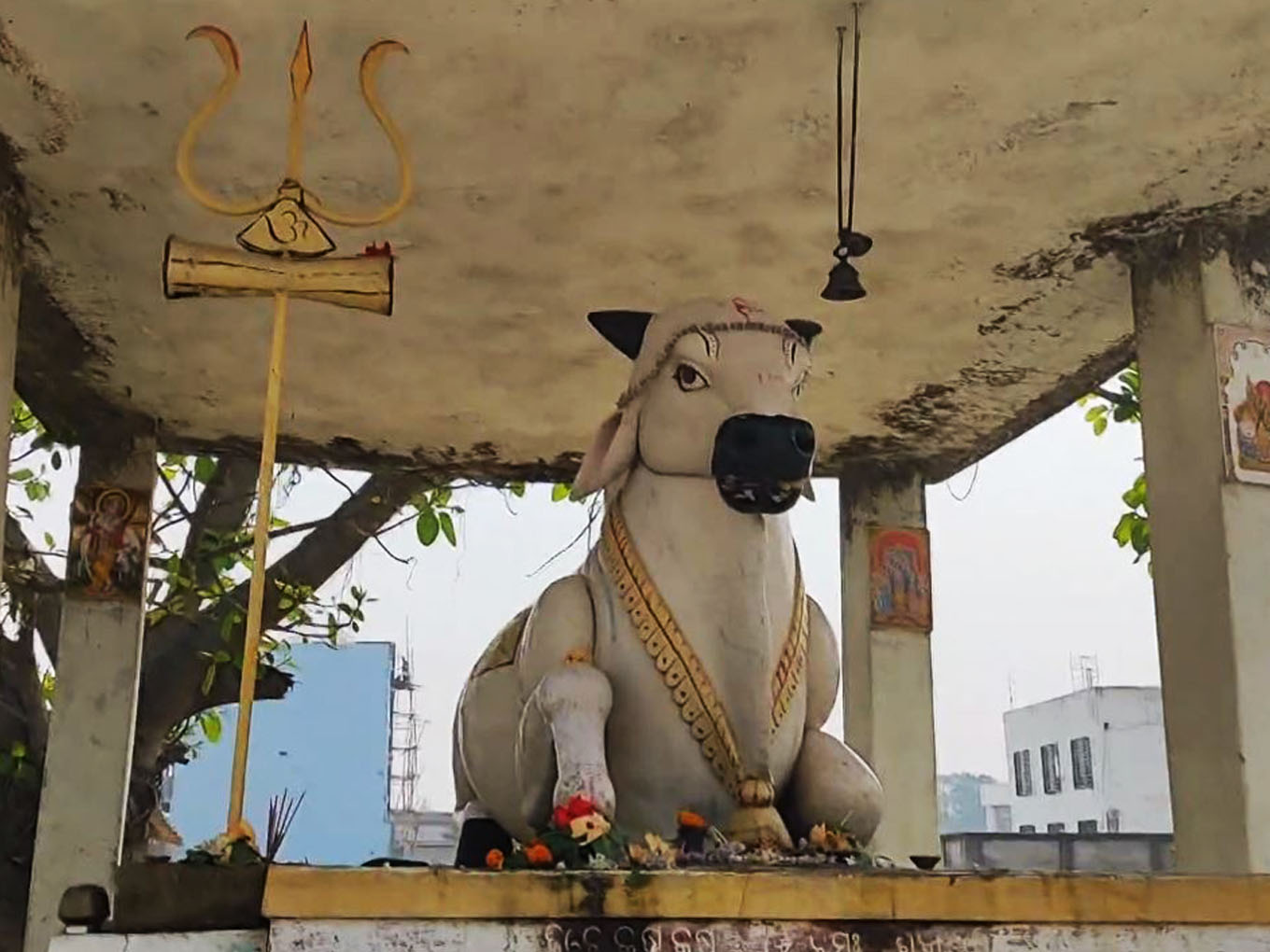
Gudeswar Shiva Temple stands in Durgapalli village, about 7 km from Sambalpur city on the bank of the Mahanadi in western Odisha. This Kalinga-style Shiva shrine draws devotees through the year and thousands more at Maha Shivaratri, when night-long prayers and special pujas fill the temple courtyard.
Key Highlights
- Gudeswar Shiva Temple is a Kalinga-style shrine in Durgapalli village, roughly 7 km from Sambalpur city in Odisha.
- The main sanctum houses a Shivalinga, with a Hanuman shrine in the temple complex.
- Maha Shivaratri is the temple’s biggest festival, drawing thousands of devotees for night-long prayers.
- Sambalpur Junction railway station is about 8 km away, and Veer Surendra Sai Airport at Jharsuguda is roughly 55 to 66 km away.
- October to February is the best time to visit for weather, while Shivaratri in February or March is best for the festival atmosphere.
About Gudeswar Shiva Temple
Gudeswar is a Shiva temple in the village sense of the word: modest in scale, deeply local in character, and woven into the daily religious life of Durgapalli. The main sanctum houses a Shivalinga, and the complex includes a Hanuman shrine. Both competitor guides describe the architecture as Kalinga style, with carved stonework, a shikhara tower and a courtyard where devotees gather.
One honest gap matters for anyone writing about this temple. No public source documents when Gudeswar was built. The old post on this site claimed an 8th-century Somavamshi origin, but neither competing guide supports that date, and no ASI listing or district gazetteer entry for the temple turned up in research. The safe statement is that the temple is old and locally revered, with its exact construction date undocumented in public sources. A cowherd-discovered-lingam legend circulates on one guide site, but it is single-source local lore, best treated as story rather than history.
What the temple does offer, without any need for invented antiquity, is atmosphere: morning devotees, flowers and incense, bells from the sanctum, and a riverside calm that larger temples do not always have.
Maha Shivaratri at Gudeswar
Maha Shivaratri is the temple’s biggest day of the year, usually falling in February or March. Thousands of devotees visit, the shrine is decorated with flowers and lights, and special pujas run through the night. If you want the temple at its most alive, this is the time to come, but expect crowds, queues and a very different experience from a quiet weekday morning.
Outside the festival, the temple works better as a calm half-day stop. Combine it with Sambalpur city rather than making it a standalone destination: the temple rewards an hour or two of unhurried darshan, not a full day on its own.
How to Reach Gudeswar Shiva Temple
By Air
The nearest airport is Veer Surendra Sai Airport at Jharsuguda. Published distances disagree, ranging from about 50 km to about 66 km, so plan on roughly 55 to 66 km and around 1.5 hours by road. From the airport, hire a taxi to Durgapalli via Sambalpur city.
By Train
Sambalpur Junction is the nearest major railway station, about 8 km from the temple. Trains from Bhubaneswar, Kolkata, Delhi and other major cities stop at Sambalpur. From the station, take an auto-rickshaw or taxi to Durgapalli.
By Road
By road, the temple is a short drive from Sambalpur city. Buses and shared autos run from Sambalpur towards Durgapalli, and a private auto-rickshaw from the city is the simplest option for most visitors. The village is on the Mahanadi bank near Khetrajpur, and the temple is signposted locally.
Temple Timings and Entry Fee
Published timings for Gudeswar disagree, so treat any single figure with caution. Both competing guides list 6 AM to 7 PM daily, while a map listing gives 5:55 AM to 9 PM. Plan a daytime visit, ideally in the morning, and you will be inside the plausible window either way. No entry fee is published for the temple anywhere in the sources checked. If a donation is requested, treat it as voluntary.
Best Time to Visit Gudeswar Temple
October to February is the best time to visit for weather. Western Odisha is hot from March onwards, and the summer months make temple hopping uncomfortable. Winter mornings are pleasant, the light is good for photography in the courtyard, and the Mahanadi riverside is at its most agreeable.
For the festival rather than the weather, come at Maha Shivaratri in February or March. The temple is decorated, the crowds are large, and the night-long pujas give a sense of the temple’s place in local life that a quiet day cannot. Book accommodation in Sambalpur early for the festival week.
Places Near Gudeswar Shiva Temple
Maa Samaleswari Temple in Sambalpur city is the natural first stop. Sambalpur owes its name to the goddess Samaleswari, and her 16th-century Chauhan temple on the Mahanadi bank is the region’s most important shrine. Hirakud Dam, about 15 km from the city, is another essential stop: built in the 1950s across the Mahanadi, it stretches about 26 km and holds one of Asia’s largest artificial lakes, covering 743 sq km.
The Leaning Temple of Huma, roughly 25 km away, is a 17th-century Shiva temple famous for its tilted structure, and Ghanteswari Temple near Chiplima, about 37 km away, is known for its thousands of bells tied by devotees. Both are easy half-day additions to a Gudeswar visit.
For nature, Debrigarh Wildlife Sanctuary is the standout near Sambalpur, with reservoir, forest and wildlife in a single landscape. Our guide to Debrigarh Wildlife Sanctuary in Sambalpur covers safaris, timings and stay options for planning an extra day.
Sambalpur city itself is worth time for shopping and food. Sambalpuri handloom, especially the ikat sarees and fabrics, is the region’s signature craft, and local dishes such as pitha and mansa tarkari are worth trying in the city’s eateries before heading back.
Temple travellers heading further into western Odisha can continue to the Metakani temple at Ulunda in Subarnapur district. Our guide to Metakani Temple in Ulunda, Subarnapur covers that shrine’s setting and approach.
Travel Tips for Gudeswar Temple
Base yourself in Sambalpur city for the widest choice of hotels and food, and use it as the hub for Hirakud, Huma and Gudeswar itself.
With an extra day, Ushakothi Wildlife Sanctuary in the Sambalpur region offers a quieter forest experience away from the temple circuit. Our guide to Ushakothi Wildlife Sanctuary explains what to expect from this less visited sanctuary.
Visit in the morning for the calmest darshan and the best light. Dress modestly as at any Shiva temple, remove footwear at the designated area, and keep photography discreet inside the sanctum, following any local instructions on the day.
For travellers building a wider Odisha temple route, the Jagannath temple at Rayagada in southern Odisha is another shrine worth knowing. Our guide to Jagannath Temple in Rayagada covers its timings and approach.
Gudeswar is best visited without inflated expectations about its age and with real appreciation for what it is: a living village Shiva temple near the Mahanadi, at its best during Shivaratri and its most peaceful on a winter morning. Pair it with Samaleswari Temple and Hirakud Dam for a full Sambalpur day.
Frequently Asked Questions
Where is Gudeswar Shiva Temple located?
Gudeswar Shiva Temple is located in Durgapalli village near Khetrajpur, about 7 km from Sambalpur city in western Odisha, on the bank of the Mahanadi river. The village PIN is 768006. From Sambalpur city, the temple is a short drive or auto-rickshaw ride, and it is signposted locally in the village.
What are the timings of Gudeswar Shiva Temple?
Published timings for Gudeswar Shiva Temple disagree, so plan a daytime visit. Both competing travel guides list 6 AM to 7 PM daily, while a map listing gives 5:55 AM to 9 PM. A morning visit falls inside both windows and is the calmest time for darshan. No official timing board is published online, so confirm locally if you are visiting late in the day.
How do I reach Gudeswar Temple from Sambalpur?
Gudeswar Temple is about 7 to 8 km from Sambalpur city, and the simplest way to reach it is by auto-rickshaw or taxi from the city. Sambalpur Junction railway station is about 8 km away, and buses and shared autos also run towards Durgapalli village. The nearest airport is Veer Surendra Sai Airport at Jharsuguda, roughly 55 to 66 km away.
Is there an entry fee at Gudeswar Shiva Temple?
No entry fee is published for Gudeswar Shiva Temple in any source checked. The temple appears to be free to enter, as is common for village Shiva shrines in Odisha. If a donation is requested during your visit, treat it as voluntary rather than a ticket charge, and carry small change for offerings if you wish to make them.
What is Gudeswar Shiva Temple famous for?
Gudeswar Shiva Temple is famous locally as a Kalinga-style Shiva shrine on the Mahanadi bank near Sambalpur, and for its Maha Shivaratri festival, when thousands of devotees attend night-long prayers and special pujas. Its exact construction date is not documented in public sources, so claims of an 8th-century origin should not be repeated as fact.
What is the best time to visit Gudeswar Temple?
October to February is the best time to visit Gudeswar Temple for weather, with cool mornings and comfortable temple hopping around Sambalpur. For the festival experience, visit at Maha Shivaratri in February or March, when the temple is decorated and crowded with devotees. Summer months from March onwards are hot and less comfortable for travel in western Odisha.
Location for Gudeswar Shiva Temple
Weather Gudeswar Shiva Temple
[location-weather id="5549"]