
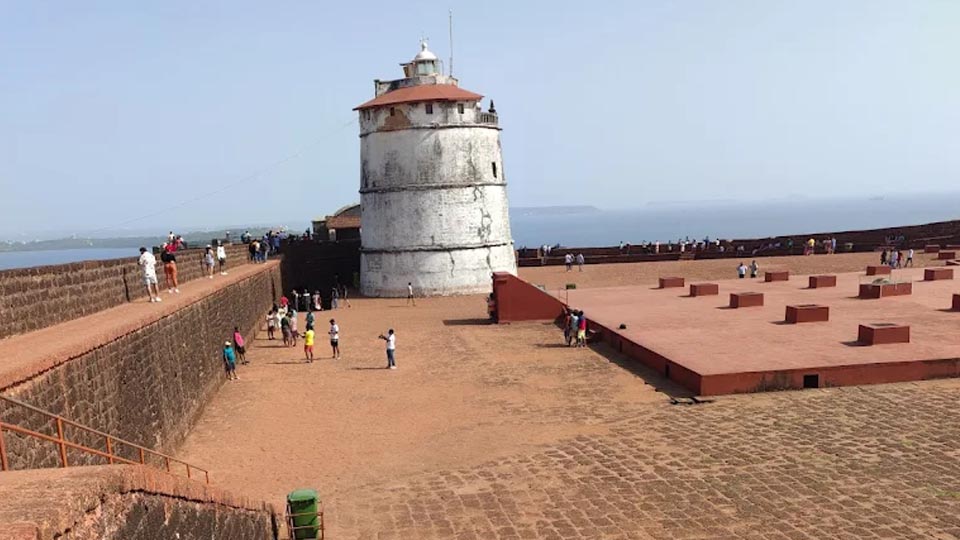
Fort Aguada Goa is a Portuguese laterite fortress on the Sinquerim headland in North Goa, guarding the point where the Mandovi River meets the Arabian Sea. Entry to the main fort is free, and it stays open through the day. Come in the late afternoon for the rampart views and the sunset, and allow about ninety minutes.
Key Highlights
- Built by the Portuguese between 1609 and 1612 to guard the mouth of the Mandovi River
- Location: Sinquerim headland, about 16 km from Panaji and under 6 km from Candolim
- Entry fee: free for the main fort; small tickets apply for the lighthouse climb and jail museum
- Timings: open all days, roughly 9.30 am to 6 pm
- Known for: the 1864 four storey lighthouse, the freshwater cistern and sunset views over the sea
About Fort Aguada
Fort Aguada stands on the rocky headland south of Sinquerim Beach, where the Mandovi opens into the Arabian Sea. The Portuguese built it between 1609 and 1612, in the years when Dutch fleets were probing the Konkan coast and Maratha armies pressed in from the Deccan. Whoever held this headland controlled the river entrance to Old Goa, then the capital of Portuguese India, so the fort was built to be the strongest link in the coastal defence chain.
The name comes from the Portuguese word agua, meaning water. A freshwater spring on the hill let ships refill their barrels before long voyages to Lisbon or down the Malabar coast. The fort grew around that supply, and its underground cistern could hold more than two million gallons, enough for the garrison and for visiting crews. Thick laterite walls, a dry moat and gun positions covering both the river mouth and the sea did the rest. The fort was never taken by assault, and Goa stayed Portuguese until 1961, when the territory became part of India.
History of Fort Aguada
Construction began in 1609 after a Dutch squadron approached the Mandovi in 1604 and exposed how thin the river defences were. The work finished in 1612, giving the Portuguese a bastion that could watch every ship entering or leaving Old Goa. For close to two centuries it held off Dutch and Maratha pressure, helped by its water supply, which let the garrison outlast a siege without depending on the river.
The lower fort, down by the water, later served as the Aguada Central Jail. During the Salazar era it held political detainees from the Goan freedom movement, and it remained a working prison for decades after liberation. Part of the old jail has since reopened as a museum on the Liberation struggle. Up on the hill, the four storey lighthouse built in 1864 once carried the great bell from the Church of St Augustine. The bell now hangs in the Church of Our Lady of the Immaculate Conception in Panaji, and the old tower was retired in 1976 when a newer lighthouse rose beside it.
What to See Inside the Fort
The upper fort is the part most visitors mean when they say Fort Aguada. Walk the ramparts first for the full sweep of the coast, from Sinquerim across Candolim and out to sea. The seaward walls still carry their old gun positions, and the laterite bulk of the place reads best on foot, one bastion at a time. Below the ramparts sit the gunpowder room and the deep freshwater cistern that made the fort so hard to starve out.
The 1864 lighthouse is the headland landmark, squat and stepped, and one of the oldest lighthouse structures in Asia. The newer tower beside it is the one open to climb for a small ticket, and it gives the widest view on the headland. In the lower fort, the jail museum tells the freedom movement story in the rooms that once held prisoners. Finish on the rampart stretch with the lighthouse behind you; it is the most photographed spot here, and the light turns gold in the last hour before sunset. After the fort, the sheltered water at Sinquerim Beach sits right below for a swim or a water sports session in season.
Timings and Entry Fee
The main fort opens all days, roughly from 9.30 am to 6 pm, with no weekly closing day. Entry to the fort and ramparts is free. You pay only to climb the newer lighthouse or enter the jail museum, each a small ticket. Confirm current charges at the gate, and budget one to one and a half hours for the upper fort.
How to Reach Fort Aguada
Road transport is the practical way in. Buses serve the Sinquerim and Candolim area but do not run all the way up to the fort gate, so a taxi, rented scooter or self drive car is simplest.
By Air
Manohar International Airport at Mopa is the closer airport by road, about 34.5 km away. Goa International Airport at Dabolim is about 43.9 km from the fort. Prepaid taxis and app cabs run from both airports toward the Candolim and Sinquerim belt.
By Train
Thivim station is the nearest useful railhead, about 20 km from the fort. Karmali station is a little over 30 km away and suits travellers coming from the Panaji side. Book trains on IRCTC and take a taxi from the station to Sinquerim.
By Road
The fort is about 5.7 km from Candolim, 9.2 km from Calangute and 16 km from Panaji, so most visitors reach it in under fifteen minutes from the northern beach belt. A motorable road climbs from Sinquerim to the hilltop. Pair the visit with a relaxed lunch in Candolim, the beach town next door, and the half day plans itself.
Best Time to Visit
November to February is the best season, with dry weather, clear air and the cleanest light for photographs. Within the day, the first hour after opening is quietest, while late afternoon gives you the sunset over the Arabian Sea. The upper fort has almost no shade, so carry a hat and water if you come at midday. In the monsoon, roughly June to September, the laterite turns slippery and views cloud over, so wear footwear with grip and check the sky before you climb.
Nearby Places to Visit
Fort Aguada pairs well with a half day around the Sinquerim and Candolim stretch. Reis Magos Fort, across the water near Verem, is smaller and beautifully restored, and it suits anyone building a heritage trail. Further north, Chapora Fort above Vagator is the fort made famous by the film Dil Chahta Hai.
The Baga and Calangute strip also sits within a short drive for travellers who want a busier evening after the fort.
For a beach finish, the lively shore at Calangute Beach is about 9 km away and easy to add before dinner.
Travel Tips
Arrive an hour or two before sunset if photographs matter to you, and stay on the ramparts until the light fades. Carry water, since shade and stalls are limited on the upper fort. Keep small cash handy for the lighthouse and museum tickets. Wear shoes you can walk stone steps in, and watch your footing on wet laterite in the rains. If you are visiting in 2026, recheck the museum hours locally, as small heritage sites adjust schedules with little notice.
Frequently Asked Questions
What are the timings of Fort Aguada?
Fort Aguada is open all days of the week, roughly from 9.30 am to 6 pm, with no weekly closing day. The lighthouse climb and the jail museum keep shorter hours of their own. Arrive just after opening for quiet ramparts, or in the last two hours for the sunset.
What is the entry fee for Fort Aguada?
Entry to the main fort and its ramparts is free. You pay a small ticket only if you climb the newer lighthouse, and a modest fee if you visit the Aguada Jail museum in the lower fort. Carry small cash, since card acceptance at small counters can vary.
When was Fort Aguada built and by whom?
The Portuguese built Fort Aguada between 1609 and 1612 to defend the mouth of the Mandovi River and the capital at Old Goa. It answered Dutch naval pressure and Maratha raids, and it was never taken by assault. Goa remained Portuguese until 1961.
Why is it called Fort Aguada?
Fort Aguada takes its name from agua, the Portuguese word for water. A freshwater spring on the hill let passing ships refill their water barrels before long voyages. The same supply filled the fort cistern, which held more than two million gallons for the garrison.
How do I reach Fort Aguada?
Drive, take a taxi or ride a scooter to Fort Aguada, since buses do not run up to the gate. It is about 5.7 km from Candolim, 16 km from Panaji and 20 km from Thivim station. Mopa airport, about 34.5 km away, is closer than Dabolim.
How much time do I need at Fort Aguada?
Most visitors need one to one and a half hours at Fort Aguada. That covers the upper fort, the ramparts, the cistern and the lighthouse view, with time for photographs. Add extra time if you also visit the jail museum in the lower fort.
Go in the late afternoon, walk the ramparts once in full, and stay for the sunset over the Mandovi mouth. Base yourself in Candolim or Sinquerim and the fort becomes an easy fifteen minute outing.
Weather Fort Aguada
[location-weather id="5549"]