
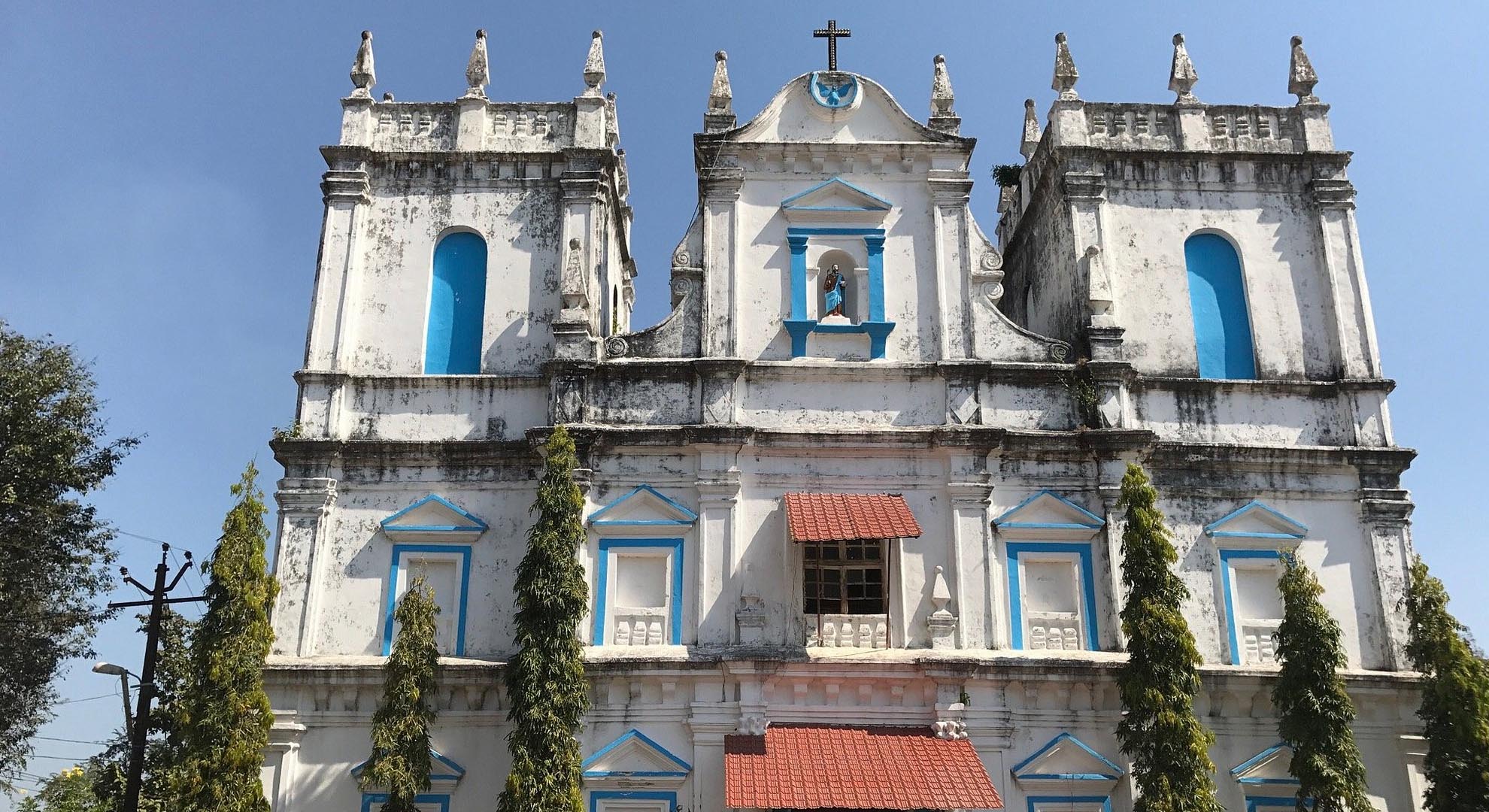
Divar Island Goa is a river island in the Mandovi, about 10 km upriver from Panjim, reached only by ferry. There is no bridge, no beach crowd, and no party strip. What you get instead is paddy fields, Portuguese-era village houses, old churches, and one of the slowest half days in Goa. Come for a morning, and pair it with Old Goa.
Key Highlights
- Divar Island Goa sits in the Mandovi River, about 10 km upriver from Panjim, and is reached only by free government ferries.
- Three ferry routes serve the island: from Old Goa, from Ribandar, and from Naroa, running roughly every 10 to 15 minutes in daytime.
- The island has three villages: Piedade, Malar, and Naroa, each with its own church and character.
- The Church of Our Lady of Compassion on the Piedade hillock is the island’s best viewpoint over the river and Old Goa.
- Bonderam, the island’s flag festival, is held on the fourth Saturday of August and draws thousands of visitors.
How to Reach Divar Island: The Ferries
The ferry is the whole point of the trip, and it is free for foot passengers. Three routes run in daytime, roughly every 10 to 15 minutes, from around 7 am to 8 pm. From Old Goa, near the Viceroy’s Arch, the crossing lands on the south side of the island. From Ribandar, near Panjim, the ferry reaches the south-west side. From Naroa in Bicholim taluka, the ferry serves the east end. You can take a two-wheeler or a car across for a small fee, which is worth it if you plan to cover all three villages. Timings shift with the season and with river conditions, so confirm the last ferry back before you wander too far. The crossing itself takes only a few minutes, but the views across the Mandovi, with Old Goa’s church spires in the distance, are the first sight of the day. The Old Goa landing also puts you steps from the Se Cathedral in Old Goa, which is easy to add on the way back.
Piedade: The Hilltop Church and Portuguese Houses
Most visitors head first to Piedade, the largest village, at the foot of a small forested hillock. The Church of Our Lady of Compassion, also called Our Lady of Piety, stands on top of the hill. A chapel stood on this site from the 16th century, and the present church took shape in the early 18th century on ground where local tradition places an older Hindu temple. Climb for the view alone: the Mandovi, the paddy fields, and Old Goa spread out below. Around the hill, Piedade’s lanes hold well kept Portuguese-era villas with balconies, carved woodwork, and bright paint. Walk slowly here. The village rewards unhurried looking, and the houses are private homes, so admire them from the lane and keep noise down.
Malar and Naroa: The Quieter Villages
Malar, once called São Matias, keeps an older, quieter feel. Its church, dedicated to St Mathias, is more than 400 years old, and the village lanes are lined with colourful houses and small chapels. Malar celebrates Bonderam in a more traditional way than Piedade, and it is a good place to see the festival without the biggest crowds. Naroa, at the east end of the island, has roots as a Hindu pilgrimage site going back to the 12th century. Its chapels include Our Lady of Candelaria, and the village sits near the ferry point that links the island to Bicholim taluka. The Konkan Railway passes through the island, but Divar has no railway station. The nearest stop is Carambolim, on the mainland.
Things to Do on Divar Island
Cycling is the best way to see the island. The roads are flat, quiet, and lined with paddy fields, and a bicycle covers all three villages in a morning. Birding is strong in the fields and along the river, especially in the early morning and in the monsoon months. If you want more birdlife, the Dr Salim Ali Bird Sanctuary on nearby Chorao Island pairs well with a Divar morning.
Heritage walks run by local guides explain the island’s layered past, from Kadamba-era Hindu settlements to Portuguese village life. The ruins of the old Saptakoteshwar Temple site in Piedade are a reminder of that earlier history: the Kadamba family deity was worshipped here before the temple was rebuilt across the river. Take the walk slowly, since much of the island’s interest is in small details, from chapel facades to the way the lanes turn towards the river.
Festivals: Bonderam and Potekar
Divar’s festivals are its own, and they are the reason many Goans know the island at all. Bonderam, on the fourth Saturday of August, is a flag festival. Floats parade through the villages with music, dance, and social messages, and mock battles recall the old disputes over village boundaries marked by flags. Thousands of visitors attend, so book stays early and expect full ferries. Potekar is stranger and smaller. Three days before Lent, young islanders in masks and homemade costumes roam the lanes, knocking on doors and playing pranks in a tradition often compared to Halloween. Both festivals are community events first and tourist shows second, so watch with respect and ask before photographing people up close.
Best Time to Visit Divar Island
November to February is the most comfortable time, with cool mornings and dry lanes for cycling. The island is visitable through the year, but March to May is hot for walking and cycling, so start early if you travel then. The monsoon, from June to September, turns the paddy a deep green and brings Bonderam in August, but rain can disrupt ferry timings and muddy the lanes. If a monsoon shower catches you, Old Goa’s Basilica de Bom Jesus is an indoor-friendly stop on the way back. There is no entry fee for the island itself. Stay options are small: village guesthouses and villas rather than resorts, and the best ones fill up for Bonderam weekend.
Travel Tips
Carry cash, since small village shops may not take cards. Wear shoes for walking, not beach sandals, and carry water and sun protection. Keep to the lanes and do not enter private courtyards.
Note the last ferry time before you set out, and keep your phone charged, since the island has limited public transport beyond the ferries. If you cycle, bring the bike on the ferry or rent on the mainland, and ride on the left with care for local two-wheelers.
Planning a Full Day
A full day can start with Divar in the morning and Old Goa after lunch, since the ferry links the two directly. History lovers with a second day can continue north to Chapora Fort, which gives you the sea-facing side of Goa’s fort story after Divar’s river quiet. Keep the order fixed: Divar first, while the ferries run frequently, and the longer drives second.
Frequently Asked Questions
How do I reach Divar Island in Goa?
Divar Island is reached only by ferry, as there is no bridge. Three free ferry routes serve the island: from Old Goa, from Ribandar near Panjim, and from Naroa. Ferries run roughly every 10 to 15 minutes in daytime, from around 7 am to 8 pm, and vehicles cross for a small fee.
Which church is famous on Divar Island?
The Church of Our Lady of Compassion, also called Our Lady of Piety, in Piedade village is the island’s best known church. It stands on a hillock with panoramic views over the Mandovi River and Old Goa. A chapel stood here from the 16th century, and the present church took shape in the early 18th century.
What is Bonderam festival on Divar Island?
Bonderam is Divar’s flag festival, held on the fourth Saturday of August. Floats parade through the villages with music, dance, and social messages, and mock battles recall old boundary disputes marked by flags. Thousands of visitors attend, so arrive early and expect full ferries.
Is there an entry fee for Divar Island?
No, there is no entry fee for Divar Island, and the ferries are free for foot passengers. You pay only a small fee if you take a two-wheeler or car across. Churches and village lanes are free to walk, though donations are welcome.
What is the best time to visit Divar Island?
November to February is the best time, with cool, dry weather for cycling and walking. The monsoon months are green and bring Bonderam in August, but rain can disrupt ferries. March to May is hot, so start early if you visit then.
How much time do I need on Divar Island?
A half day covers the island well: a morning ferry, the Piedade church and lanes, a cycle ride through Malar and Naroa, and a ferry back by early afternoon. Pair Divar with Old Goa for a full day, rather than treating the island as a standalone destination.
Conclusion
Divar Island is Goa at its slowest: a free ferry, three quiet villages, and a hilltop church with a river view. Go in the morning, cycle the lanes, and leave time for Old Goa on the way back.
Weather Divar Island
[location-weather id="5549"]