
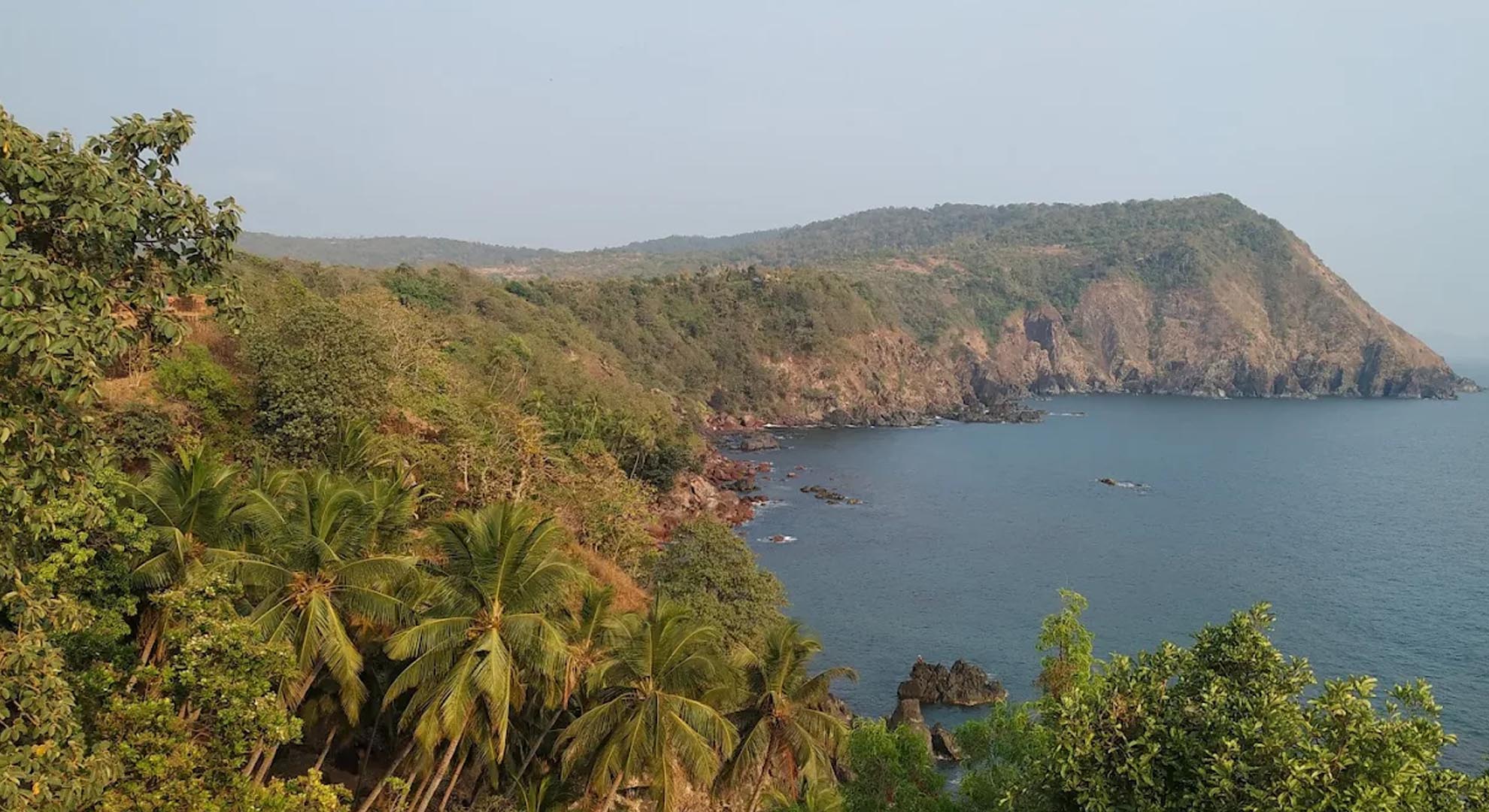
Cabo de Rama Fort in Canacona, South Goa, is a ruined cliff-top fort with wide Arabian Sea views, a small church inside its walls, and a steep path down to a quiet pebble beach. Entry is free, and late afternoon is the best time to visit, when the light turns soft and the sunset crowds gather along the ramparts.
Key Highlights
- Cliff-top fort in Canacona, South Goa, about 28 km from Margao and 60 km from Panaji.
- Free entry, open daily, with most sources listing timings of 9:00 am to 5:30 pm.
- Named for Lord Rama, with a local legend of his exile stay here with Sita.
- Portuguese seized the fort in 1763 and built barracks, a church, and cannons into it.
- Steep path from the fort leads down to Cabo de Rama Beach, a secluded pebble shore.
The Legend Behind the Name
Cabo de Rama takes its name from Lord Rama of the Ramayana. Local legend says Rama stayed here with Sita during their exile, and the headland has carried his name ever since. The story is legend, not documented history, but it explains why the place feels sacred as well as strategic. Visitors still link the fort with the epic, and the name itself draws travellers who know the Ramayana well.
That blend of myth and military history is what sets Cabo de Rama apart from Goa’s other forts.
History of the Fort
The fort predates Portuguese rule in Goa. Hindu rulers held this headland first, valuing the cliff for its command over the coast and the mouth of the Sal River. In 1763, the Portuguese seized the fort and turned it into a military base, adding barracks, a church, and gun positions. Later, the fort also served as a prison.
After Goa’s liberation in 1961, the fort passed out of military use and became a public monument. Time and weather have worn it down since then. Walls stand in places, bastions crumble in others, and cannons sit rusted where they were left. The ruin is part of the experience: this is a fort to walk through slowly, not a museum to tick off.
What to See Inside
Inside the walls, the most intact building is the small church of St Anthony, which still holds services and gives the site a living religious side. Around it lie the remains of barracks, a cemetery, and old cannon positions. The walls themselves are built of red laterite stone, and in places they rise high above the cliff, framing views that run for miles along the coast.
The best viewpoints sit along the western ramparts, facing the open sea. From here, the coast curves away towards Agonda and Palolem in one direction and towards the Sal River mouth in the other. Photographers should come in the late afternoon, when the low sun lights the laterite and the sea. For a second fort walk on another day, Chapora Fort in the north offers a different view of the Goan coast. Stay well back from the cliff edges, since there are no safety barriers at the drops.
Cabo de Rama Beach
A steep path from the fort leads down to Cabo de Rama Beach, a secluded shore covered in pebbles rather than sand. The beach is quiet even in peak season, and it suits travellers who want solitude over shacks and crowds. The climb back up is steep, so wear sturdy footwear and carry water.
Most visitors treat the beach as a short side trip from the fort, not as a full beach day.
How to Reach Cabo de Rama Fort
The fort sits in Canacona taluka in South Goa, and the only practical way to reach it is by road. The same coastal road also serves Palolem Beach, the nearest beach base for the fort. Public buses run to Canacona and nearby villages, but they are infrequent, and the last stretch usually needs a taxi or an auto rickshaw. A rented scooter or car gives the most freedom, and the drive itself is part of the trip, running through villages and along the coast.
By Air
The nearest airport is Dabolim Airport, about 51 to 53 km from the fort. From the airport, hire a taxi for the drive south through Margao and Canacona, which takes around one and a half hours. Manohar International Airport at Mopa is farther away, so Dabolim is the better choice for this part of Goa.
By Train
The nearest railway station is Canacona, about 20 km from the fort. From Canacona station, take a taxi or an auto rickshaw for the last stretch. Madgaon (Margao) station is the bigger railhead in South Goa, about 28 km away, and it offers more train options and easier taxi access.
By Road
By road, the fort is about 28 to 30 km from Margao, 60 km from Panaji, 18 km from Palolem Beach, and 16 km from Agonda Beach. From Margao, the route runs through Chinchinim, Assolna, and Betul before turning towards the coast. The last stretch of road narrows and winds through a canopy of trees before opening at the fort’s parking area. Parking near the entrance is usually free or costs a small fee of around Rs 20 to Rs 30.
Best Time to Visit
October to March is the best season for Cabo de Rama Fort, with pleasant weather and calm seas. Agonda Beach, about 16 km away, is the quietest beach base for a fort visit in this season. November to February is the most comfortable stretch, and late afternoon visits give the best sunset views. Summer months from April to June are hot but quieter. Avoid the monsoon months of June to September for a fort visit, since paths turn slippery, shelter is limited, and the sea is rough.
Entry Fee and Timings
Entry to Cabo de Rama Fort is free, and there is no ticket counter or advance booking. Most sources list the timings as 9:00 am to 5:30 pm daily, though the site has no formal gate, and some guides describe it as open from sunrise to sunset. Arrive by 4:30 pm to explore the walls and the church before sunset, and leave before dark, since lighting inside the fort is limited. A small refreshment stall near the entrance sells snacks and drinks, but there are no proper restaurants or toilets inside, so carry water.
Things to Do Nearby
Cabo de Rama fits well into a South Goa beach circuit. Palolem Beach and Agonda Beach are the nearest beach stops, both within about 18 km, and both offer places to eat and stay. Bogmalo Beach near the airport works as a stop on the way south, and Chapora Fort in the north gives a second fort walk with a different view of the Goan coast.
Travel Tips
On the drive back, Bogmalo Beach near the airport works as a final stop before a flight. Wear shoes with grip, since the fort paths are uneven and the beach path is steep. Carry water, sunscreen, and a hat. Do not climb on unstable walls or lean over cliff edges for photos. If you ride a scooter, check the fuel before leaving Canacona, since pumps are sparse on the coastal road.
Frequently Asked Questions
Where is Cabo de Rama Fort located?
Cabo de Rama Fort is located in Canacona taluka in South Goa, on a cliff above the Arabian Sea. It sits about 28 km from Margao, 60 km from Panaji, and 16 km from Agonda Beach. The fort stands on a cliff above the Arabian Sea near Cabo de Rama Beach.
Is there an entry fee for Cabo de Rama Fort?
No, there is no entry fee for Cabo de Rama Fort. Entry is free for all visitors, and there is no ticket counter or advance booking, though parking near the entrance may cost a small fee. There is no ticket counter, and no advance booking is needed for a visit.
What are the timings of Cabo de Rama Fort?
Cabo de Rama Fort is generally open from 9:00 am to 5:30 pm daily. The site has no formal gate, so some guides describe it as open from sunrise to sunset, but late afternoon is the best time for a visit.
What is the history of Cabo de Rama Fort?
Cabo de Rama Fort predates Portuguese rule and was held by Hindu rulers before the Portuguese seized it in 1763. They built barracks, a church, and gun positions into it, and later used it as a prison, before it became a public monument after 1961.
How do I reach Cabo de Rama Fort from Margao?
From Margao, drive about 28 to 30 km south through Chinchinim, Assolna, and Betul to Canacona and on to the fort. A rented scooter or taxi is the best option, since public buses on this route are infrequent. Book a return taxi in advance, since taxis are limited near the fort.
Can I visit Cabo de Rama Beach from the fort?
Yes, a steep path from the fort leads down to Cabo de Rama Beach, a secluded pebble shore. Wear sturdy footwear, carry water, and allow time for the climb back up, since the path is steep and exposed. Carry water for the climb, and allow extra time for the steep path.
Cabo de Rama Fort rewards travellers who like their history unpolished. Go late in the day, walk the ramparts slowly, and finish with the sunset before heading back to Palolem or Agonda for the night.
Weather Cabo de Rama Fort
[location-weather id="5549"]