
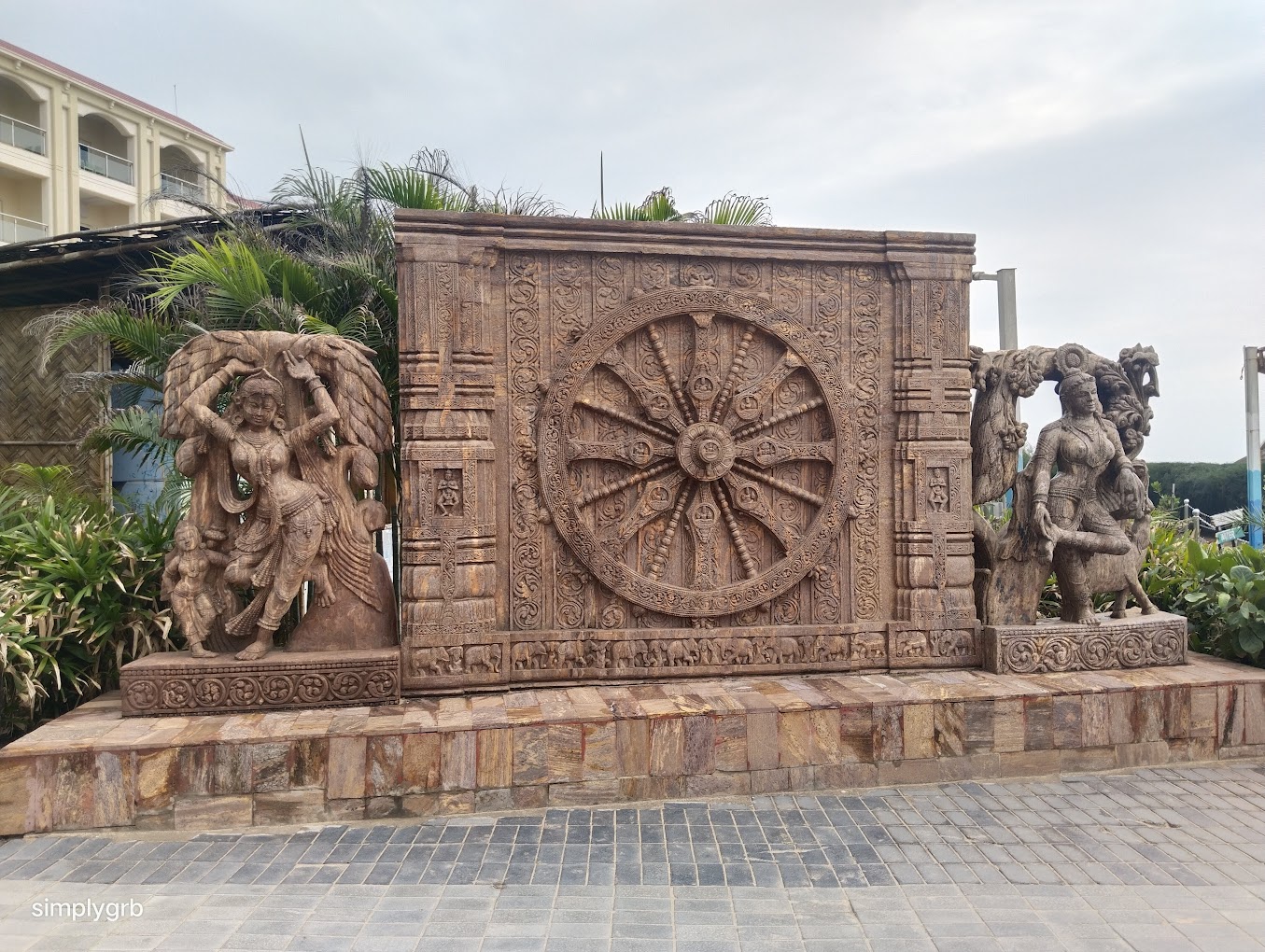
Golden Beach Puri is Odisha’s Blue Flag beach, an 870-metre stretch on Chakratirtha Road that has held the Blue Flag eco-certification every year since October 2020. The fenced zone has paid entry, Nolia community lifeguards, changing rooms, watchtowers and a strict no-plastic rule. It sits about 2–2.5 km from the Jagannath Temple, so visitors often pair the two in one day. This guide covers the certification, fees, timings, facilities, how to reach and the best time to go.
Key Highlights
- Golden Beach received India’s Blue Flag certification in October 2020 (jury announced 6 October, flag hoisted 11 October 2020) from FEE, Denmark, awarded against 33 criteria in 4 categories, with annual renewal; the 2026 season marks its 7th consecutive year.
- The certified zone is an 870m stretch on Chakratirtha Road near Mayfair Heritage, a managed, fenced section distinct from the rest of Puri beach.
- Entry is ticketed: about ₹20 for 3 hours, with day passes around ₹50 (district residents) / ₹100 (tourists) and under-10s free; figures vary across sources, so confirm at the gate.
- Facilities include Nolia community lifeguards, watchtowers, red-flag swim zones, changing rooms, solar lighting, accessible pathways and an information centre; plastic, loud music and alcohol are not allowed.
- The beach is about 2 km from Puri railway station, 60 km from Biju Patnaik International Airport (Bhubaneswar) and 2–2.5 km from the Jagannath Temple. Best season: October to March.
What the Blue Flag Actually Means
The Blue Flag is an eco-label run by the Foundation for Environmental Education (FEE), Denmark, awarded to beaches, marinas and tourism boats that meet 33 criteria across four categories: environmental education and information, water quality, environmental management, and safety and services. In India the programme is driven by the Ministry of Environment, Forest and Climate Change; Odisha’s MoBeach cleanup drive, documented on the Odisha Tourism blog, got Golden Beach certified. The jury announced the award on 6 October 2020 and the flag was hoisted on 11 October 2020 (Wikipedia, Puri Beach). Certification renews every year: a beach must keep meeting the criteria, not just meet them once. For the 2026 season Golden Beach holds its 7th consecutive certification, which means cleaner sand, tested water and lifeguard cover you can count on.
The Beach: An 870-Metre Managed Stretch
The Blue Flag zone covers 870 metres of shoreline on Chakratirtha Road, on the Mayfair Heritage side of Puri’s beachfront, fenced and gated, with entry controlled at ticket counters. Inside the zone the sand is cleaned daily, water quality is monitored, and swimming is restricted to marked safe zones. Outside the fence, Puri’s main beach continues as before: fishing boats, camel rides, food stalls and the full chaos of a working beach town. You pay a small fee to step into the managed section. At sunrise the sun comes up straight out of the Bay of Bengal, and the Blue Flag stretch is nearly empty before 8 am.
Facilities Inside the Zone
Facilities cover five groups: eco infrastructure (segregated bins, a no-plastic policy, solar lighting), modern amenities (changing rooms, washrooms, drinking water, an accessible pathway), safety (Nolia community lifeguards, watchtowers, first aid, marked red-flag zones), recreation (a play area, water-sports counters), and information boards on the criteria and water quality. The Nolia lifeguards know these currents better than anyone; their watchtowers are staffed through bathing hours, and red flags go up when the sea turns rough.
Entry Fee and Timings
Entry is ticketed: the commonly reported figure is about ₹20 for 3 hours, with day passes around ₹50 for district residents and ₹100 for tourists, and children under 10 free. Treat every figure as approximate: sources vary and the counters revise rates, so confirm at the gate. Timings are reported as roughly 5–6 am to 10 pm, varying by source. Arrive before 9 am for the cleanest beach and easiest parking, and avoid the midday heat; shade inside the zone is limited.
Things to Do (and What to Skip)
Swimming is the main activity, but respect the sea: Puri’s coast has strong currents, so swim between the flags and never beyond the red markers. Water sports run from licensed counters at the zone’s edge; indicative prices are about ₹1,500–2,000 for surfing and ₹600–800 for jet-ski rides, but confirm on the spot and check safety gear before paying. Do not swim after dark, do not ignore a red flag because the water “looks fine,” and do not carry plastic inside; the no-plastic rule is enforced. Loud music and alcohol are barred too. For a wilder beach day, the Pir Jahania Beach at Astaranga and Dagara Sea Beach in Balasore offer the opposite end of the spectrum, no tickets, no fences, far fewer people.
How to Reach Golden Beach Puri
By Air
The nearest airport is Biju Patnaik International Airport, Bhubaneswar, about 60 km away. From the airport, take a taxi or bus to Puri (roughly 1.5 hours); from Puri town the beach is a short auto-rickshaw ride down Chakratirtha Road.
By Train
Puri railway station, about 2 km from the beach, is a major terminus with direct trains from Kolkata, Delhi, Mumbai, Chennai, Hyderabad and Bhubaneswar. From the station, autos and cycle-rickshaws run to Chakratirtha Road and the Blue Flag entry gate.
By Road
Puri is well connected by road: regular OSRTC and private buses run from Bhubaneswar (about 60 km, 1.5 hours), and the Bhubaneswar–Puri highway is in good condition. Parking near the Blue Flag gate fills on winter weekends; arrive before 9 am or use an auto from town.
Best Time to Visit
October to March is the best season, with pleasant daytime temperatures, calm seas and the full facility roster running. This corrects the old post’s “November to June” window, which stretches too far into the hot season; April–May is genuinely hot on open sand. The monsoon (June–September) brings rough seas, red-flag days and occasional zone closures. Rath Yatra week (June–July) floods Puri with pilgrims; memorable once, but not the trip for a relaxed beach day. Winter weekdays give you the Blue Flag stretch at its best: clean, uncrowded and swimmable.
Nearby Places Worth Adding
The Jagannath Temple, about 2–2.5 km away, is the reason most travellers are in Puri at all: do the temple in the morning and the beach in the late afternoon. The Puri lighthouse, about 3.4 km along the coast, gives a good elevated view of the shoreline. Day trips include Raghurajpur artisan village, Chilika Lake’s Satapada side for dolphins, and Konark’s Sun Temple up Marine Drive. Beach-hoppers comparing certified versus wild shores can look at Goa’s calmer options too, Palolem Beach in the south and Sinquerim Beach in the north, though neither carries the Blue Flag management that makes Golden Beach different. Closer to home, Ganjam’s Bateswar Sea Beach pairs a quiet shoreline with a seaside temple for a very different coastal day.
Travel Tips
- Carry the entry fee in cash or UPI; counters accept digital payments but queues move faster with exact change.
- Swim only between the marked flags and never when the red flag is up; Puri’s currents are strong.
- Leave plastic outside: the no-plastic rule is enforced at the gate.
- Early morning (before 8 am) is the best time for photos, clean sand and empty frames.
Frequently Asked Questions
Why is Golden Beach Puri called a Blue Flag beach?
Because it holds the Blue Flag eco-certification from the Foundation for Environmental Education (FEE), Denmark, awarded against 33 criteria in 4 categories: environmental education, water quality, environmental management, and safety and services. The award was announced on 6 October 2020 and the flag hoisted on 11 October 2020, and it is renewed every year.
What is the entry fee for Golden Beach Puri?
The commonly reported fee is about ₹20 for 3 hours, with day passes around ₹50 for district residents and ₹100 for tourists, and children under 10 free. Sources vary and counters revise rates, so confirm at the gate. Entry to the rest of Puri’s main beach outside the fenced Blue Flag zone remains free.
What are the timings of the Blue Flag beach in Puri?
Timings are reported as roughly 5–6 am to 10 pm, varying by source. The practical window is early morning to sunset: arrive before 9 am for the cleanest sand and easiest parking, and avoid the midday heat since shade inside the zone is limited.
Is it safe to swim at Golden Beach Puri?
Yes, within the marked safe zones, trained lifeguards from the local Nolia fishing community staff the watchtowers through bathing hours. Puri’s coast has strong currents, so swim only between the flags and never beyond the red-flag markers. Do not swim after dark.
How far is Golden Beach from Puri railway station and the Jagannath Temple?
The beach is about 2 km from Puri railway station and 2–2.5 km from the Jagannath Temple, on Chakratirtha Road near Mayfair Heritage. Biju Patnaik International Airport at Bhubaneswar is about 60 km away. The temple and the beach pair easily in a single day.
What is the best time to visit Golden Beach Puri?
October to March is the best season, with pleasant temperatures and calm seas. April–May is hot on the open sand, and the monsoon (June–September) brings rough seas and occasional zone closures. Rath Yatra week floods Puri with crowds; memorable once, but not the trip for a quiet beach day.
Do the temple in the morning, the Blue Flag stretch in the late afternoon, and swim only between the flags; that is the whole formula for getting this beach right.
Weather Blue Flag Sea Beach
[location-weather id="5549"]