
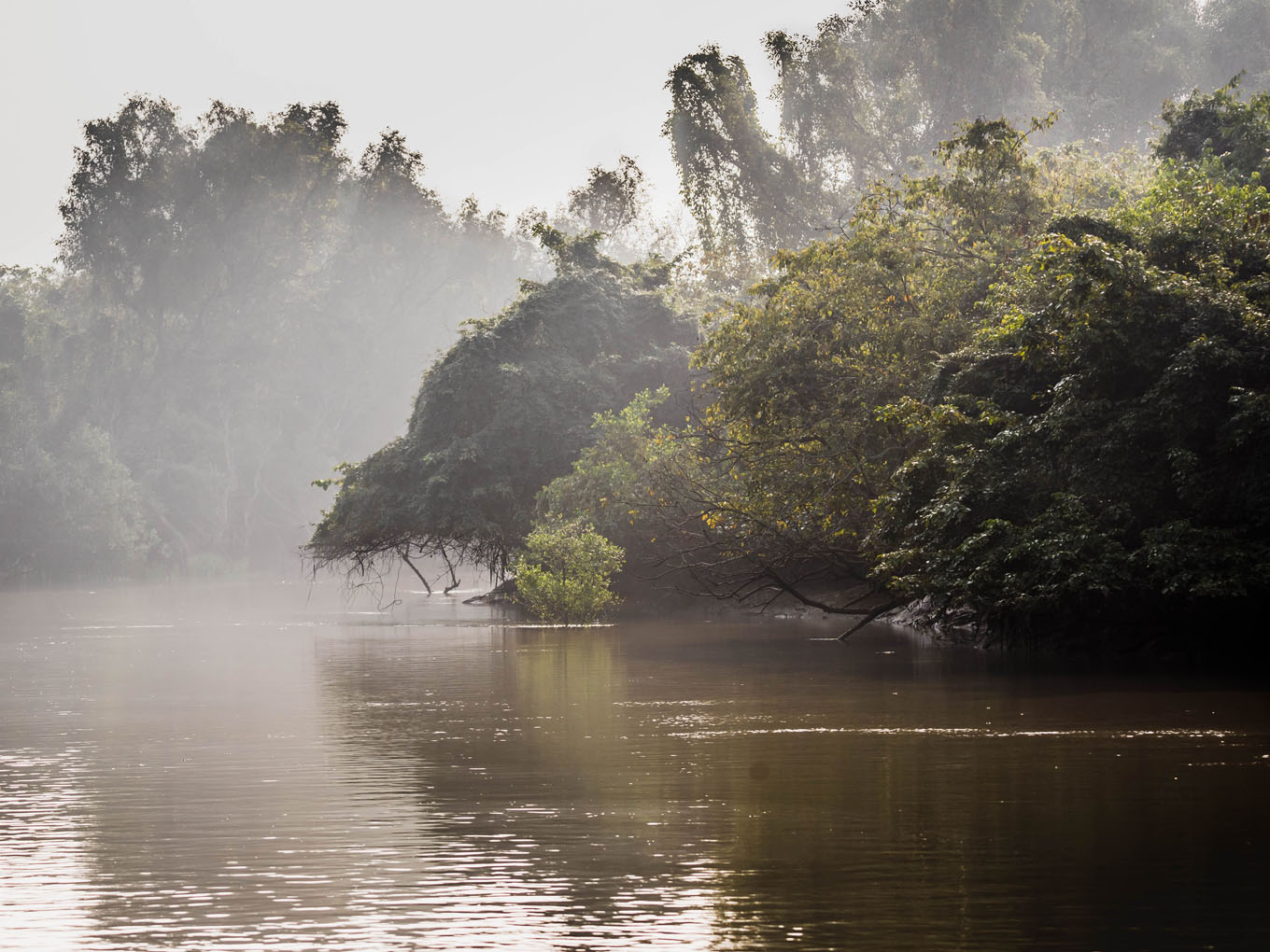
Bhitarkanika National Park is a 145 sq km mangrove national park in Kendrapara district, Odisha, and the heart of India’s second-largest mangrove forest after the Sundarbans. Its creeks hold one of the country’s largest saltwater crocodile populations, its trees shelter more than 300 bird species, and the only way to see most of it is by boat.
Key Highlights
- India’s second-largest mangrove forest, spread across the Brahmani, Baitarani, and Dhamra river delta.
- More than 1,800 saltwater crocodiles, including adults over 6 metres long.
- A Ramsar wetland site since 19 August 2002, inside a 672 sq km wildlife sanctuary.
- Boat safaris only: no roads cross the park, and every trip runs through tidal creeks.
- Best visited November to February, when crocodiles bask on mudbanks and winter birds arrive.
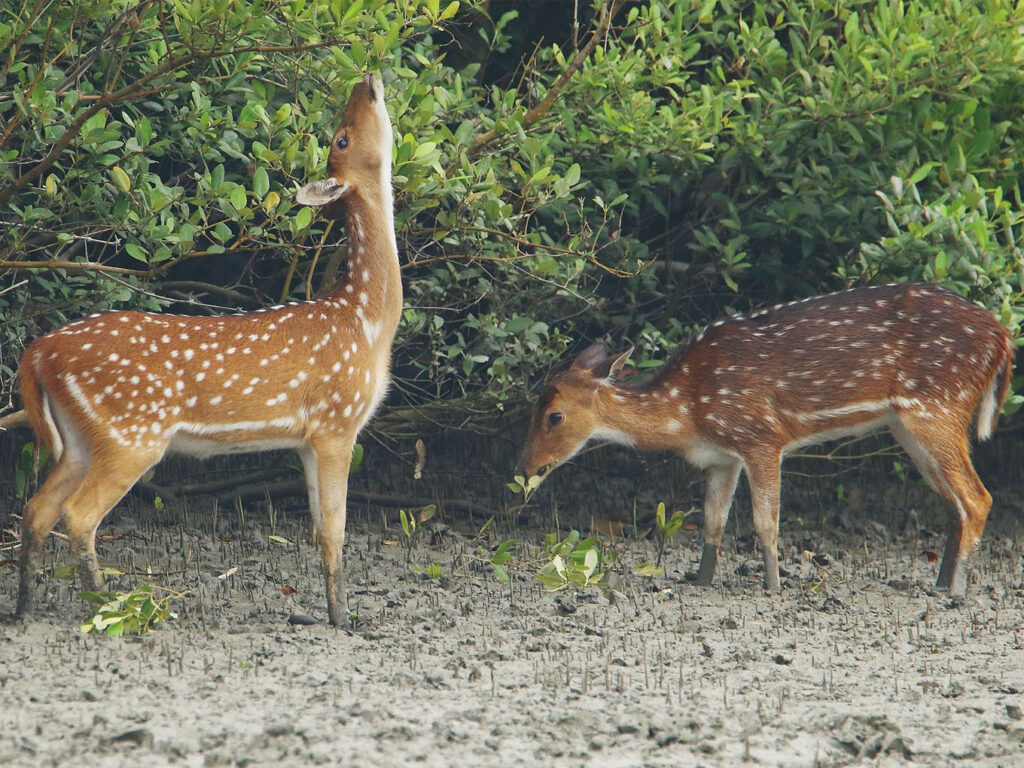
The Mangrove Forest
Bhitarkanika’s mangroves grow where three rivers meet the Bay of Bengal. The park covers 145 sq km inside a 672 sq km sanctuary, designated on 16 September 1998 and listed as a Ramsar site on 19 August 2002, the second in Odisha after Chilika Lake.
Mangroves are salt-tolerant trees whose stilt roots shelter nurseries for fish, crabs, and prawns, and the forest shields the coast from cyclones. Travellers planning a wildlife route can compare it with other reserves in our guide to wildlife sanctuaries in India.
Tides set the rhythm here. Twice a day, water floods the mudflats, then pulls back and leaves the banks exposed, deciding when boats can pass and when crocodiles rest.
Wildlife: Saltwater Crocodiles
The saltwater crocodile is the reason most visitors come. Recent counts put the population at more than 1,800 animals, and about 10 percent of the adults exceed 6 metres in length.
Morning is the best time to see them, when crocodiles climb onto mudbanks to warm up and the low winter sun makes them easy to spot. Stay inside the boat: these are wild animals, and the forest department’s rules exist because the risk is real. Odisha runs a separate crocodile programme at the Ramatirtha Crocodile Project, which shows how the state’s conservation work extends beyond this one park.
The Dangmal breeding centre raises hatchlings for release into the creeks and is a standard stop on the Khola boat route, where visitors can see young crocodiles up close.
Birds of Bhitarkanika
The heronry at Bagagahana, near Dangmal, is the park’s best-known nesting site, and a short walk from the dock leads to a birding tower. Go in the morning, when herons and storks are most active, and bring binoculars.
The park records around 320 bird species, including eight kingfishers. Openbill storks, black ibis, darters, egrets, and herons are common along the creeks, and close to 120,000 migratory birds arrive each winter. Odisha’s other great birding wetland is Mangalajodi Bird Sanctuary near Chilika, which pairs well with Bhitarkanika on a longer itinerary.
Look for the mangrove pitta, a shy, brightly coloured bird of the mangrove floor. In 2023, a count recorded 179 in the park, a figure that shows how intact this habitat is. Plan the afternoon shift, when waders feed along the mudflats.
Boat Safari: Gates, Routes, and Costs
There are no roads inside Bhitarkanika, so every visit is a boat trip. Khola Gate is the main entry and the best choice for crocodiles and the Dangmal breeding centre. Gupti Gate suits birdwatchers and the run to Habalikhati Beach, with fewer crocodiles and open coastal views.
Boats must be hired at the gate, and every boat carries a local forest guide. A private boat on the inner Khola to Dangmal route costs about Rs. 3,000 to Rs. 3,500 for three to four hours, and the outer Gupti to Habalikhati run costs about Rs. 2,000 to Rs. 2,500. The guide fee is roughly Rs. 100 to Rs. 200, and each boat takes up to 18 people, so sharing brings the cost down.
Tides control the day. Boats run a morning shift from about 7:30 AM to 11 AM and an afternoon shift from about 1:30 PM to 4:30 PM, morning for crocodiles and afternoon for birds. Ask at the forest office which shift matches the tide on your date.
Entry Fee and Timings
The park is open from 7 AM to 5 PM, with last entry around 3:30 PM. Entry costs Rs. 40 per Indian visitor (Rs. 25 in groups of ten or more) and Rs. 1,000 per foreign visitor, as listed by the forest department; confirm the rate at the gate, since fees change. The core park closes from 1 May to 31 July for the breeding season, and for about a week in January for the annual census.
Best Time to Visit
November to February is the best time to visit. Daytime temperatures sit between 15°C and 27°C, the sky stays clear, and crocodiles spend long hours basking on open mudbanks. Migratory birds arrive in the same months, so one boat trip can cover both.
March and April turn hot, and the park closes from May. In late October or early March, book the morning shift, since crocodiles retreat to deep water as the sun climbs.
How to Reach Bhitarkanika National Park
By Air
The nearest airport is Biju Patnaik International Airport in Bhubaneswar, around 150 km away, and the drive to the gates takes about three and a half hours via Chandikhole and Kendrapara town.
By Train
Bhadrak, about 70 km away on the Howrah-Chennai main line, is the closest railhead, and Cuttack, about 120 km away, offers more trains. From either station, hire a taxi or take a bus towards Rajnagar.
By Road and Boat
From Bhubaneswar, drive 145 km to Rajnagar, then continue to Khola or Gupti jetty, where permits are issued on showing a valid photo ID. From the jetty, the boat takes over, and the creek ride to Dangmal is part of the experience itself.
Places to Visit Near Bhitarkanika
Habalikhati Beach is a remote, quiet beach reached by boat from Gupti, with untouched sand and no facilities. It works as a half-day extension after a morning safari.
Gahirmatha Beach lies to the east, separating the mangroves from the Bay of Bengal. Gahirmatha hosts one of the largest olive ridley turtle nesting sites on Earth, though the mass nesting, called arribada, needs separate planning.
Dangmal, the main hub inside the park, has forest lodges, a watchtower, and the breeding centre, and most boat routes pass through it.
Pentha Beach near Rajnagar is a long, open shoreline that suits a quiet evening after the safari and is the easiest beach here to reach by road. It has little infrastructure, so go for the walk and the sea air.
Why Bhitarkanika Matters for Conservation
Bhitarkanika protects more than crocodiles. Its mangroves store carbon, buffer the coast against cyclones, and support the fisheries that nearby villages depend on. The Ramsar listing recognises that value at a global level, and the park’s crocodile breeding, mangrove restoration, and community eco-tourism programmes all aim to keep the system intact.
Where to Stay and Travel Tips
Stay at Dangmal, where the forest department runs lodges inside the park, or base yourself at Rajnagar or Kendrapara town. Forest stays need advance booking and fill up from November to February.
Carry cash, a valid photo ID, drinking water, and sun protection. Mobile signal is weak inside the park, so inform family of your plan before you enter. Wear a life jacket, follow the guide, and never trail a hand in the water. With extra days, pair Bhitarkanika with the riverine forests of Satkosia Wildlife Sanctuary, which shows a different side of Odisha’s wildlife.
Conclusion
Bhitarkanika rewards a slow boat, a quiet creek, and a crocodile on a mudbank. Pick the Khola gate for wildlife, go in winter, and give the park a full day.
Frequently Asked Questions
What is Bhitarkanika National Park famous for?
Bhitarkanika is famous for its saltwater crocodiles and its mangrove forest, the second-largest in India after the Sundarbans. The 145 sq km park in Kendrapara holds more than 1,800 crocodiles, 320 bird species, and a Ramsar-listed wetland in the Brahmani-Baitarani-Dhamra delta.
How much does a Bhitarkanika boat safari cost?
A private Khola to Dangmal boat costs about Rs. 3,000 to Rs. 3,500 for three to four hours, and the outer Gupti to Habalikhati run costs about Rs. 2,000 to Rs. 2,500. Entry is Rs. 40 per Indian visitor, plus about Rs. 100 to Rs. 200 for a guide.
What is the best time to visit Bhitarkanika National Park?
November to February is the best time, with daytime temperatures between 15°C and 27°C. Crocodiles bask on mudbanks in the cool mornings, migratory birds arrive, and safaris run smoothly. The park closes from 1 May to 31 July for breeding.
Which gate should I choose, Khola or Gupti?
Choose Khola Gate for crocodiles and the Dangmal breeding centre, since its narrow creeks give the closest views. Choose Gupti Gate for birdwatching and the boat run to Habalikhati Beach, where the coastal views are better but crocodile sightings are fewer.
How do I reach Bhitarkanika National Park?
Fly to Bhubaneswar airport, about 150 km away, or take a train to Bhadrak (70 km) or Cuttack (120 km). Drive to Rajnagar, then to the Khola or Gupti jetty, where you buy a permit and board a forest boat into the park.
Is Bhitarkanika National Park open throughout the year?
No. The core park closes from 1 May to 31 July every year for the breeding season, and for about a week in January for the census. The open season runs from August to April, with November to February the best months.
Weather Bhitarkanika National Park
[location-weather id="5549"]