
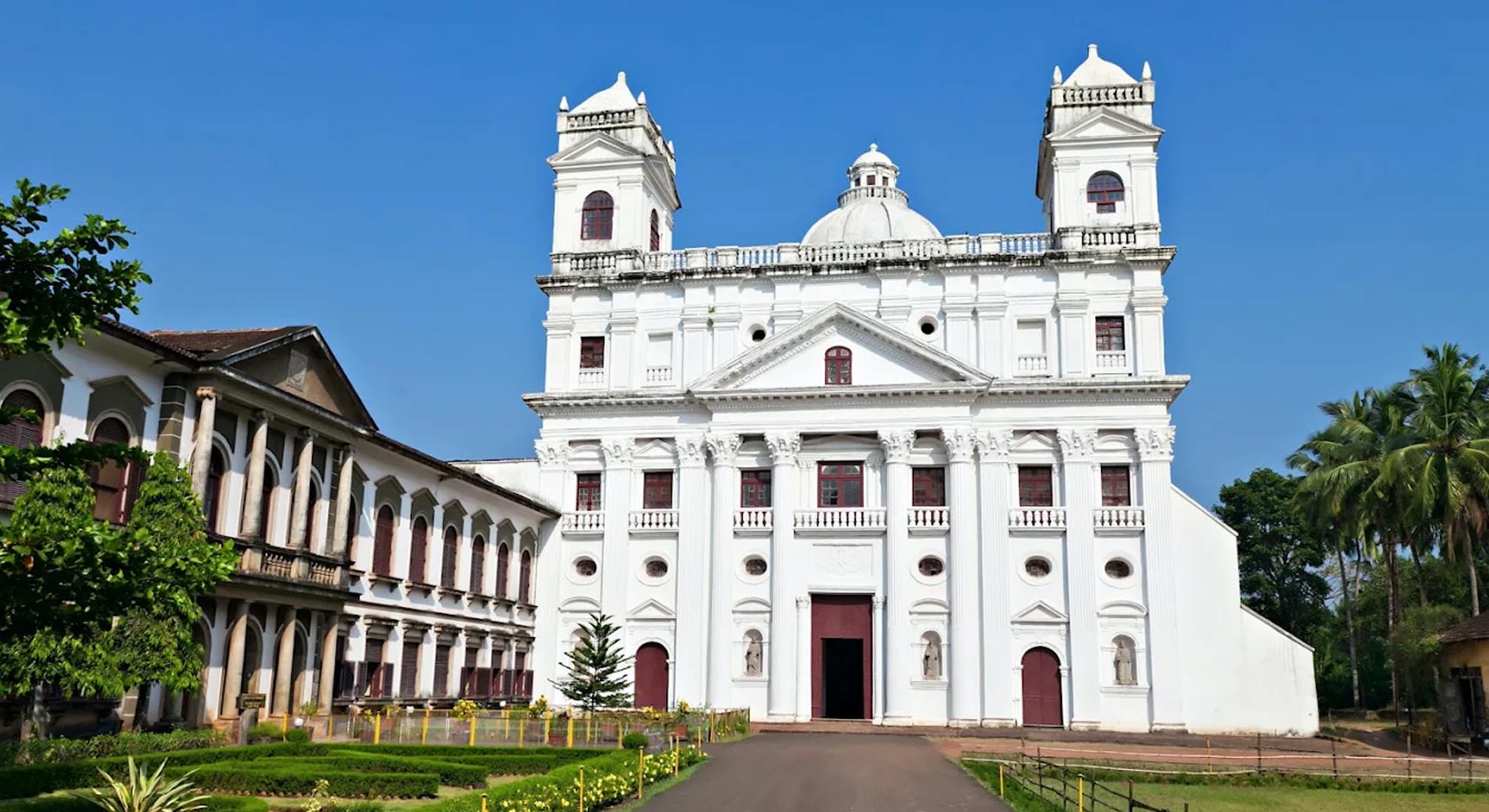
The Basilica de Bom Jesus Goa stands in Old Goa, about 10 km from Panaji, and it holds the relics of St. Francis Xavier inside a church built between 1594 and 1605. It is a UNESCO World Heritage Site, the first minor basilica in India, and still an active place of worship.
Key Highlights
- UNESCO World Heritage Site since 1986, part of the Churches and Convents of Goa, with the relics of St. Francis Xavier in a silver casket.
- Built between 1594 and 1605 and consecrated on 15 May 1605, it is one of the oldest churches in India.
- Entry is free. Usual hours are 9:00 AM to 6:30 PM on weekdays and 10:30 AM to 6:30 PM on Sundays.
- Nearest railway station is Karmali, about 3 km away. Dabolim airport is about 30 km away and Mopa airport about 35 to 40 km away.
- Best time to visit is November to February, early in the morning or late in the afternoon, and the Feast of St. Francis Xavier falls on 3 December.
History of the Basilica
Work on the church began on 24 November 1594, and Archbishop Alexio de Meneses consecrated it on 15 May 1605. The Jesuits built it at a time when Old Goa was the capital of Portuguese India. The name Bom Jesus means Good Jesus, or Infant Jesus, in Portuguese, and the church was dedicated to the infant Jesus.
The basilica is known across the world for one reason above all others. It holds the mortal remains of St. Francis Xavier, the Spanish missionary who arrived in Goa in 1542 and helped found the Society of Jesus. He died in 1552, and his body was brought to Goa in 1554. It rests in a silver casket set on an ornate marble mausoleum, a gift from Cosimo III de Medici, the Grand Duke of Tuscany.
In 1946, the church became the first minor basilica in India. Forty years later, UNESCO listed it as part of the Churches and Convents of Goa, a World Heritage Site. The relics are shown in public only once every ten years during the Solemn Exposition, and the most recent exposition ran from November 2024 to January 2025.
Architecture and the Laterite Facade
The basilica is one of the finest examples of Baroque architecture in India, and its outside looks different from almost every other church in Goa. Most Goan churches are painted white. This one keeps its original laterite stone facade, weathered red brown by four centuries of sun and rain.
Step through the door and the first thing you notice is the gilded main altar, carved wood covered in gold leaf and dedicated to the infant Jesus. The marble floor is inlaid with precious stones, and the walls carry paintings and frescoes that tell scenes from the life of St. Francis Xavier.
The same laterite and lime mortar went into the other Portuguese forts and churches of the period. Fort Aguada, built in 1612 to guard the mouth of the Mandovi river, shows the same solid stonework on a much larger scale.
What to See Inside
Start at the tomb of St. Francis Xavier. The silver casket, made in the 17th century, rests on the marble mausoleum with carved scenes from the saint’s life on its sides. Photography of the tomb is not allowed, and a low murmur is the norm here because people are praying. Give yourself time. The line moves slowly on weekends and feast days.
Look up at the main altar and then across to the side chapels, which hold statues of saints and old wooden carvings. The art gallery beside the basilica holds paintings, sculptures and religious objects from Goa’s colonial period, and it fills in the story the bare walls leave out. The basilica is a working church, not a museum: mass is said daily, and the inner sanctum closes during services and on some public holidays, so an early visit is the safest way to see everything.
Feast of St. Francis Xavier
The feast falls every year on 3 December, the saint’s death anniversary, and Old Goa fills with pilgrims for the novena in the days before it. Special masses run through the day, processions carry the statue of the saint through the lanes, and stalls selling candles, food and religious articles line the road outside. The queue for the tomb can take an hour or more, so visit on a weekday morning in the same week if you want the decorations without the crush.
How to Reach the Basilica
By Air
The nearest airport is Dabolim, also called Goa International Airport, about 30 km from Old Goa. Taxis take 45 minutes to an hour. Manohar International Airport at Mopa, in the north of the state, is about 35 to 40 km away, and the drive takes about an hour.
By Train
Karmali Railway Station is the nearest station, about 3 km from the basilica, and most trains on the Konkan Railway stop there. From Karmali, a taxi or an auto takes ten minutes to Old Goa. Madgaon station is about 28 km away and has more trains.
By Road
Old Goa sits on NH748, about 10 km east of Panaji, and the drive takes 20 to 25 minutes by taxi or private car. Kadamba buses run from Panaji bus stand to Old Goa through the day. Rental scooters are common in Goa, and the ride from Panaji is an easy one.
Timings, Entry Fee and Best Time to Visit
The basilica is usually open from 9:00 AM to 6:30 PM on weekdays and from 10:30 AM to 6:30 PM on Sundays. Timings shift slightly on feast days and public holidays, so check the notice board at the gate on the day. There is no entry fee, and donations for upkeep are welcome.
The best time to visit in 2026 is November to February, when Goa is dry and the light is soft. Come at opening time if you can. The tomb is quiet, the heat is low, and you get the church almost to yourself before the tour buses arrive around mid-morning. Late afternoon is the next best slot.
Nearby Places in Old Goa
The Se Cathedral stands across the square from the basilica, and it is one of the largest churches in Asia. The Church of St. Francis of Assisi, next door, has painted wood panels and an archaeological museum with sculptures, coins and manuscripts from Goa’s past.
The Church of St. Cajetan, a short walk away, was modelled on St. Peter’s Basilica in Rome, and the Viceroy’s Arch stands near the river. All of these are within a ten-minute walk of each other, so leave the car parked and walk the loop.
After the churches, many visitors head to the coast for the evening. Chapora Fort, made famous by the film Dil Chahta Hai, is about 45 minutes north and has one of the best sunset views in Goa. Dona Paula Beach, near Panaji, is closer, with a jetty and a viewpoint over the meeting of two rivers and the sea.
For a quiet beach evening, Palolem Beach in the south and Agonda Beach next to it are both worth the drive.
Travel Tips
Dress modestly. This is an active church, and sleeveless tops and short shorts draw frowns, especially during mass. Keep your voice low inside, switch the phone to silent, and follow the signs on photography. Some areas allow photos, the tomb area does not, and the rules are posted at the entrance.
Conclusion
Go for the history and stay for the quiet. The Basilica de Bom Jesus Goa rewards an early start, and the Old Goa walk around it is the best heritage half-day in the state. Pair it with an evening at Dona Paula or Chapora Fort to see both sides of Goa in one day.
Frequently Asked Questions
Why is the Basilica of Bom Jesus famous?
The basilica is famous because it holds the relics of St. Francis Xavier, the 16th-century Jesuit missionary, in a silver casket on a marble mausoleum. It is also one of the oldest churches in India, built between 1594 and 1605, and a UNESCO World Heritage Site known for its Baroque architecture.
Is the Basilica of Bom Jesus a UNESCO World Heritage Site?
Yes. UNESCO listed the basilica in 1986 as part of the Churches and Convents of Goa, a World Heritage Site. It was the first minor basilica in India, a status it received in 1946, and it remains one of the most visited monuments in Goa.
What is the entry fee and timing of the Basilica of Bom Jesus?
There is no entry fee to visit the basilica. It is usually open from 9:00 AM to 6:30 PM on weekdays and from 10:30 AM to 6:30 PM on Sundays. Timings can shift on feast days and public holidays, so check the notice at the gate on the day of your visit.
How much time is needed to visit the Basilica of Bom Jesus?
Most visitors need 45 minutes to an hour and a half to see the church, the tomb of St. Francis Xavier and the art gallery. If you also want to walk the Old Goa heritage zone, including Se Cathedral and the Church of St. Cajetan, set aside half a day.
What is the best time to visit the Basilica of Bom Jesus?
The best time to visit is November to February, when the weather in Goa is dry and pleasant. Early morning is ideal because the church is quiet and the light is soft. The Feast of St. Francis Xavier on 3 December is the most atmospheric day, but also the most crowded.
How do I reach the Basilica of Bom Jesus from Panaji?
The basilica is about 10 km from Panaji, a drive of 20 to 25 minutes by taxi, bus or private car. Kadamba buses run from Panaji bus stand to Old Goa through the day. The nearest railway station is Karmali, about 3 km away, and the nearest airport is Dabolim, about 30 km away.
Weather Basilica de Bom Jesus
[location-weather id="5549"]