
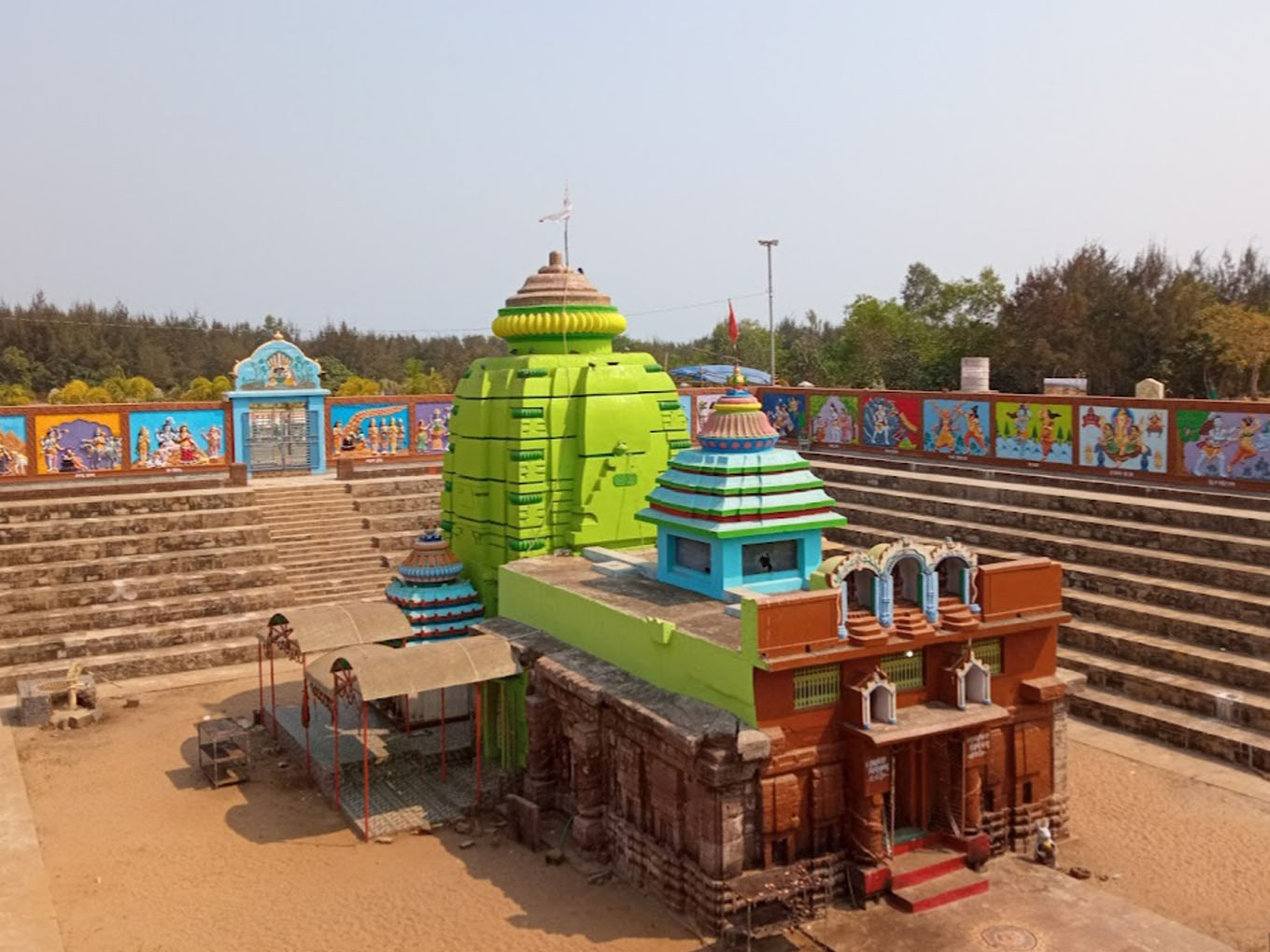
Bakreswar Shiva Temple stands in Markona village in Balasore district, Odisha, on the banks of the Kansa Bansa river. The Kalinga-style shrine is a quiet pilgrimage stop for Shiva devotees and a rewarding detour for travellers exploring the temple towns of northern Odisha.
Key Highlights
- An old Shiva shrine in Markona village, Balasore district, on the banks of the Kansa Bansa river.
- Built in the Kalinga style of temple architecture, with a cluster of smaller shrines around the main sanctum.
- About 19 km from Soro and about 53 km from Balasore town, making it an easy day trip from either.
- Maha Shivratri is the biggest festival here, when the temple draws its largest crowds.
- Best visited between November and February, when the weather stays cool and dry.
Where the temple is
Markona is a small village in the Soro area of Balasore district, in northern Odisha. The temple sits close to the Kansa Bansa river, and the approach runs through paddy fields and village lanes rather than a busy town centre. That setting is part of the appeal: the visit feels calm and unhurried, very different from the crowds at the big pilgrimage cities.
From Balasore town, the drive to Markona takes roughly an hour and a half. Soro, about 19 km away, is the nearest small town and a useful reference point when asking for directions. Signboards use both “Bakreswar” and “Bakreshwar” spellings, so confirm the village name, Markona, with the driver.
History and legend
Local guides disagree on the age of Bakreswar Shiva Temple, and visitors should treat any single date with caution. One Odisha travel guide traces the shrine’s origins to the 8th or 9th century, with the present stonework dated to the 11th and 12th centuries. Another guide places construction in the 16th century, while a third describes it simply as a temple about 500 years old. The honest picture is that the shrine is old and has been extended over time.
The legend attached to the temple says Shiva appeared here in the form of a bull to protect villagers from a demon that was terrorising the area. After the demon was defeated, the villagers built a shrine at the spot, and the name Bakreswar is linked in local telling to that bull form of the god. The story is folklore, not recorded history, but it explains why the temple matters so much to the surrounding villages.
One confusion to avoid: there is a better known Bakreshwar in Birbhum district, West Bengal, famous for its hot springs and its place among the Shakti pithas. That is a different temple in a different state. The Markona shrine in Odisha has no hot springs and no Shakti pitha connection, and travel plans should not mix the two.
Architecture of the temple
The temple follows the Kalinga style seen across Odisha, with a curving tower over the sanctum and carved stonework on the walls. The complex is built mainly in red stone, and one guide counts 13 shrines in the compound, with the central shrine dedicated to Shiva in the form of Bhargaveswar. Smaller shrines around the main sanctum are dedicated to other deities, so a full walk of the compound takes in more than the main hall alone.
Compared with the great temples of Bhubaneswar, Bakreswar is modest in scale, and that is its charm. The carvings reward a slow look, and the riverside setting gives the compound an open, airy feel. Travellers who enjoy the temple architecture of Odisha will find the same Kalinga vocabulary here in a quieter, village setting, similar to the smaller shrines around Ananta Vasudeva Temple in Bhubaneswar.
Festivals and rituals
Maha Shivratri is the temple’s biggest day. Devotees gather for night-long worship, and the village around the temple fills with stalls and visitors. If you want to see the temple at its liveliest, plan around Shivratri, but expect crowds and book transport early. Mondays in the month of Shravan also draw extra devotees, as they do at Shiva shrines across the region.
On an ordinary day, worship follows the usual pattern of a living village temple: morning and evening rituals, offerings of flowers, bel leaves and milk at the sanctum, and prasad for visitors. There is no published entry fee for the temple, and darshan is open to all visitors. Timings are not published on any official site, so confirm the day’s schedule with a local contact or at Soro before setting out, especially if you plan an early morning visit.
Other Odisha temple festivals draw similar village crowds, including the annual celebrations at the Jagannath Temple at Sabarang in Bhadrak district, where the whole village turns out for the deity’s festival days.
How to reach Bakreswar Shiva Temple
By Air
The nearest major airport is Biju Patnaik International Airport at Bhubaneswar, several hours away by road. From the airport, the practical route is a taxi or a bus to Balasore or Soro, then a local taxi to Markona. Travellers flying in should allow a full day for the airport-to-temple journey rather than treating it as a quick hop.
By Train
Balasore railway station, about 53 km from Markona, is the most useful railhead, with trains from Kolkata, Bhubaneswar and other major cities on the Howrah-Chennai line. Soro station is closer, about 19 km away, and also serves the route, though fewer trains stop there. From either station, hire a taxi or an auto-rickshaw for the last stretch to the village.
By Road
Balasore town connects by road to Soro and on to Markona, and the whole stretch is motorable through the year. Buses run between Balasore and Soro, and local taxis cover the final leg. Driving yourself is straightforward, but the last village lanes are narrow, so park at the edge of the temple area and walk in. Drivers continuing south can also stop at Chandikhol Chandi Temple in Jajpur district on the highway route.
Best time to visit
November to February is the most comfortable window, with cool, dry weather that suits temple visits and riverside walks. The monsoon months from July to September turn the countryside green and the river full, which some travellers enjoy, though heavy rain can make village roads messy. Summer, from March to June, gets hot and humid, so an early morning visit works best then. For the festival atmosphere, Maha Shivratri is the obvious pick, and the temple also sees steady visitors through the winter pilgrimage season.
Nearby places to visit
Balasore district has several stops that pair well with Markona. Soro town itself is a small market centre worth a short stop, and the district’s better known shrines include the Khirachora Gopinath temple at Remuna, near Balasore town, and the Panchalingeswar temple in the Nilgiri hills, where a stream flows over five lingams. Both are day-trip distance from Markona.
For those interested in Odisha’s living spiritual centres rather than only its old stone temples, the Tapoban Mahima Ashram near Dhenkanal is a further option, set in the Kapilash hill area and very different in atmosphere from a village Shiva shrine.
Travel tips
Dress modestly and remove footwear before entering the sanctum area. Carry drinking water, since shops near the temple are few. Photography is usually tolerated in the outer compound, but ask before photographing inside the sanctum. Mobile signal can be patchy, so download offline maps for the Balasore-Soro stretch first. During Shivratri, arrive early: parking and the approach lanes get crowded by late morning.
Frequently Asked Questions
Where is Bakreswar Shiva Temple located?
Bakreswar Shiva Temple is in Markona village in Balasore district, Odisha, on the banks of the Kansa Bansa river. It lies about 19 km from Soro town and about 53 km from Balasore town, and it is reached by road through village lanes from either place.
How old is Bakreswar Shiva Temple?
The exact age is not settled. Published Odisha guides give different dates, ranging from 8th-9th century origins to a 16th century construction and a general “about 500 years old” tradition. The safest description is that it is an old shrine that has been rebuilt and extended over several centuries.
What is the legend behind the temple?
Local folklore says Shiva appeared in the form of a bull to defeat a demon that was terrorising the villages around Markona. The villagers then built a shrine at the spot, and the name Bakreswar is linked in this telling to the bull form of the god. The story is tradition, not documented history.
Which festival is most important at Bakreswar Shiva Temple?
Maha Shivratri is the temple’s biggest festival, when devotees gather for night-long worship and the village fills with visitors and stalls. Mondays in the month of Shravan also draw larger than usual crowds, as at Shiva shrines across the region.
How do I reach Bakreswar Shiva Temple from Balasore?
Take a bus or taxi from Balasore town toward Soro, then a local taxi for the last stretch to Markona village, about 53 km in total. Balasore railway station is the most useful railhead, and the drive from the town takes roughly an hour and a half.
What is the best time to visit Bakreswar Shiva Temple?
November to February is the best time, with cool and dry weather for temple visits and riverside walks. The monsoon months from July to September are green and pleasant if you do not mind rain, while summer visits are best made early in the morning.
For a quiet temple visit away from Odisha’s big pilgrimage crowds, Markona is worth the detour.
Weather Bakreswar Shiva Temple
[location-weather id="5549"]