
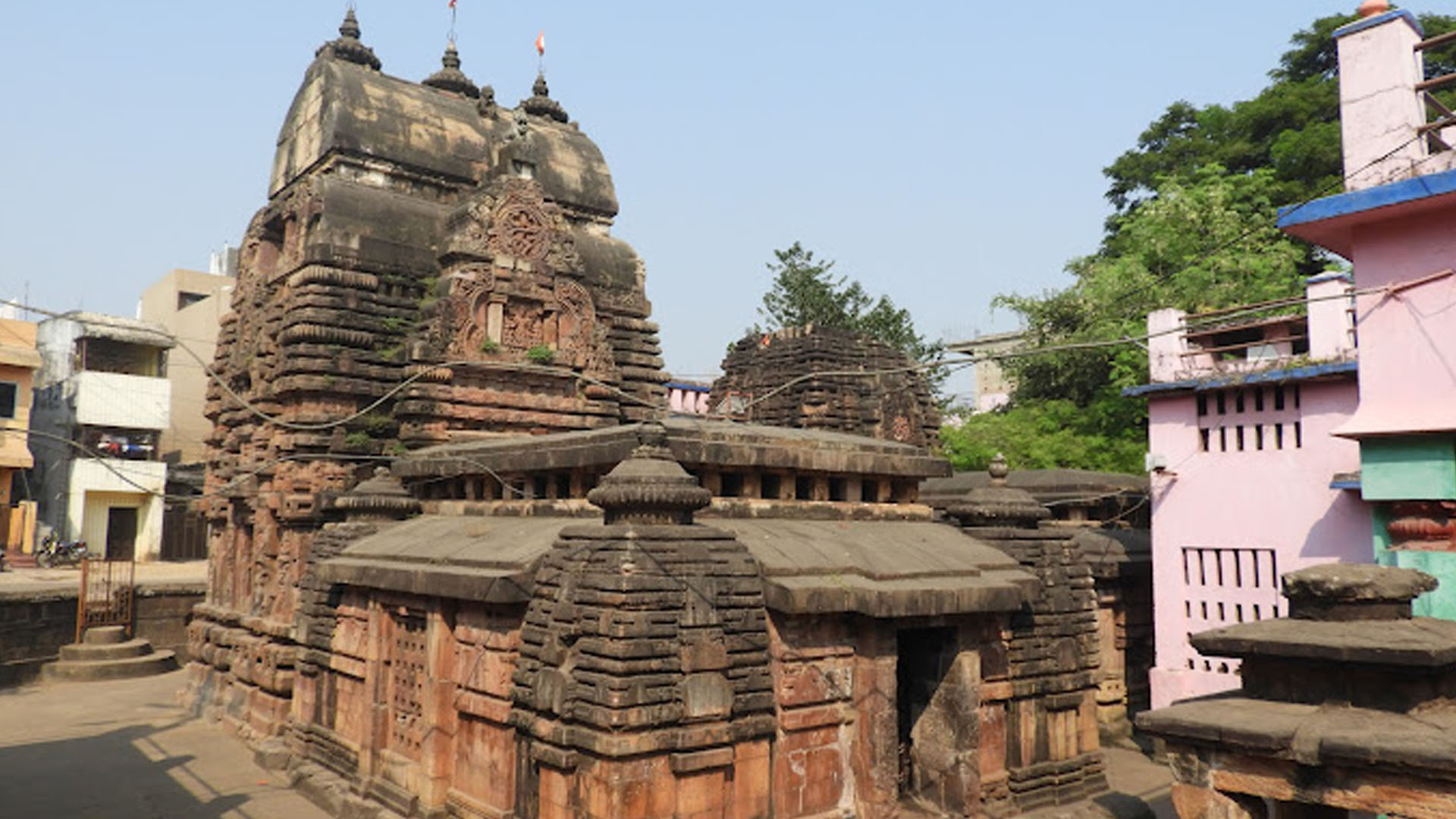
Baitala Temple Bhubaneswar, also called Vaital Deula, is an 8th century shrine to Goddess Chamunda in the Old Town of Bhubaneswar, Odisha. It is one of the few temples in the city built in the Khakhara style, with a barrel-vaulted tower that looks nothing like the curvilinear spires around it. Visit in the morning, when the shrine is most likely to be open.
Key Highlights
- Baitala Temple Bhubaneswar is an 8th century shrine to Chamunda, a fierce form of Durga, on the banks of Bindu Sagar.
- It is a rare Khakhara style temple, with a semi-cylindrical vaulted roof, an oblong sanctum, and three spires.
- Locals call it Tini Mundia Mandira, the temple with three spires, said to stand for Mahakali, Mahalakshmi, and Mahasaraswati.
- Entry is free, and most guides list timings as 8 am to 6 pm, though the shrine is often found closed outside morning worship.
- The temple stands about 700 metres from Lingaraja Temple and 4.5 km from Bhubaneswar railway station.
History: A Tantric Shrine from the 8th Century
Baitala Deula dates to the 8th century CE, a period when Shaktism and tantric practice were strong in Odisha. The shrine is dedicated to Chamunda, known locally as Kapalini, and it is one of the rare temples in India built for tantric worship rather than the mainstream temple ritual of its time. That history shows in the art. The central image is eight-armed Chamunda, seated on a corpse, wearing a garland of skulls, with a jackal and an owl beside her. Around her are niches filled with unusual figures, and the walls carry panels of deities, hunting scenes, elephant captures, and erotic couples. The temple was built when Bhubaneswar, then Ekamra Kshetra, was already a major sacred city, and it still stands in the same Old Town lanes, close to Kedargouri Temple and Bindu Sagar tank.
Architecture: Why the Roof Looks Different
Most Bhubaneswar temples rise in a curving tower called a rekha deul. Baitala breaks that pattern. Its tower is rectangular in plan and capped with a semi-cylindrical vault, a shape closer to the gopurams of South India than to the spires of its neighbours. This is the Khakhara order of Kalinga architecture, and Baitala is one of its best known examples. The jagamohana, or assembly hall, is also rectangular, with a small subsidiary shrine set into each corner. Look for the two chaitya windows on the facade above the jagamohana. The lower one carries a finely carved Surya, the sun god, with Usha and Pratyusha shooting arrows on either side. The upper one holds a ten-armed Nataraja. In front of the hall stands a stone post with two Buddha-like figures in the dharma-chakra-pravartana pose. The entrance is marked by a four-faced linga with detailed carving. The name Baitala itself is sometimes linked to the Odia word boita, a boat, because the vaulted roof reads like an overturned vessel. For a second Khakhara comparison on the same trip, the Megheswar Temple in Bhubaneswar belongs on the same route.
Best Time to Visit
October to March is the best time to visit Bhubaneswar, when days are pleasant for walking the Old Town lanes. Navaratri brings special rituals at the shrine and larger crowds. Summer afternoons are hot, so plan a morning visit if you travel between April and June. The monsoon months are humid but quieter, and the temple lanes are at their greenest then.
How to Reach Baitala Temple
By Air
Biju Patnaik International Airport in Bhubaneswar is about 6 km from the Old Town. From the airport, a taxi or auto-rickshaw reaches the temple in roughly 20 to 30 minutes depending on traffic.
By Train
Bhubaneswar railway station is about 4.5 km from the temple. Autos and taxis are available outside the station all day. The ride to the Old Town takes around 15 to 20 minutes. Autos from the station can drop you in the Old Town temple lanes near the Ananta Vasudeva Temple in Bhubaneswar, an easy first stop before Baitala.
By Road
The temple stands on Barhadanda Road in the Old Town, near Bindu Sagar and about 700 metres from Lingaraja Temple. Buses from across Odisha reach Bhubaneswar’s main bus stands, and city buses, autos, and taxis cover the last stretch. Walking from Lingaraja Temple is easy and lets you see several Old Town shrines on the way.
Entry Fee and Timings: Read This Before You Go
Entry is free. Timings are where visitors get caught out. Most directories list 8 am to 6 pm daily, while some guides list 6 am or 7 am to 8 pm. The honest position, noted by recent guides, is that the shrine is often found closed outside morning worship hours. Go before 10 am to be safe, and treat an afternoon visit as a gamble. Photography is generally allowed in the outer areas, but the sanctum interior is restricted, so ask before raising a camera inside.
Things to Do Around Baitala Temple
Baitala sits in the densest temple quarter of Bhubaneswar, so it works best as part of an Old Town walk. Lingaraja Temple, the city’s great 11th century shrine, is about 700 metres away, and the lanes between the two temples hold small shrines, tanks, and old houses worth a slow look. Bindu Sagar tank, beside the temple quarter, is the ritual centre of the Old Town, and a walk around its steps gives you the context for the shrines that ring it.
For a change of pace after the temple lanes, the Ekamra Kanan Botanical Gardens give you shade and open space, with labelled plants and quiet paths. The gardens work well as a late morning stop once the temple visits are done, especially in the hotter months when the Old Town lanes warm up early.
Travel Tips
Dress modestly and remove footwear before entering, as at any active shrine. Keep your voice low in the sanctum, and do not photograph inside without permission.
Carry water, since Old Town walks involve sun and stone lanes. Combine Baitala with Lingaraja Temple and Bindu Sagar in one morning, and keep your afternoon free for the museums and gardens, in case the shrine is closed when you return.
Planning a Full Day
Travellers with a full day can finish the Old Town walk by early afternoon and still fit a coast road trip. The Konark Sun Temple museum is the big day trip in that direction, and it pairs well with a morning spent on Bhubaneswar’s early temples. Keep the order fixed: Baitala first, while the shrine is open, and the longer drive second.
Frequently Asked Questions
Where is Baitala Temple in Bhubaneswar?
Baitala Temple stands on Barhadanda Road in the Old Town of Bhubaneswar, near Bindu Sagar tank and Kedargouri Temple. It is about 700 metres from Lingaraja Temple and 4.5 km from Bhubaneswar railway station, so it fits easily into an Old Town walking route.
Who is worshipped at Baitala Temple?
Goddess Chamunda, a fierce tantric form of Durga, is the presiding deity. She is known locally as Kapalini and is shown eight-armed, seated on a corpse, wearing a garland of skulls, with a jackal and an owl beside her in the sanctum.
What is special about Baitala Temple architecture?
Baitala is a rare Khakhara style temple, with a semi-cylindrical vaulted roof and an oblong sanctum instead of the usual curving tower. Its three spires give it the local name Tini Mundia Mandira, the temple with three spires, said to stand for three powers of the goddess.
What are Baitala Temple timings?
Most directories list 8 am to 6 pm daily, but the shrine is often found closed outside morning worship. Visit before 10 am to be safe, since an afternoon visit can end at a locked door. Entry is free, and photography outside is allowed while the sanctum interior is restricted.
When was Baitala Temple built?
Baitala Deula dates to the 8th century CE, when tantric Shaktism was strong in Odisha. It is one of the oldest temples in Bhubaneswar and one of the rare Indian shrines built for tantric worship rather than mainstream temple ritual.
What is the best time to visit Baitala Temple?
October to March is the best time, with pleasant weather for walking the Old Town lanes. Navaratri brings special rituals and crowds to the shrine. In summer, visit in the morning to avoid the afternoon heat and to catch the shrine open.
Conclusion
Baitala Temple rewards visitors who come early and look closely: a vaulted roof unlike any other in the city, and a fierce goddess at the heart of a quiet Old Town lane. Pair it with Lingaraja Temple in one morning walk.
Weather Baitala Temple
[location-weather id="5549"]