
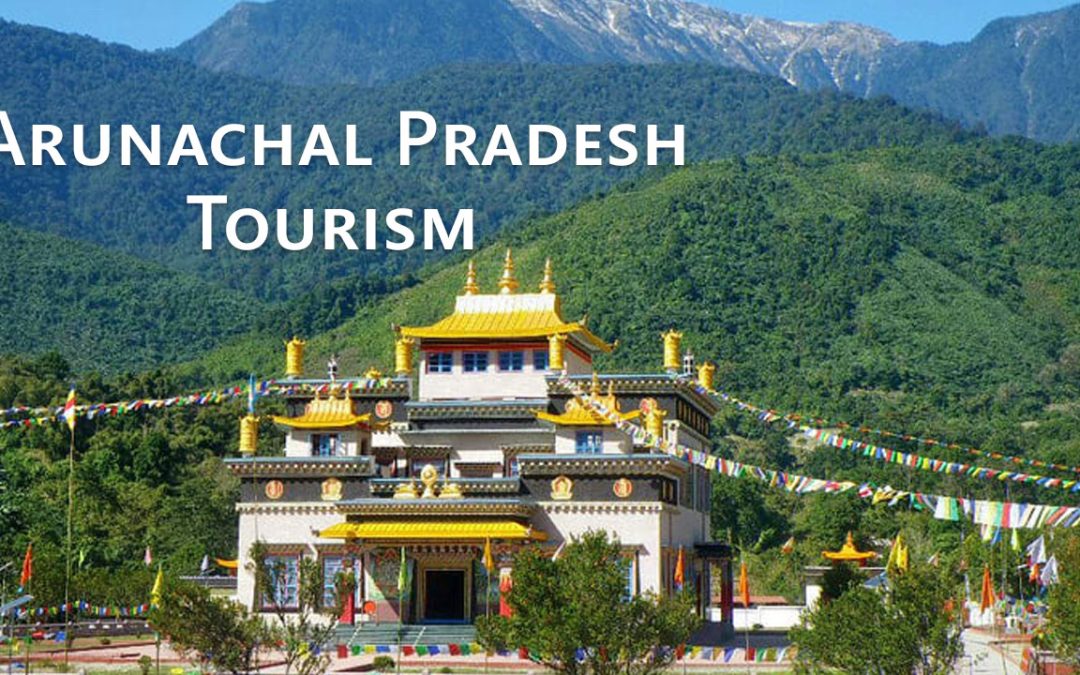
Arunachal Pradesh Tourism covers India’s least-travelled Himalayan state, a land of high passes, river valleys, Buddhist monasteries, and rainforest. Spread over 83,743 sq km in the far northeast, the state borders Assam, Bhutan, China, and Myanmar, and it rewards travellers who plan around its permits, its roads, and its seasons.
Key Highlights
- India’s largest northeastern state at 83,743 sq km, bordering Assam, Bhutan, China, and Myanmar, with Tawang, Ziro, Mechuka, and Namdapha as its headline destinations.
- Indian citizens need an Inner Line Permit (eILP) and foreign nationals need a Protected Area Permit; Bum La and Madhuri Lake need an extra local permit.
- Donyi Polo Airport at Hollongi, about 14 km from Itanagar, opened in November 2022, with IndiGo flights from Delhi, Kolkata, Mumbai, and Guwahati.
- Tawang Monastery, founded in 1680, is the largest monastery in India, and Sela Pass at 4,170 m is the gateway to the Tawang valley.
- March to May and October to November are the best months to visit, with clear skies, open roads, and snow at the high passes in winter.
Where Arunachal Pradesh Is and How to Plan It
Arunachal Pradesh sits in the far northeast of India, sharing borders with Assam to the south, Bhutan to the west, China to the north and northeast, and Myanmar to the east. It is the largest state in the Northeast and one of the least connected, which is why most trips split into regions rather than trying to cover the whole state at once. Tawang and Mechuka, for instance, are both famous and sit about two days’ drive apart.
The state divides naturally into three circuits. The west covers Bomdila, Dirang, Sela Pass, Tawang, Bum La, and Madhuri Lake, reached from Guwahati or Tezpur in about six or seven nights. The centre covers Itanagar and Ziro Valley, reached from Itanagar itself in about four nights. The east covers Pasighat, Mechuka, Roing and Mayodia, and Namdapha, reached from Dibrugarh in about six nights per trip. Pick one circuit per visit, since the mountain roads take far longer than the distances suggest.
The rivers set the shape of the land. The Lohit, Siang, and Subansiri run through deep valleys, and the routes between towns follow their courses. The state is also home to rare wildlife, including the white-winged wood duck, and its orchid plantations hold over 1,000 varieties. Dozens of tribal communities live here, each with its own festivals, dress, and food, which gives every valley a character of its own.
Tawang: Monasteries, Passes, and High Lakes
Tawang is the highlight of any Arunachal trip. The town sits about 3,000 m above sea level in the northwest, close to the Bhutan and China borders, and it combines Buddhist heritage with high-mountain scenery. Tawang Monastery, founded in 1680, is the largest monastery in India and one of the most important Buddhist monasteries in the Eastern Himalayas. Visit in the morning for the prayers and the huge golden Buddha in the main hall.
Sela Pass, at about 4,170 m, is the gateway to Tawang, with the sacred Sela Lake just below the top. The pass holds snow from December to March, and the Sela Tunnel, opened in March 2024, keeps the road open in winter and cuts about an hour from the drive. Beyond Tawang, Bum La, at 4,633 m, is the pass on the India-China border, and Madhuri Lake, also called Sangetsar Lake, freezes in winter. Both need a separate local permit arranged in Tawang a day before, and both stay closed to foreign nationals.
On the way up, Dirang and Bomdila break the climb. Dirang sits in a valley of hot springs and apple orchards, while Bomdila has a monastery, a craft centre, and views across the Kameng valley. Nuranang Falls, near Jang on the Tawang road, is a tall cascade worth a stop. Allow six or seven nights for the full Tawang circuit from Guwahati, and carry warm clothing even in summer, since the pass stays cold.
Ziro Valley and Central Arunachal
Ziro Valley, in central Arunachal, looks nothing like the high passes of the west. It is a wide, flat valley of rice fields and pine-covered hills, home to the Apatani tribe, known for its sustainable farming and its distinctive village life. The Ziro Festival of Music, held in late September, draws indie and folk musicians from across India to perform against a backdrop of paddy fields and bamboo huts.
Itanagar, the state capital, sits at about 320 m in the foothills north of the Brahmaputra. Ita Fort, the 14th-century brick fort that gives the city its name, the Jawaharlal Nehru Museum, and Ganga Lake are the main stops, and the city works best as a base for Ziro, about 115 km away, rather than as a destination on its own. Donyi Polo Airport at Hollongi has made Itanagar far easier to reach, and it is now the usual starting point for Ziro.
From Itanagar, the road north runs through the hills to Ziro in about four hours. The valley suits a slow stay: walk the village paths, watch the farming, and visit the local markets. April to October shows the valley at its greenest, while September adds the music festival.
Mechuka, Pasighat, and the East
Mechuka Valley, in the Shi Yomi district near the China border, is one of the state’s least-visited corners. The valley holds a 400-year-old monastery, wooden houses, and meadows that stay green through the summer, and the drive in, over high passes from Along, is part of the draw. March to October is the best window, avoiding the heaviest monsoon months.
Pasighat, on the Siang river, is one of the oldest towns in the state and the gateway to the east. From here, the road runs to Roing and Mayodia, where snow falls from December to February, and on to Anini in the Dibang valley, one of the remotest corners of India. Dong Valley, in the far east, is where India sees its first sunrise, and the trek to the sunrise point suits travellers who like their mornings early.
Namdapha National Park, in Changlang district, is one of India’s largest national parks and a stronghold of rainforest wildlife. It is known as the only park in India where four big cat species, tiger, leopard, snow leopard, and clouded leopard, have been recorded. The park needs a permit and a guide, and the best months run from October to April, when the forest trails stay open. For a sense of how India’s protected areas compare, see our guide to the wildlife sanctuaries and national parks of India.
Wildlife, Rivers, and Adventure in Arunachal Pradesh
The best wildlife months run from October to April, when the forest trails stay dry and the animals come to the water. Guides are required in Namdapha, and the park’s entry rules are strict, so arrange permits through your operator before you travel.
Wildlife is one of the state’s strongest draws. Namdapha, Dibang, Sessa, and Pakhui, also called Pakke, are the best-known reserves, and they hold hornbills, elephants, and a wide range of birds, amphibians, and reptiles. Eaglenest Wildlife Sanctuary in West Kameng is one of India’s top birdwatching destinations, and the winter months bring the best sightings. Travellers who like the wildlife side of India can also plan a trip to Bhitarkanika National Park in Odisha, the mangrove and crocodile reserve on the coast, for a very different kind of nature day.
The rivers offer rafting and kayaking, with the Kameng near Bhalukpong and the Siang near Pasighat the best-known runs. Bhalukpong, on the Assam border, is the usual gateway town, and its river beaches and orchid centre suit a first night in the state. Trekking routes run through the high valleys, and the scenic road from Bhalukpong to Tawang, passing Dirang and Bomdila, is popular with motorbike riders. The state’s orange and apple orchards, around Aalo and Bomdila, are worth a stop in fruit season.
Permits: Inner Line Permit and Protected Area Permit
Arunachal Pradesh is a protected border state, so visitors need permits to enter. Indian citizens need an Inner Line Permit, applied for online on the state eILP portal. Under the current rules it is a Temporary ILP valid for 15 days, costing about ₹300 to ₹500, though you should pay whatever the portal shows, since fees change. Foreign nationals need a Protected Area Permit instead, arranged through a registered tour operator.
Apply before you travel, and carry a printout as well as the digital copy. The permit is checked at Banderdewa on the road from Guwahati, and at the airport and railway station. Bum La and Madhuri Lake need an extra local permit arranged in Tawang a day before the visit, and both are closed to foreign nationals. Check the current rules before you travel, since permit conditions, fees, validity, routes, and procedures can change.
How to Reach Arunachal Pradesh
Most trips start from Guwahati in Assam, the nearest big city, and the state is now far easier to reach than it was a few years ago. The airport and the railway station at Naharlagun have changed the journey, but the roads still set the pace, so build in spare time.
By Air
Donyi Polo Airport at Hollongi, about 14 km south of Itanagar, opened in November 2022 and is now the usual way in. IndiGo flies to Delhi, Kolkata, and Mumbai, and Alliance Air flies to Guwahati and Tezu, with a daily Guwahati to Itanagar service as well. Schedules change often, so check the current status before you book, and keep Guwahati as a backup, since it has far more flights. Lilabari Airport in Assam, about 60 km from Itanagar, is the other nearby option.
By Train
Naharlagun station, about 15 km from Itanagar, is the state’s railhead. The Donyi Polo Express and a Shatabdi connect it to Guwahati, and a direct train runs to New Delhi. The first train reached Naharlagun in February 2015, and the line has grown since. From Naharlagun, buses and shared Sumos run into Itanagar and onward to Ziro and the west.
By Road
Guwahati to Itanagar is about 320 km and takes around eight hours by road via Banderdewa, where the eILP is checked. Shared Sumos and state buses run from Guwahati, Tezpur, and North Lakhimpur. Tezpur is the better gateway for the Tawang circuit, while Dibrugarh serves the eastern circuits. Roads are mostly in good shape, but landslides in the monsoon can close stretches without warning. Most visitors reach the state through Assam, so our Assam tourism guide is a useful companion for the Guwahati leg of the journey.
Best Time to Visit Arunachal Pradesh
March to May and October to November are the best months across most of the state, with dry roads, clear views, and rhododendrons in bloom in spring. October to April is the broadest good window, and the winter months, December to February, bring snow to Sela Pass, Tawang, and Mayodia, which is beautiful but very cold, with nights well below zero at altitude.
June to September is the monsoon, with heavy rain and frequent landslides, and it is best avoided for Tawang and the high roads. The one exception is Ziro, where the music festival in late September draws crowds despite the rain. For snow, head to Sela Pass, which holds it from December to March, followed by Bum La and the Tawang area.
Things to Do on an Arunachal Pradesh Trip
Start with the monasteries. Tawang Monastery, the Bomdila monastery, and the Mechuka monastery each show a different face of the region’s Buddhist life, and the morning prayers are the best time to visit. Then take the high roads: Sela Pass, Bum La, and the Mayodia snow point give the clearest sense of the Himalaya here.
Culture fills the middle of a trip. The Apatani villages of Ziro, the Monpa villages around Tawang and Dirang, and the markets of Pasighat and Roing show how varied the state is. Time a visit for a festival if you can: the Ziro Festival of Music in late September, Losar in the Monpa areas, and the Solung festival of the Adi people are the best known. For travellers planning a wider Himalayan trip, our Sikkim tour packages cover the neighbouring state, which pairs well with an Arunachal circuit.
Travel Tips for Arunachal Pradesh
Sort the permit first, then the transport. Apply for the eILP as soon as your dates are fixed, and keep a printout with you. Book flights and hotels early for March to May and October to November, since the small number of good stays in Tawang, Ziro, and Mechuka fills fast. Carry warm layers even in summer, since Sela Pass and Tawang stay cold, and pack rain gear if you travel anywhere near the monsoon.
Plan for slow roads. A distance that looks short on the map can take twice as long in the hills, so keep each day’s drive under six hours where you can. Carry cash, since ATMs thin out beyond Itanagar and Tawang, and download offline maps, since mobile signal fades on the mountain roads. Respect local customs in the villages and monasteries, ask before photographing people, and leave the high passes before dark in winter, when the cold and the fog close in fast. If you extend the trip into the neighbouring state, our guide to the famous places in Sikkim covers its best-known places.
Frequently Asked Questions
Do Indian citizens need a permit to visit Arunachal Pradesh?
Yes, Indian citizens need an Inner Line Permit to enter Arunachal Pradesh, applied for online on the state eILP portal. Under the current rules it is a Temporary ILP valid for 15 days, costing about ₹300 to ₹500, though you should pay whatever the portal shows. Foreign nationals need a Protected Area Permit instead, arranged through a registered tour operator.
What is the best time to visit Arunachal Pradesh?
March to May and October to November are the best months across most of the state, with dry roads, clear skies, and open high passes. December to February brings snow to Sela Pass, Tawang, and Mayodia. June to September is the monsoon, with heavy rain and landslides, and it is best avoided for Tawang.
How do I reach Arunachal Pradesh by flight?
Fly to Donyi Polo Airport at Hollongi, about 14 km south of Itanagar, which opened in November 2022. IndiGo flies there from Delhi, Kolkata, Mumbai, and Guwahati, and Alliance Air flies from Guwahati and Tezu. Guwahati is the backup airport, about 320 km and eight hours by road from Itanagar.
What are the top places to visit in Arunachal Pradesh?
The top picks are Tawang Monastery, Sela Pass, Bum La, and Madhuri Lake around Tawang; Dirang and Bomdila on the way up; Ziro Valley for Apatani culture; and Mechuka, Namdapha National Park, and Mayodia in the east. Tawang is the most visited, while Mechuka and Namdapha are the least crowded.
How many days do I need for Arunachal Pradesh?
Allow six to seven nights for the Tawang circuit from Guwahati, about four nights for Itanagar and Ziro Valley, and about six nights per trip for the eastern circuits around Pasighat, Mechuka, and Namdapha. Trying to cover the whole state in one short trip is not practical, so pick one circuit per visit.
Is Arunachal Pradesh safe for tourists?
Yes, Arunachal Pradesh is safe for tourists who travel with the right permits and plan around the roads and seasons. The main risks are landslides in the monsoon, cold and fog at the high passes in winter, and long drives on mountain roads. Travel with a local driver, carry the permit, and check conditions before setting out.