
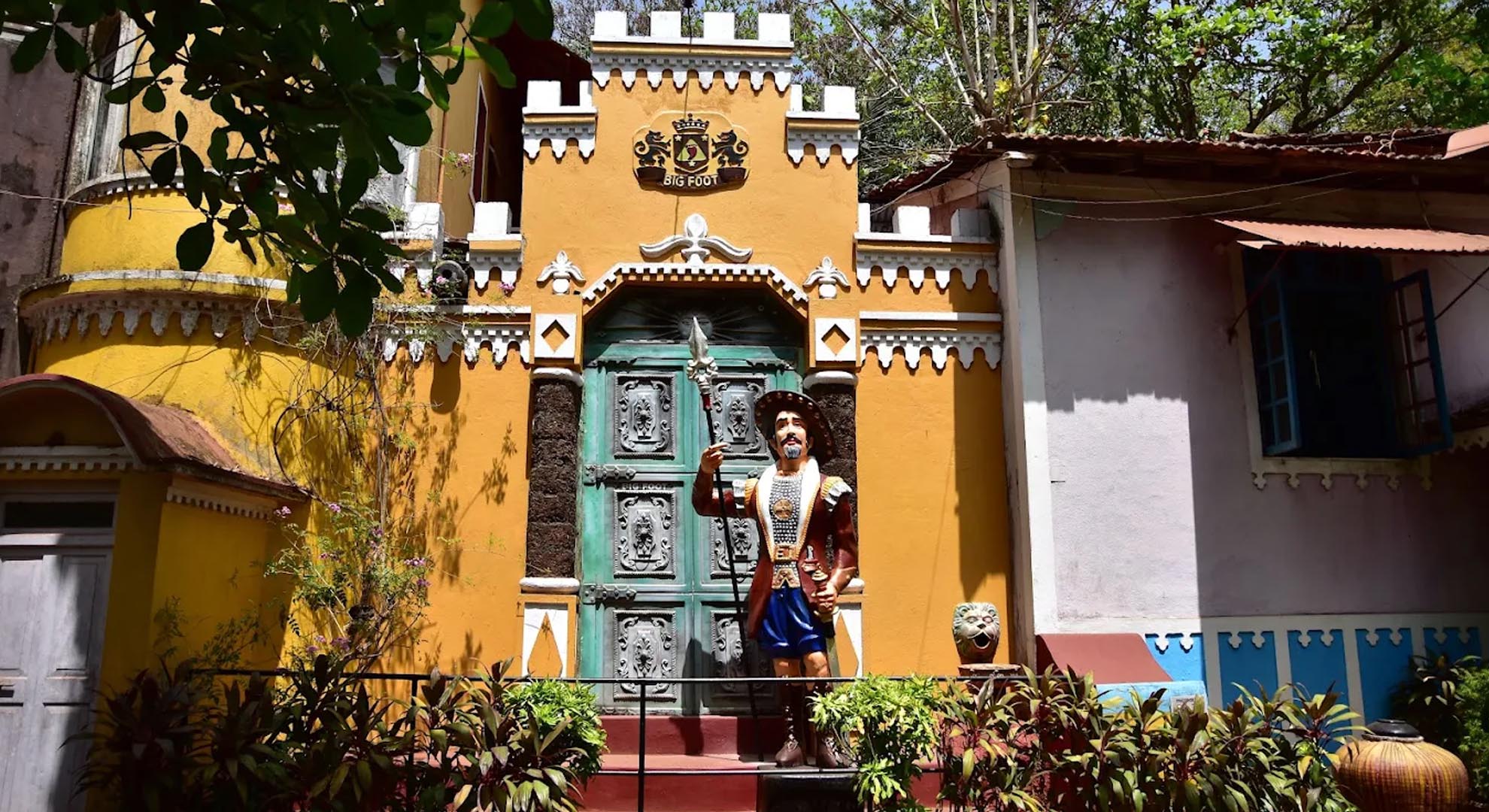
Ancestral Goa Museum, better known as the Big Foot Museum, sits in the village of Loutolim in South Goa, about 25 km from Panaji and 10 km from Margao. This open-air museum recreates a Goan village from centuries ago with life-size sculptures, old houses, and craft workshops, and its centrepiece is a 14-metre laterite sculpture of Sant Mirabai. It is the best half-day stop in Goa for anyone who wants to see the state’s culture beyond its beaches.
Key Highlights
- Ancestral Goa Museum is in Loutolim, South Goa, about 25 km from Panaji and 10 km from Margao.
- Artist Maendra Jocelino Araujo Alvares created it in 1995 on about 9 acres of a former barren hillock.
- The 14-metre laterite sculpture of Sant Mirabai was carved in 30 days and holds a Limca Book of Records place.
- Open daily from 9 am to 6 pm; entry is ₹100 for adults and ₹50 for children aged 3 to 10.
- October to February is the best time to visit, and plan about 2 hours inside.
What Is the Ancestral Goa Museum?
Most visitors come to Goa for beaches and nightlife, and the Ancestral Goa Museum shows the other side of the state. Artist Maendra Jocelino Araujo Alvares started it in 1995 to preserve the art, culture, and environment of rural Goa for future generations. What began as a personal project now covers about 9 acres on what was once a barren hillock, and it has grown into an open-air museum of Goan village life.
The Legend of the Big Foot
The museum gets its nickname from a footprint carved into a rock inside a small cave-like shrine. The legend tells of a wealthy landowner who gave away his money to the poor until he had nothing left. The gods, pleased with his generosity, gave him a hot rock to stand on and pray. He stood there on one foot, day and night, until the gods carried him to heaven and left his footprint behind in the stone. Local belief says a wish made here with a pure heart, while touching the footprint, comes true.
The Sant Mirabai Sculpture
The centrepiece of the museum is the 14-metre sculpture of Sant Mirabai, carved from laterite stone by Maendra Alvares himself in just 30 days. It shows the poet-saint playing her tambori, with a red kumkum on her forehead, armlets, and anklets, in a style that draws on the Gandhara school. It is listed in the Limca Book of Records as the longest laterite sculpture in India. For most visitors, this one sculpture is worth the trip on its own.
A Walk Through the Recreated Goan Village
The heart of the museum is a recreated village, built with true-to-life detail. Life-size statues show farmers tilling the soil, fishermen hauling in the catch, and women at their daily chores. Each trade has its own corner: the Goan farmer, called Joao; the basket weaver, or Anmare; the blacksmith, the cobbler, the potter, and the market seller. A Taverna, the old Goan liquor shop, shows feni changing hands, and a game called Tablam sits nearby, the pastime labourers played after work. Miniature houses show how different classes lived, and the Escola da Musica, a small music school, sits alongside a village market and a feni distillery.
Casa Araujo Alvares and the Sound and Light Show
Inside the complex stands Casa Araujo Alvares, a restored Portuguese-era mansion with antique furniture and period rooms. A guided tour runs through the house, and an automated sound and light show narrates how a 19th-century Goan family lived, with the story told in English and Hindi. Entry to the show costs about ₹100 per person, with some packages up to ₹200. The Loutolim village around the museum holds more houses of this kind, including the 400-year-old Figueiredo Mansion, which runs its own tours.
Art Gallery, Handicrafts, and the Cross Museum
The art gallery inside the museum holds about twenty paintings at a time, with shows by Goan and Indian artists through the year. The handicraft centre sells pottery, cane and bamboo work, woven textiles, and clay lamps made by local artisans, and buying here supports the makers directly. The Cross Museum holds photographs of 1,062 crosses from around the world, grouped into 80 categories. A dance floor shaped like a giant foot hosts festivals, weddings, and cultural programmes, and an open-air stage called Bal Kala hosts concerts, book releases, and children’s events.
How to Reach Ancestral Goa Museum
The museum is about 1 km from the Loutolim bus stop, an easy walk or a short rickshaw ride.
By Air
The nearest airport is Goa International Airport at Dabolim, about 25 km away. A prepaid taxi from the airport is the simplest option, and the drive takes under an hour outside peak traffic.
By Train
Margao railway station, about 10 km away, is the nearest major station, with trains from Mumbai, Pune, and Bengaluru. From Margao, take a bus toward Loutolim or hire a taxi for the short run.
By Road
From Panaji, the drive is about 25 km through South Goa’s village roads, and from Margao it is about 10 km. Buses run from both towns to Loutolim, and a hired car or scooter gives the most freedom, since the museum pairs well with the nearby beaches. Parking is available at the site.
Timings, Entry Fee, and Best Time to Visit
As of 2026, the museum is open every day from 9 am to 6 pm. Entry is ₹100 for adults and ₹50 for children aged 3 to 10, with ₹20 extra for a still camera. The sound and light show at Casa Araujo Alvares costs about ₹100 per person. Audio tours run in Hindi and English.
October to February is the best time to visit, when the weather is pleasant and the open-air paths are comfortable. Visit in the morning or late afternoon to avoid the midday heat. Avoid the summer months, when the heat makes the outdoor walk tiring, and the July to September monsoon, when heavy rain can close the outdoor areas. Plan about 2 hours inside, or 3 hours if you take the mansion tour and stop at the craft stalls.
Nearby Places to Visit
Loutolim village itself is worth an hour after the museum. Walk its lanes to see Portuguese-era houses, the village church, and the old post office, and stop at Jila Bakery for Goan sweets. The Figueiredo Mansion, more than 400 years old, runs personal tours with the family. For beaches further south, Palolem Beach and Agonda Beach are the best-known stretches, while Arossim Beach sits closer to the airport road. If you drive north, Fort Aguada is the classic fort stop, and the Anjuna flea market is the famous Wednesday market. End the day at one of these beaches.
Travel Tips for Ancestral Goa Museum
Carry water and a hat, since most of the museum is outdoors. Wear comfortable shoes for the uneven paths, and keep your camera fee receipt handy. Ask at the counter about the sound and light show timings before you start the village walk, so you can plan your route around it. Photography is allowed in most outdoor areas, but confirm the rules inside the mansion and gallery.
Ancestral Goa Museum will not give you a beach day, and that is exactly its value. Put it on a South Goa morning, and the beaches that follow will make more sense.
Frequently Asked Questions
Where is Ancestral Goa Museum located?
Ancestral Goa Museum, also called the Big Foot Museum, is in Loutolim village in South Goa. It is about 25 km from Panaji and 10 km from Margao. The museum is about 1 km from the Loutolim bus stop, which you can walk or cover by local rickshaw.
What are the timings and entry fee of Ancestral Goa Museum?
The museum is open every day from 9 am to 6 pm. Entry is ₹100 for adults and ₹50 for children aged 3 to 10, with ₹20 extra for a still camera. The Casa Araujo Alvares sound and light show costs about ₹100 per person. Plan about 2 hours for the visit.
Why is it called the Big Foot Museum?
The museum is named after a large footprint carved into a rock inside a small shrine on the grounds. Legend says a generous landowner prayed standing on one foot on a hot rock, and the gods left his footprint behind when they carried him to heaven. Visitors believe a wish made while touching the footprint comes true.
What is the Sant Mirabai sculpture at Ancestral Goa?
The Sant Mirabai sculpture is a 14-metre laterite carving of the poet-saint playing her tambori, made by the museum’s founder Maendra Jocelino Araujo Alvares in just 30 days. It is listed in the Limca Book of Records as the longest laterite sculpture in India, and it is the museum’s main attraction.
What is the best time to visit Ancestral Goa Museum?
October to February is the best time to visit, with pleasant weather for the open-air exhibits. Go in the morning or late afternoon to avoid the midday heat. Avoid the summer heat and the July to September monsoon, when heavy rain can close the outdoor areas.
How much time is needed for Ancestral Goa Museum?
Plan about 2 hours for the museum, including the recreated village, the Big Foot shrine, and the Mirabai sculpture. Add an hour if you take the Casa Araujo Alvares mansion tour and browse the handicraft stalls. A half day covers the museum and the village of Loutolim.
Weather Ancestral Goa Museum
[location-weather id="5549"]