

Ambapani Wildlife Sanctuary sits in the Eastern Ghats of Nabarangpur district, Odisha, about 45 km from Nabarangpur town and 77 km from Bhawanipatna. It is a quiet hill forest of sal and teak, known for deer, leopards, waterfalls, and a strange valley where the light turns objects yellow. This guide covers its wildlife, waterfalls, and routes.
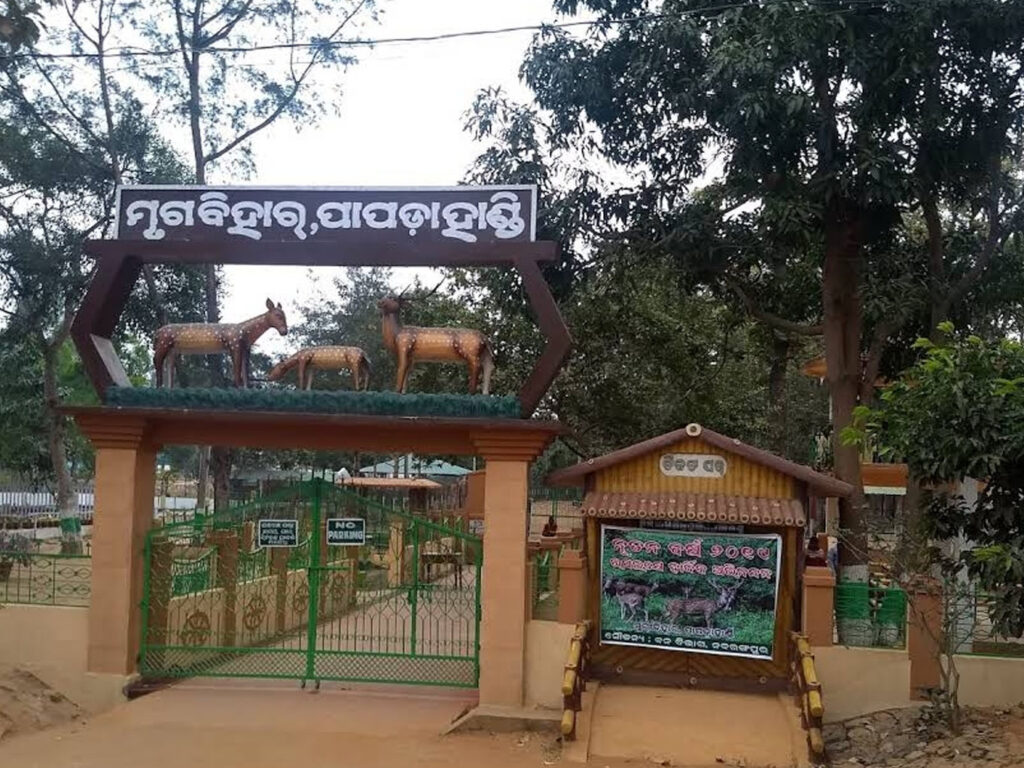
Key Highlights
- Ambapani Wildlife Sanctuary lies in Nabarangpur district, Odisha, 45 km from Nabarangpur town and 77 km from Bhawanipatna.
- Deer are the best-known residents, with leopards, sloth bears, elephants, and black panthers also reported in the forest.
- Bhairaghumar Waterfall, about 150 ft high, sits inside the sanctuary near the Odisha-Chhattisgarh border.
- The best time to visit is October to March, when trails are dry and wildlife sightings improve.
- Entry is usually free or a small forest charge, parking around Rs 50. Check timings with the forest office first.
Where Is Ambapani Wildlife Sanctuary
The sanctuary lies in Nabarangpur district, near the Kalahandi border, in the Eastern Ghats of southern Odisha. It takes its name from the Ambapani region, and the Budhraja deity is honoured in a small temple at the foot of a hillock nearby.
The landscape is inland hill forest: sal and teak slopes, seasonal streams, bamboo patches, and grass clearings where deer graze. It is not a coastal forest, and it has no mangroves, despite what some older travel pages claim. The nearest town is Nabarangpur, 45 km away, and Bhawanipatna in Kalahandi district is 77 km away. Nabarangpur is the closer base.
Wildlife You Can See
Deer are the animals visitors are most likely to see. Spotted deer, sambar, barking deer, four-horned antelope, chinkara, and nilgai all live in the sanctuary, and they gather at clearings and water points in the early morning. Larger mammals include elephants, leopards, sloth bears, wild boar, wild dogs, and hyenas, and the black panther is reported here. The Behera reservoir is a good spotting point, especially for deer at dawn and dusk. No source lists the tiger as a resident species, so do not expect one. Peacocks, hornbills, paradise flycatchers, and jungle fowl draw birdwatchers in winter. A local guide improves your chances a lot, since animals keep to thick cover by midday. For a different Odisha forest experience, Debrigarh Wildlife Sanctuary in Sambalpur is another good option in the state.
Waterfalls Inside the Sanctuary
Several waterfalls run through the sanctuary’s hills, and they are the main reason many visitors come. Bhairaghumar Waterfall is the best known, dropping about 150 ft near the Odisha-Chhattisgarh border, about 16 km from Chandahandi and 100 km from Nabarangpur. The other named falls are Dokrichanchara, Badghumar, Karak, and Thippa, all reached by forest paths rather than roads.
A common route is to enter from the Bhawanipatna side, trek 4 to 5 km to the Bhairaghumar cascade, and continue to the Behera reservoir. The falls run best from October onwards, when streams are full and paths have dried. Carry water and food, since there are no shops inside, and wear grippy shoes for the slippery rocks.
Haladigundi Valley and the Temples
Haladigundi valley, in the Ambapani hills, is known for an odd light effect: in the morning and evening, reflected sun rays make objects in the valley appear yellow. It is best seen with a local guide who knows the timing. The sanctuary also has a spiritual side. The Ghumareswar Temple, dedicated to Lord Shiva, stands at the base of Ambapani mountain, and pilgrims often combine a temple visit with a walk in the forest. The Budhraja temple at the foot of a nearby hillock draws local devotees during festivals. Local tribal communities know its paths and seasons well, which is one more reason to hire a guide. If you want another forest stay in the region, the Belghar Nature Camp in Kandhamal offers a similar mix of forest and hills.
How to Reach Ambapani Wildlife Sanctuary
By Air
Bhawanipatna has only a small airstrip with no scheduled commercial flights, so flying in is not a practical option. Most visitors fly into Bhubaneswar or Raipur and continue by road, so plan it as part of a wider Odisha trip.
By Train
Travel guides list Nabarangpur station, 45 km from the sanctuary, as the nearest railhead, with Bhawanipatna 77 km away as the other option. Train services here are limited, so check IRCTC timings first. Most visitors find the road option simpler.
By Road
The sanctuary is reached by road from Nabarangpur (45 km) or Bhawanipatna (77 km). Buses run to both towns, and a hired car is the easiest way to cover the last stretch, since the final approach runs through forest roads with little public transport. The drive from Nabarangpur takes about an hour and a half. Start early; the forest is best in the morning.
Best Time to Visit Ambapani Wildlife Sanctuary
October to March is the best time to visit, and most sources agree on the winter months. The weather is cool enough for walking, the trails are dry, and deer and birds are easier to spot. The monsoon, from mid-June to September, turns the forest green but makes the paths muddy and the falls hard to reach. Some older pages call June to September the best season, but wet trails make winter the safer choice. Summer days are hot and humid; winter nights can be cool, so pack a light woollen layer. Karlapat Wildlife Sanctuary in Kalahandi follows the same October to March season if you are pairing the two.
Entry Fee and Timings
Entry to the sanctuary is usually free or carries a small charge set by the forest department, and parking costs around Rs 50 for a car. A camera fee may apply. Timings vary across sources: some list 10 AM to 6 PM, others list a 9 AM to 4 PM forest entry window, and one guide mentions a deer park open 8 AM to 1 PM and 3 PM to 5 PM, closed on Mondays. Because no single timing is confirmed, check with the local forest office before you travel rather than relying on one website. Night stays inside need forest department permission. Ushakothi Wildlife Sanctuary in Sambalpur has a similar permit setup.
Things to Do in Ambapani Wildlife Sanctuary
Wildlife watching is the main activity, and the early morning hours give the best results. Birdwatching is rewarding in winter, when peacocks, hornbills, and paradise flycatchers are active. Trekking is the way to reach the waterfalls, and the 4 to 5 km walk to Bhairaghumar is the most popular route.
Photography works well in the soft morning light, especially around the Behera reservoir. The temples add a cultural stop, and a picnic near the falls works for families if you carry everything out. Podagada Hill Station and Fort in Nabarangpur is the closest other attraction in the district and pairs well with a sanctuary day.
Travel Tips for Ambapani Wildlife Sanctuary
Visit early in the morning for the best wildlife sightings and carry water, snacks, and comfortable trekking shoes. Keep quiet inside the forest, do not litter, and follow local forest department guidelines at all times. Travel with a local guide for better exploration and safer navigation of the forest paths. Stay options are in Nabarangpur, which has small hotels and a circuit house, or Bhawanipatna, 77 km away. Check entry and timing details with the Odisha Forest Department first, and see the Odisha tourism guide for the rest of the trip.
Frequently Asked Questions
Where is Ambapani Wildlife Sanctuary located?
Ambapani Wildlife Sanctuary is in Nabarangpur district, Odisha, near the Kalahandi border in the Eastern Ghats. It is about 45 km from Nabarangpur town and 77 km from Bhawanipatna. The sanctuary is an inland hill forest of sal and teak, not a coastal or mangrove forest.
What is the best time to visit Ambapani Wildlife Sanctuary?
October to March is the best time to visit Ambapani Wildlife Sanctuary, when the weather is cool, trails are dry, and wildlife sightings improve. The monsoon from mid-June to September makes the forest green but the paths muddy. Summer days are hot and humid, so winter is the safer choice.
What animals can be seen in Ambapani Sanctuary?
Deer are the most commonly seen animals: spotted deer, sambar, barking deer, four-horned antelope, chinkara, and nilgai. The sanctuary also has elephants, leopards, sloth bears, wild boar, wild dogs, hyenas, and the black panther. Peacocks, hornbills, and paradise flycatchers are the notable birds.
What are the opening hours and entry fee of Ambapani Sanctuary?
Entry is usually free or a small forest charge, with parking around Rs 50 for a car. Timings vary across sources, with 10 AM to 6 PM and 9 AM to 4 PM both listed, so check with the local forest office before you travel.
How do I reach Ambapani Sanctuary from Bhawanipatna or Nabarangpur?
The sanctuary is 45 km by road from Nabarangpur and 77 km from Bhawanipatna. A hired car is the easiest option for the last stretch. Travel guides list Nabarangpur station as the nearest railhead, and Bhawanipatna has only a small airstrip with no scheduled flights.
Which waterfalls are inside Ambapani Sanctuary?
Bhairaghumar Waterfall, about 150 ft high, is the best-known fall inside the sanctuary, near the Odisha-Chhattisgarh border. The other named falls are Dokrichanchara, Badghumar, Karak, and Thippa. They are reached by forest paths, and the 4 to 5 km trek to Bhairaghumar is the most popular route.
Conclusion
Ambapani is a quiet forest for travellers who like deer, waterfalls, and empty trails. Go in winter, start early, and pair it with Podagada or Karlapat.
Weather Ambapani Wildlife Sanctuary
[location-weather id="5549"]