
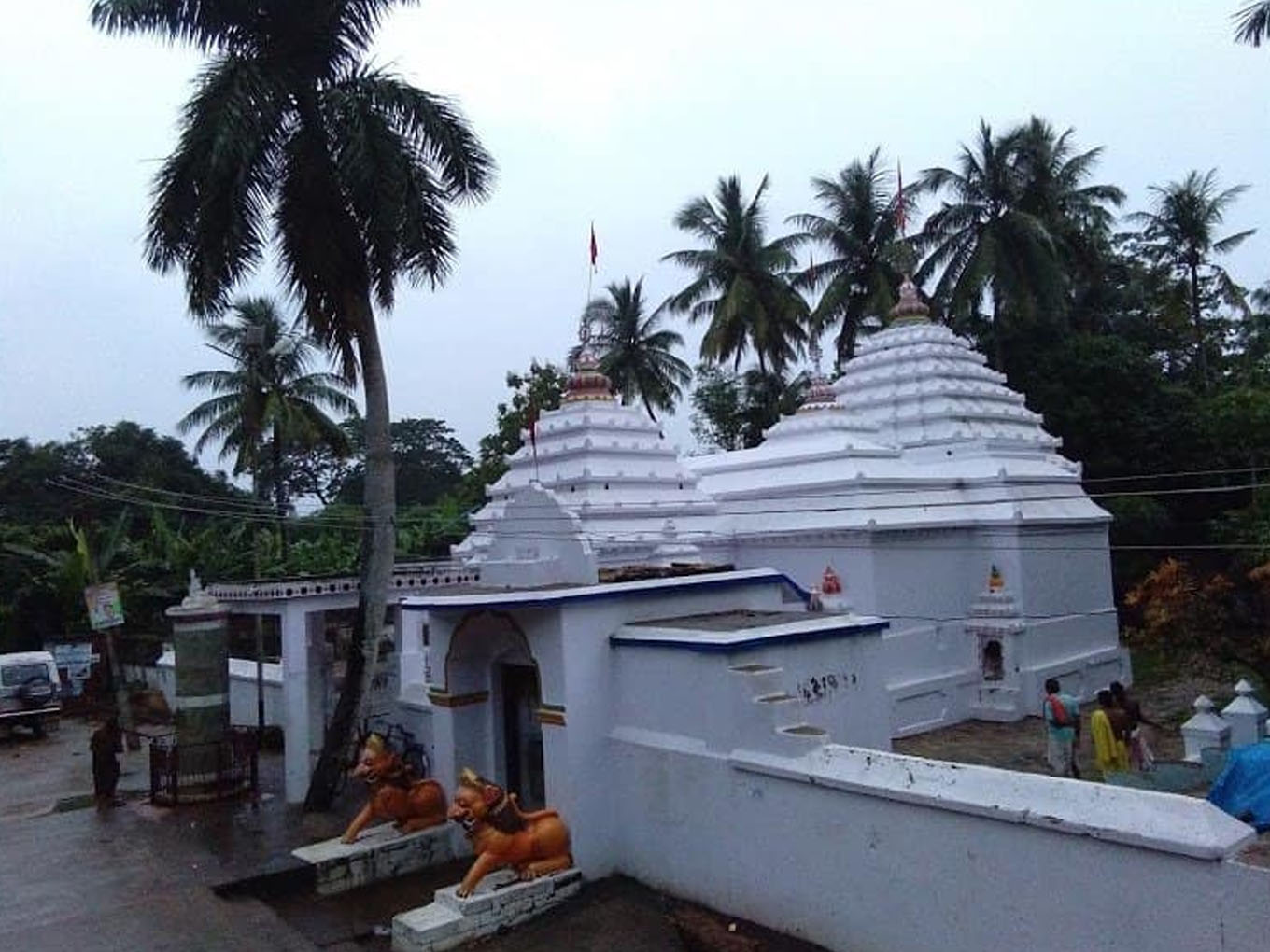
Jagannath Temple Keradagarh is a living village shrine in Keradagada, Rajnagar area of Kendrapara district, Odisha. It enshrines wooden idols of Jagannath, Balabhadra and Subhadra, and it is best known for its annual Rath Yatra, when the deities are taken out on decorated chariots.
Key Highlights
- A living Jagannath shrine in Keradagada village, about 5 km northeast of Rajnagar in Kendrapara district.
- Wooden idols of Jagannath, Balabhadra and Subhadra on a raised platform inside a pidha-style sanctum.
- Documented by the Archaeological Survey of India, which dates the present structure to the 19th century.
- Rath Yatra is the biggest festival, with Dolapurnima (Holi) also observed with devotion.
- Commonly listed darshan hours are 6 AM to 1 PM and 4 PM to 9 PM; confirm locally before visiting.
Where the temple is
Keradagada, also spelt Keradagarh, is a village in Rajnagar tehsil of Kendrapara district, on the Odisha coast. The temple stands in the centre of the village, and its PIN code is 754225. Rajnagar, the nearest town, is about 5 to 7 km away, while Kendrapara town is roughly 47 km to the west. The village sits in the same coastal belt as Bhitarkanika, so the landscape around it is flat, green and criss-crossed by rivers and creeks.
The temple is easy to miss if you only follow the big pilgrimage map of Odisha, which is dominated by Puri. Keradagarh is a different kind of stop: a working village temple where the daily ritual matters more than the monument, and where visitors are usually devotees from nearby villages rather than tour groups.
History of the temple
The history of this temple is told in two different ways, and both are worth knowing. Local guides credit a king of Kanika with founding the shrine about three centuries ago, and one guide names Raja Baikuntha Jena of Kanika as the founder. Another account links the temple’s later prominence to Rajendra Narayan Bhanja Deo, a Rajkani king who ruled into the mid-20th century.
The Archaeological Survey of India’s documentation, published through the Indira Gandhi National Centre for the Arts, gives a more cautious picture: it records the temple as a living shrine of pidha style and states that its architectural features place the present structure in the 19th century. The older ITP-era claim of a 16th century Bhoi origin is not supported by that documentation, so this guide follows the ASI dating for the building while noting the older local tradition. The temple is managed by the Endowment Department of the Government of Odisha.
Architecture and the sanctum
The temple is built in the Kalinga idiom of Odisha, with a pidha vimana, the tiered, pyramid-like tower form used for smaller shrines and halls. The ASI record gives the temple’s footprint as about 20 metres long, 10 metres wide and 12 metres high, and notes that the main shrine stands on a high platform. The idols of Jagannath, Balabhadra and Subhadra are carved in wood, in the same tradition as the great temple at Puri, though on a far smaller scale.
Smaller shrines and subsidiary structures stand within the temple compound, and the complex measures roughly 35 by 33 metres overall. Visitors should not expect the scale or carving density of Puri or Konark. The interest here is different: a complete, working Jagannath temple in its village setting, with the rituals, the chariot yard and the community around it intact. Travellers tracing Odisha’s Jagannath tradition beyond Puri will find a useful comparison in the Jagannath Temple at Sabarang in Bhadrak district, another village shrine of the same tradition.
Festivals and rituals
Rath Yatra is the temple’s great event. Once a year, usually in June or July, the deities are brought out of the sanctum on decorated chariots and pulled through the village by devotees, in the same pattern as the Puri festival on a village scale. Thousands of devotees from across Kendrapara district attend, and the village fills with stalls, music and visitors for the duration.
Dolapurnima, the spring festival of colours, is the other major observance recorded for this temple. Daily worship continues through the year, with morning and evening rituals at the sanctum. Commonly listed darshan hours are 6 AM to 1 PM and 4 PM to 9 PM, but no official timetable is published online, so confirm the day’s hours with the temple office or a Rajnagar contact before travelling, especially on festival days when schedules change.
Other shrines in the coastal districts hold similar village festivals, including Damadamani Pitha in Cuttack district, a reservoir-side shrine with its own local following.
How to reach Jagannath Temple Keradagarh
By Air
The nearest airport is Biju Patnaik International Airport at Bhubaneswar, roughly 150 km away by road. From the airport, take a taxi toward Kendrapara and Rajnagar; the last stretch runs through village roads, so allow a full day for the journey rather than planning a tight connection.
By Train
There is no major railway station at Keradagada itself. The nearest major railhead is Cuttack, roughly 130 km away by road, with trains from across India. Some guides list a Kendrapara station about 70 km away, but services there are limited, so Cuttack is the safer bet for most travellers. From Cuttack, hire a taxi to Rajnagar and on to Keradagada.
By Road
Road is the practical way in. Rajnagar is the nearest bus stop, about 5 to 6 km from the temple, with buses from Kendrapara town and nearby centres. From Rajnagar, auto-rickshaws and local taxis cover the last stretch. If you are driving from Bhubaneswar or Cuttack, follow the route toward Kendrapara and Rajnagar, and ask locally for Keradagada village once you reach Rajnagar. Drivers with more time can also detour to the Tapoban Mahima Ashram near Dhenkanal, a very different kind of spiritual centre in the Kapilash hills.
Best time to visit
For the festival experience, visit during Rath Yatra in June or July, when the temple is at its most alive. For comfortable sightseeing, the winter months from November to February are better, with cool and dry weather across coastal Odisha. The monsoon, from June to September, keeps the countryside green but can make rural roads slow, and the summer heat from March to May is best avoided for a midday visit. If you come for Rath Yatra, book transport and stay in Rajnagar or Kendrapara town well ahead, since the village has limited lodging.
Nearby places to visit
Rajnagar is the gateway to Bhitarkanika National Park, one of Odisha’s best known wildlife destinations, famous for its mangroves, estuarine crocodiles and migratory birds. A temple trip to Keradagarh pairs naturally with a Bhitarkanika visit, and Rajnagar is the usual base for both. Kendrapara town, about 47 km away, is home to the Baladevjew Temple, another important shrine of the district, and the town’s small museum is worth a stop for context on the region.
The Ananta Vasudeva Temple in Bhubaneswar is the natural big-city comparison for anyone studying Odisha’s temple architecture after seeing Keradagarh at village scale.
Travel tips
Dress modestly and remove footwear before entering the sanctum, as at any working temple. Photography is generally permitted in the outer areas, according to visitor guides, but ask at the shrine before photographing the idols. Carry cash, since the village has few card facilities, and keep drinking water with you. Mobile signal can be patchy on the rural stretches, so download an offline map for the Rajnagar area. On Rath Yatra day, arrive early and expect the approach lanes to be crowded.
Frequently Asked Questions
Where is Jagannath Temple Keradagarh located?
Jagannath Temple Keradagarh is in Keradagada village, Rajnagar tehsil, Kendrapara district, Odisha. It stands in the centre of the village, about 5 to 7 km northeast of Rajnagar town and roughly 47 km from Kendrapara town, and Rajnagar is the nearest base for visitors.
How old is the Keradagarh Jagannath Temple?
Local tradition credits a Kanika king with founding the temple about three centuries ago. The Archaeological Survey of India’s documentation, however, dates the present structure to the 19th century on architectural grounds, so the building you see today is best described as a 19th century shrine with an older local tradition.
What are the darshan timings of the temple?
Commonly listed darshan hours are 6 AM to 1 PM and 4 PM to 9 PM every day. No official timetable is published online, so confirm the hours with the temple office or a Rajnagar contact before visiting, especially on festival days.
When is Rath Yatra celebrated at Keradagarh?
Rath Yatra is celebrated once a year, usually in June or July, when the wooden idols of Jagannath, Balabhadra and Subhadra are taken out on decorated chariots and pulled through the village by devotees. It is the temple’s biggest festival and draws thousands of visitors.
How do I reach Keradagarh from Cuttack?
Take a taxi or bus from Cuttack toward Kendrapara and Rajnagar, a road journey of roughly 130 km, then an auto-rickshaw or local taxi for the last 5 to 6 km from Rajnagar to Keradagada village. Cuttack is the nearest major railhead for most travellers.
What is the best time to visit Keradagarh temple?
November to February is the most comfortable season, with cool and dry weather across coastal Odisha. Visit during Rath Yatra in June or July if you want the festival atmosphere, but book transport and stay in Rajnagar or Kendrapara town well in advance.
Keradagarh rewards travellers who want Odisha’s Jagannath tradition at village scale. Pair it with Bhitarkanika and you have a full coastal Kendrapara day.
Weather Jagannath Temple
[location-weather id="5549"]