
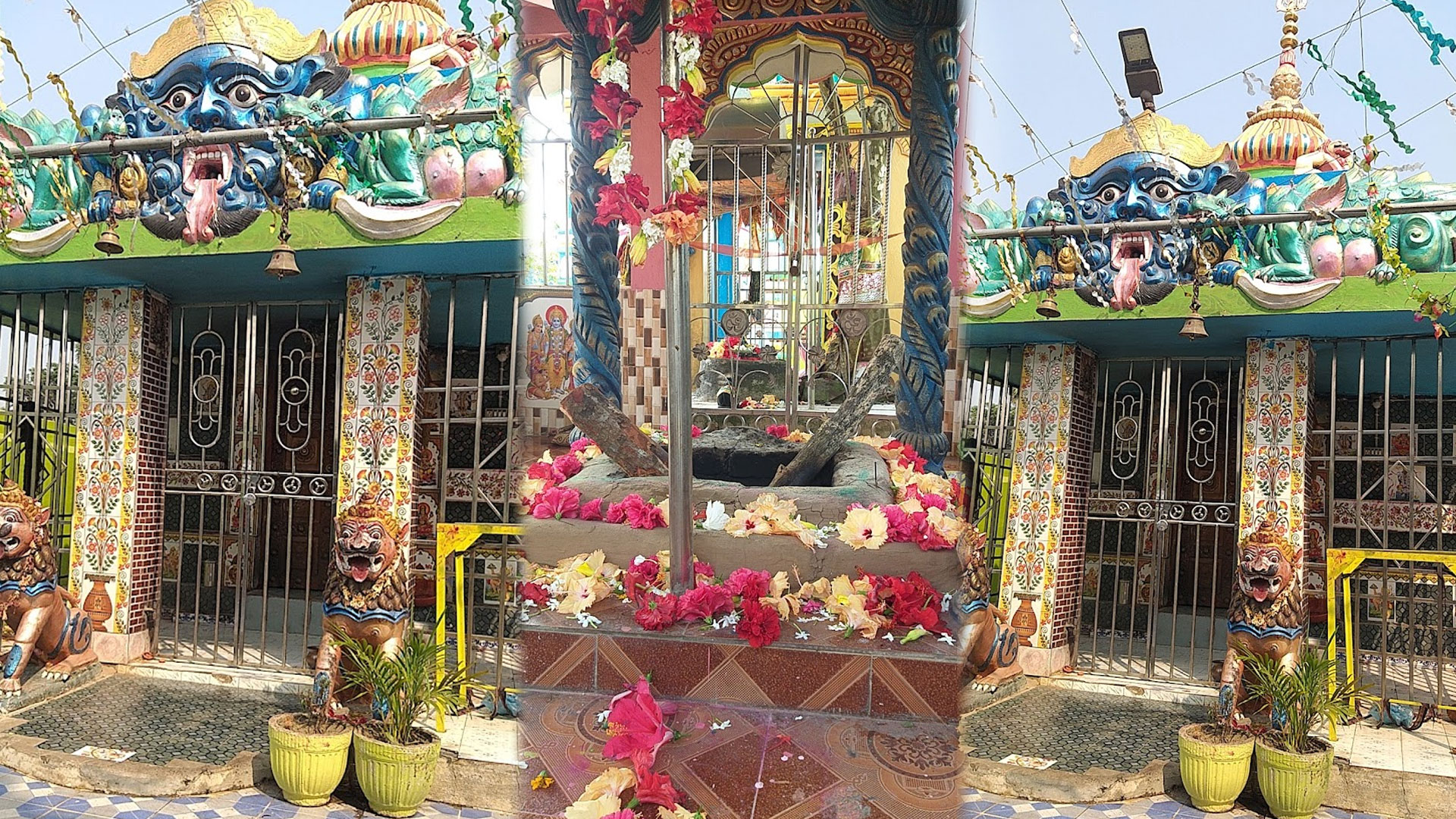
Madhava Temple at Madhab village near Niali in Cuttack district is one of the Prachi valley’s finest Vishnu shrines, a 13th-century Eastern Ganga temple dedicated to four-armed Vishnu as Madhava. It stands on the eastern bank of the Prachi river, about 6 km from Niali town, with carved black-chlorite sculpture and a rare Durga image worshipped as the deity’s sister. This guide covers its history, architecture, festivals, darshan practicalities and how to reach it.
Key Highlights
- Madhava Temple is a 13th-century shrine of the Eastern Ganga dynasty (attributed to the reign of Anangabhima Deva III), correcting the “9th century” claim still found on some blogs, which no reliable source supports.
- The temple is pancharatha in plan: a curvilinear Rekha Deula vimana, a stepped Pidha Deula jagamohana, and a flat-roofed Natamandapa renovated by the ASI, textbook Kalinga architecture.
- The presiding deity is four-armed Madhava (Vishnu) in black chlorite; a rare Durga image in the complex is worshipped as Madhava’s sister, giving the shrine its “Durgamadhava” name.
- Entry is free; local belief calls the temple the “maternal uncle’s house of Lord Jagannath.” Temple meals are available on prior booking, but there are no prasad stalls: buy offerings from the market.
- The temple sits about 6 km from Niali, 7 km from Sobhaneswar and roughly 35 km from Cuttack (sources vary on the Cuttack figure); Mo Bus and local buses connect it from Bhubaneswar and Cuttack.
History: A Ganga-Era Temple on the Prachi
The Prachi valley, the river plain between Bhubaneswar and the coast, is dense with medieval temples; Madhava Temple is among its best-preserved. Published archaeology scholarship (Ray, Donaldson, Mohapatra, Behera) places the shrine in the 13th century CE under the Eastern Ganga dynasty, with attribution to the reign of Anangabhima Deva III. The temple’s existing online write-ups are unreliable here: the old post claimed the 9th century and one low-quality source claims an 11th-century Somavamshi origin, neither supported by the scholarship. The Ganga attribution fits the architecture, mature Kalinga work of exactly the period the Gangas were building across the region. The Prachi itself adds to the setting’s meaning: the river’s eastern bank here was once lined with shrines, and Madhava’s temple is the survivor that still functions as a living place of worship rather than a monument.
Architecture: Textbook Kalinga in Stone
The temple is pancharatha: its plan projects five vertical offsets (rathas) on each face, the classic mature-Kalinga articulation. The vimana (sanctum tower) is a Rekha Deula, rising in the familiar curvilinear profile; the jagamohana (assembly hall) is a Pidha Deula with its stepped, pyramidal roof; and the natamandapa (dance hall) is flat-roofed, renovated by the Archaeological Survey of India. The sculpture programme repays slow looking: panels depict the Dasa-Avatar, a black-granite Sudarshan Chakra, Ananta Sayana Vishnu, and Krishna Lila and Mahabharata episodes, with a granite Garuda in attendance before the deity. The overall effect is more refined than grand; this is a jewel-box temple, and photographers should budget time for the carved doorway and the chlorite panels rather than expecting a towering skyline. Students of the style will recognise the same Kalinga vocabulary, handled very differently, at Bhubaneswar’s Ananta Vasudeva Temple, the great Vishnu shrine of the temple city and the natural companion visit.
The Deity: Four-Armed Madhava and His Sister
The presiding deity is Madhava, Vishnu, shown four-armed in black chlorite with conch, discus, mace and lotus in their documented order. The image has the polished finish chlorite takes, and it is dressed and garlanded daily. The shrine’s distinctive feature is the Durga image worshipped as Madhava’s sister, the pairing that gives the temple its local name “Durgamadhava”, a brother-sister deity arrangement rare enough to be worth the trip on its own. Local belief calls the temple the maternal uncle’s house of Lord Jagannath, linking this quiet riverside shrine to the great Puri tradition, a connection also visible in the Jagannath Temple at Rayagada.
Festivals Through the Year
Janmashtami is the temple’s biggest celebration, with Krishna’s birth observed through the night. Ekadashi days bring extra worship through the year, and Dol Purnima is celebrated with the deities. Ram Navami and Anla Navami draw special observances, and the month-long festivals of the Odia months of Maagha and Vaishakha fill the calendar. On festival days the small courtyard fills quickly; arrive early, because this is a village-scale complex, not a crowd-engineered pilgrimage centre.
Timings, Entry Fee and Prasad
Entry is free: there is no ticket. Published darshan timings conflict (one detailed source reports 6:00–12:30 and 15:30–19:30; a listings site claims 5:00 am–8:00 pm), so treat any single figure as indicative and plan around the standard pattern: morning worship, a midday break, evening darshan. On prasad, know the local arrangement in advance: there are no prasad stalls at the temple; devotees buy offerings from the market before arriving, but the temple serves meals on prior booking, useful if you are visiting in a group. Ask at the temple office on arrival about the day’s meal arrangement.
How to Reach Madhava Temple
By Air
The nearest airport is Biju Patnaik International Airport, Bhubaneswar, roughly 60–65 km away (approximate). From the airport, take a taxi or bus toward Cuttack–Niali and continue by road to Madhab village.
By Train
The nearest major railheads are Cuttack and Bhubaneswar, both on the Howrah–Chennai main line with trains from across India. From either station, continue by bus or taxi toward Niali; Madhab village is about 6 km beyond Niali town.
By Road
The temple stands about 6 km from Niali, 7 km from Sobhaneswar and roughly 35 km from Cuttack (sources vary between 30 and 40 km). Mo Bus services and local buses run from Bhubaneswar and Cuttack toward Niali, from where an auto-rickshaw covers the last stretch to Madhab village on the Prachi’s eastern bank.
Best Time to Visit
For the 2026 season, October to March is the pleasant window, with the riverside setting at its best in the cool months. Janmashtami (August–September) is the time for the festival at full scale, though the monsoon makes the riverbank paths slippery, so wear sure-footed shoes. The Maagha and Vaishakha month festivals (roughly January–February and April–May) offer a second festive window. Summer afternoons are hot on the open stone courtyard, so in the warm months plan a morning visit.
Nearby Places Worth Adding
Sobhaneswar, about 7 km away, has its own Shiva temple and makes the obvious paired stop, the two shrines together covering the Prachi valley’s Shaivite and Vaishnavite sides in one outing. The wider Prachi valley holds a string of lesser-known shrines along the river. Back toward the cities, Bhubaneswar’s old town is the deeper dive: the tantric Baitala Temple with its Khakhara roof, and the Megheswar Temple on the city’s edge, both repay visitors who have developed a taste for Kalinga stonework at Madhava. Kendrapara district’s Gojabayani Temple offers the Shakti counterpoint if you are touring the region’s goddess shrines.
Travel Tips
- Buy flowers and offerings in Niali market before reaching Madhab: there are no prasad stalls at the temple.
- Ask at the temple office about the prior-booking meal if you want the temple lunch; it is not a walk-in arrangement.
- Wear slip-off footwear; the stone courtyard is hot by midday in summer.
- Carry cash; the village has no ATMs and digital payments are unreliable.
- Combine with Sobhaneswar (7 km) for a half-day Prachi valley circuit from Cuttack or Bhubaneswar.
Frequently Asked Questions
Where is Madhava Temple located?
Madhava Temple stands at Madhab village near Niali town in Cuttack district, Odisha, on the eastern bank of the Prachi river. It is about 6 km from Niali, 7 km from Sobhaneswar and roughly 35 km from Cuttack. Mo Bus and local buses connect it from Bhubaneswar and Cuttack, with an auto-rickshaw covering the last stretch.
How old is Madhava Temple, and which dynasty built it?
The temple dates to the 13th century CE and belongs to the Eastern Ganga dynasty, attributed to the reign of Anangabhima Deva III (per published archaeology scholarship). The “9th century” claim on some blogs is unsupported, and an “11th-century Somavamshi” origin is an unverified minority claim; the Ganga dating is the reliable one.
Which deity is worshipped at Madhava Temple?
Vishnu is worshipped here as Madhava, shown four-armed in black chlorite with conch, discus, mace and lotus. A rare Durga image in the complex is worshipped as Madhava’s sister, the “Durgamadhava” pairing, and local belief calls the temple the maternal uncle’s house of Lord Jagannath.
What is the architecture style of Madhava Temple?
It is classic Kalinga architecture, pancharatha in plan: a curvilinear Rekha Deula vimana (sanctum tower), a stepped Pidha Deula jagamohana (assembly hall), and a flat-roofed Natamandapa renovated by the ASI. Carved panels show the Dasa-Avatar, a black-granite Sudarshan Chakra, Ananta Sayana Vishnu and Krishna Lila scenes.
Is there an entry fee, and are prasad stalls available?
Entry is free. There are no prasad stalls at the temple, so buy flowers and offerings from Niali market before you arrive. The temple does serve meals on prior booking; ask at the temple office on arrival rather than assuming a walk-in lunch.
What are the darshan timings of Madhava Temple?
Published timings conflict: one detailed source reports 6:00–12:30 and 15:30–19:30, while a listings site claims 5:00 am–8:00 pm. Treat any single figure as indicative and plan around the standard pattern: morning worship, a midday break, evening darshan, confirming locally for a tight schedule.
Come for the chlorite carving and the rare brother-sister shrine, and pair it with Sobhaneswar 7 km away.
Weather Madhava Temple
[location-weather id="5549"]