
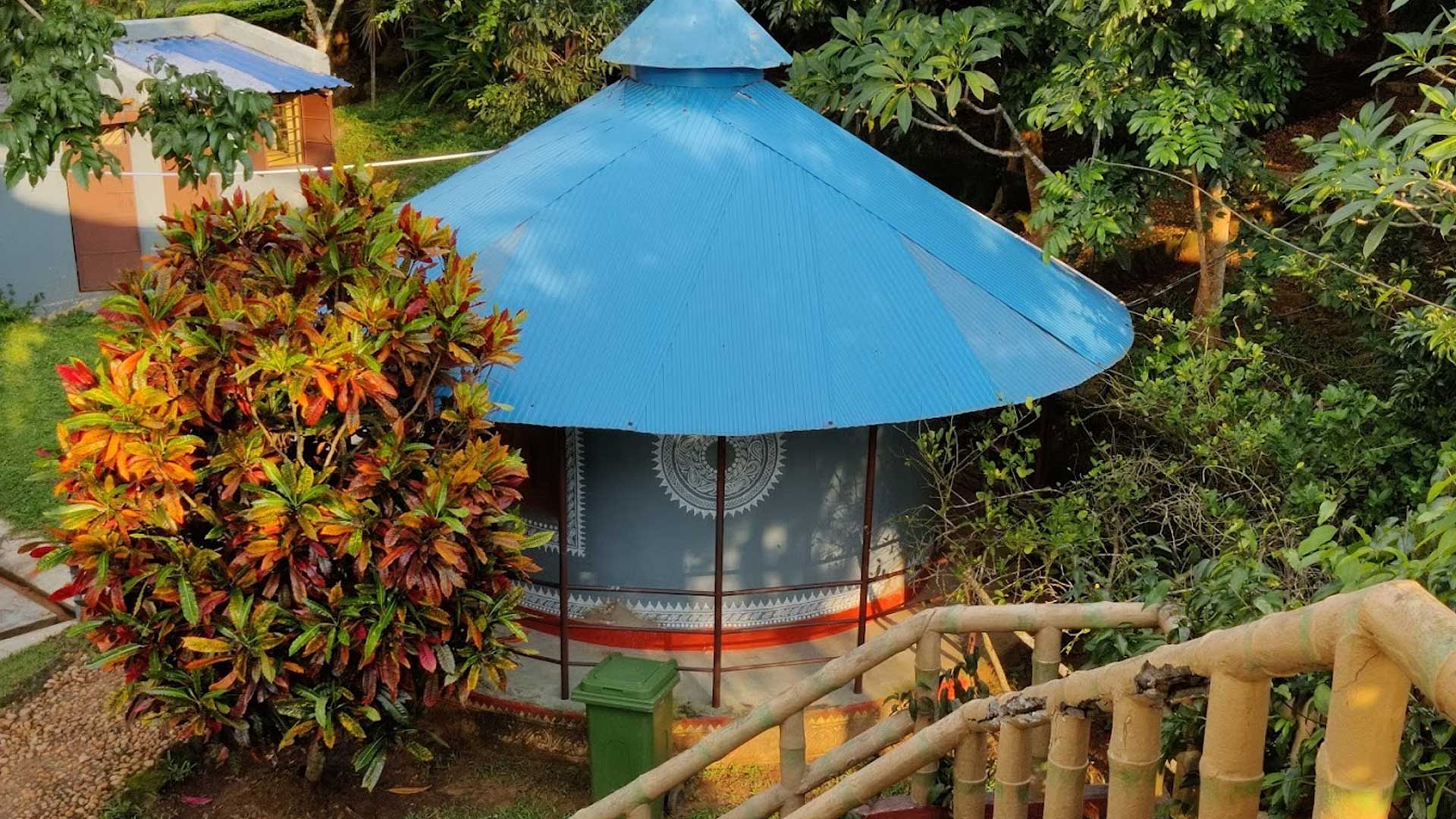
Chandaka Nature Camp is the easiest way to step inside a real Odisha forest without going far from Bhubaneswar. About 20 km west of the city, it offers forest stays, open-jeep safaris, nature trails and birdwatching in elephant country protected for over four decades.
Key Highlights
- Chandaka Nature Camp sits inside the Chandaka-Dampara Wildlife Sanctuary, roughly 20 km from Bhubaneswar — close enough for a day trip, rich enough for an overnight stay.
- Stay at the Deras or Godibari nature camps in AC cottages, bamboo huts and log huts, with the Deras reservoir beside the camp.
- The sanctuary is elephant country: Asian elephants roam here with spotted deer, sambar, wild boar, sloth bears, langurs and 150+ bird species — though sightings are never guaranteed in a wild forest.
- Open-jeep safaris run in one-hour morning and evening slots from the Godibari, Deras, Bharatpur and Dampara gates; entry is ₹40 per person per day for Indian nationals.
- October to March is the best season, when the weather suits long nature walks, safaris and early-morning birdwatching.
About Chandaka Nature Camp and the Sanctuary
The Chandaka-Dampara Wildlife Sanctuary covers roughly 175–195 sq km of rolling table land and low hillocks on the Khurda uplands, at the edge of the Eastern Ghats region. Its mix of semi-evergreen patches, sal stands and thorny bamboo brakes was set aside as an elephant reserve over four decades ago — still prime Asian elephant habitat on the fringe of a growing city.
That closeness to Bhubaneswar is the camp’s biggest draw. You leave city traffic and, within about 45 minutes, you are on forest roads smelling of bamboo and sal leaves. The forest department runs ecotourism through two bases: Deras, beside the Deras reservoir, and Godibari on the forest side — both deliberately low-key, a forest first and a tourist spot second.
Come with the right expectation. Chandaka is not a zoo, and no guide can promise an elephant on a given morning — but the birdsong at dawn, deer on the meadow edges and pugmarks on the dust roads rarely disappoint.
How to Reach Chandaka Nature Camp
Chandaka sits just west of Bhubaneswar, so the journey is simple by air, rail or road. Use the exact camp location from your booking (Deras or Godibari) in your map app — the sanctuary’s four gates are kilometres apart.
By Air
Biju Patnaik International Airport, Bhubaneswar is the nearest airport, roughly 16–25 km from the sanctuary gates — about a 30 to 45-minute drive. It connects directly with Delhi, Mumbai, Kolkata, Bengaluru, Hyderabad and Chennai. From the terminal, take a prepaid taxi or app cab to Deras or Godibari.
By Train
Bhubaneswar railway station is the practical railhead, roughly 16–25 km from the camps on the Howrah–Chennai main line. From the station, hire a cab or auto-rickshaw — agree on the fare before you start.
By Road
Road is the most flexible option: about 20 km of green highway from Bhubaneswar city to Deras, near Mendhasal on the city’s western side. Buses link Bhubaneswar with nearby towns; from the city, continue by cab or auto. If you self-drive, keep speed low inside the sanctuary — wild animals have the right of way.
Best Time to Visit Chandaka Nature Camp
October to March is the best time to visit. Winter brings cool mornings made for safaris, long walks and birdwatching, and the post-monsoon forest is at its greenest in October and November. Planning your trip in 2026? Aim for these months.
The camp stays open through the year, but each season changes the experience. Summer afternoons get hot — restrict yourself to early-morning outings and carry extra water. In the monsoon, trails can turn slushy and some activities may pause, so check operating status before you go.
Things to Do at Chandaka Nature Camp
Jungle Safari
The open-jeep safari is the signature experience: one-hour slots in the morning (roughly 7:00–10:30 am) and evening (roughly 3:15–5:15 pm) from the Godibari, Deras, Bharatpur and Dampara gates. An 8-seater open vehicle costs roughly ₹1,350 for the hour — confirm current rates when you book. Keep your voice low and stay inside the vehicle: deer, wild boar and peafowl are commonly seen, elephants are a matter of luck.
Nature Trails and Trekking
Guided walks and short treks run on designated trails, mostly in winter. Walking changes what you notice — bird calls, tracks in the soil, the shift from bamboo brake to sal forest. Always go with a guide and stay on marked routes; wandering alone is neither allowed nor safe in elephant country.
Birdwatching
Chandaka is one of Odisha’s recognised birding spots, with 150+ recorded species across forest, bamboo and reservoir-edge habitats. Dawn is the most rewarding hour, and binoculars matter more here than a long lens. Keen birders can pair this with Mangalajodi Bird Sanctuary on Chilika Lake, another of the state’s great birding destinations.
Cycling, Boating and the Reservoir
Light cycling trails run around the camps, and boating is offered at selected camps when conditions allow — treat it as a bonus, since availability varies. The Deras reservoir itself repays lingering: built as a water source for the sanctuary’s animals, its edges are often the busiest part of the forest at dawn and dusk.
Watchtowers, Photography and Star Gazing
Watchtowers at vantage points let you sit quietly and scan watering holes — elephants do come down to drink, and patience is the whole technique. After dark, the lack of city glare makes for fine star gazing from the camps.
Chandaka Nature Camp Entry Fee, Timings and Stay
Entry is ₹40 per person per day for Indian nationals, paid at the gate; foreign nationals are reported to pay around ₹1,000. Safari charges are separate, per vehicle. Day visits generally run around 10 am to 5 pm with safari slots on their own schedule — confirm the day’s timings when you book, since forest activities usually wind down by mid-afternoon.
For a night halt, choose between the two camps. Deras Nature Camp, by the reservoir, has AC cottages (roughly ₹3,500 per night) plus an AC bamboo hut and AC log huts (roughly ₹3,000). Godibari Nature Camp offers AC rooms in a similar band (roughly ₹2,500–₹3,500). Tariffs are indicative and the daily entry fee is extra — book well ahead through the official Odisha ecotourism booking channel, especially for winter weekends. Forest-stay fans can also look at the Phulbani Nature Camp in Odisha’s hill country.
Nearby Places to Visit
Chandaka combines neatly with Bhubaneswar’s other attractions:
- Deras Dam — beside the Deras camp, the reservoir built for the sanctuary’s wildlife; best at sunrise.
- Khandagiri and Udayagiri Caves — ancient rock-cut Jain shelters, roughly 17 km away.
- Nandankanan Zoological Park — roughly 20 km away; a natural fit for a wildlife-themed itinerary.
- Dhauli Shanti Stupa — the peace pagoda on the Daya riverbank, roughly 30 km away.
- Ekamra Kanan — Bhubaneswar’s botanical garden, an easy city add-on (see the Ekamra Kanan guide).
- ISKCON Temple, Bhubaneswar — a calm temple stop to round off the trip (see the ISKCON Temple guide).
Travel Tips for Chandaka Nature Camp
- Book ahead — October–March is peak season and camp rooms are limited.
- Start early — the forest is most alive before 9 am, so keep the morning free for birdwatching.
- Carry water and wear closed shoes. Water isn’t guaranteed on every trail, and forest paths need proper grip.
- Keep the forest quiet. No loud music or shouting — noise ruins sightings and disturbs animals.
- Never feed wildlife or leave the vehicle on safari. Keep your distance from elephants and follow forest staff instructions at once.
- Leave no trace. Carry back all litter, avoid plastics; alcohol, smoking and pets are not allowed inside.
Frequently Asked Questions
Where is Chandaka Nature Camp located?
Chandaka Nature Camp lies inside the Chandaka-Dampara Wildlife Sanctuary in Khurda district, about 20 km west of Bhubaneswar near Mendhasal. Its bases are Deras, beside the Deras reservoir, and Godibari on the forest side, with entry gates at Godibari, Deras, Bharatpur and Dampara.
What is the best time to visit Chandaka Nature Camp in 2026?
October to March is the best time to visit Chandaka Nature Camp in 2026 — cool mornings suit safaris, nature walks and birdwatching, and the post-monsoon forest is at its greenest. Summers are best limited to early-morning outings.
What is the entry fee for Chandaka Nature Camp?
Entry is ₹40 per person per day for Indian nationals, paid at the gate; foreign nationals are reported to pay around ₹1,000. Safaris are charged separately per vehicle — an 8-seater open-jeep safari costs roughly ₹1,350 for a one-hour slot. Confirm tariffs before travelling, as prices are revised periodically.
Can I stay overnight at Chandaka Nature Camp?
Yes — at Deras (AC cottages, an AC bamboo hut and AC log huts) or Godibari (AC rooms), with tariffs roughly between ₹2,500 and ₹3,500 per night plus the daily entry fee. Book ahead through the official Odisha ecotourism booking channel, especially for winter weekends.
Will I definitely see elephants at Chandaka?
No — never plan the trip around a guaranteed sighting. Asian elephants are the sanctuary’s flagship species and they do roam here, but wildlife movement depends on season, water and luck. Deer, wild boar, peafowl and rich birdlife are far more commonly seen; treat an elephant sighting as a bonus.
How many days are enough for Chandaka Nature Camp?
One full day covers a safari and a nature trail if you start early. An overnight stay is better — it adds an evening safari, a dawn birdwatching walk and unhurried time at the reservoir.
Weather Chandaka Nature Camp
[location-weather id="5549"]