
Hidden within the rugged hills of the Aravalli Range, Galta Ji Temple is one of the most fascinating spiritual destinations in Rajasthan. Located about 10 kilometers east of the Pink City, the temple complex attracts pilgrims, photographers, hikers, and curious travelers from around the world.
Often called the “Monkey Temple of Jaipur”, Galta Ji is famous for its large population of monkeys, sacred water tanks (kunds), natural springs, and breathtaking hilltop views. Unlike typical temples built on flat land, this sacred complex is nestled within a narrow mountain valley, creating a mystical and peaceful atmosphere.
The temple is considered a significant pilgrimage site for devotees of Hinduism. The combination of ancient architecture, sacred water bodies, spiritual rituals, and scenic landscapes makes Galta Ji one of the most unique tourist places in Jaipur.
This comprehensive travel guide explores the history, architecture, spiritual significance, festivals, trekking trail, sunset viewpoints, and travel tips for visiting Galta Ji Temple.
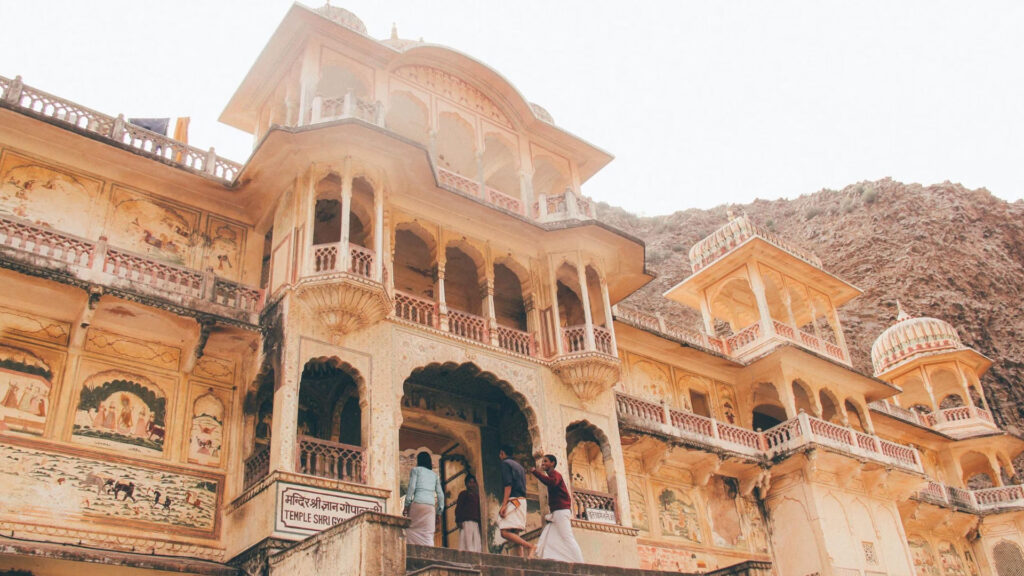
Overview of Galta Ji Temple
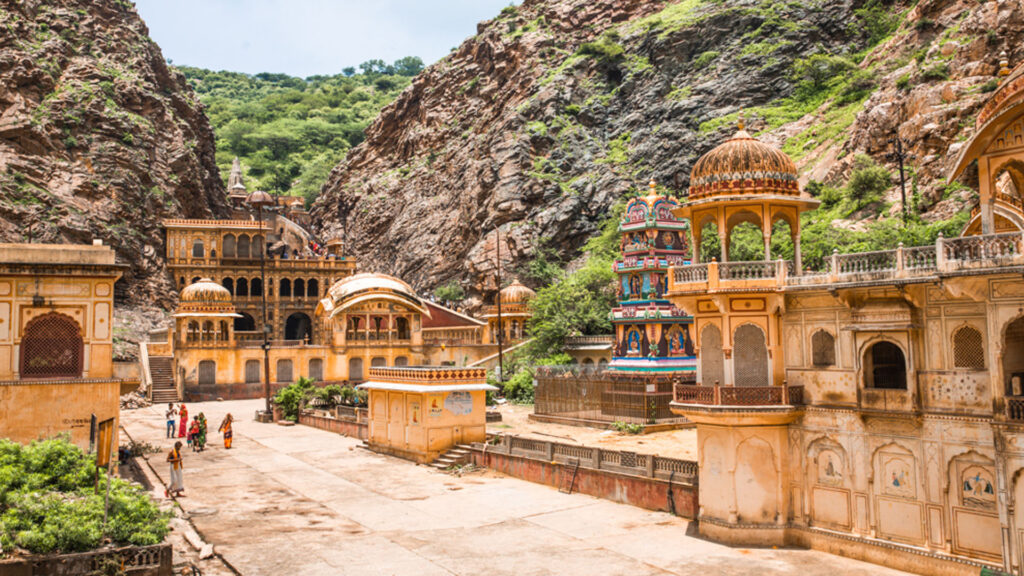
The Galta Ji Temple complex is an ancient Hindu pilgrimage site surrounded by the hills of the Aravalli Range. The temple area consists of several shrines, sacred kunds (water tanks), pavilions, and ghats built in traditional Rajasthani architectural style.
The main temple is dedicated to Lord Hanuman, though the complex also includes temples dedicated to other Hindu deities. Important highlights of the Galta Ji Temple complex include:
- Sacred water tanks called kunds
- Natural springs flowing through the temple
- Ancient temples and shrines
- A trekking route from Jaipur city
- A large population of monkeys
- Scenic viewpoints and sunset views
Because of these elements, the temple holds both religious and cultural importance in Rajasthan.
Historical Significance of Galta Ji Temple
Galta Ji Temple has deep historical and religious roots. According to legend, the site was once the meditation place of Saint Galav, a revered Hindu sage who performed intense penance in the region.
It is believed that Saint Galav practiced meditation here for thousands of years. Because of his devotion, a sacred water source emerged from the hills, creating the natural spring that continues to flow into the temple’s holy tanks today.
The present temple structures were largely built during the 18th century under the patronage of Rajput rulers of Jaipur. The architectural style reflects traditional Rajasthani palace-style design, with pink sandstone structures, domes, and carved pillars.
Over time, the temple became a major pilgrimage site where devotees come to perform rituals, offer prayers, and take a sacred bath in the kunds.
Sacred Kunds of Galta Ji Temple
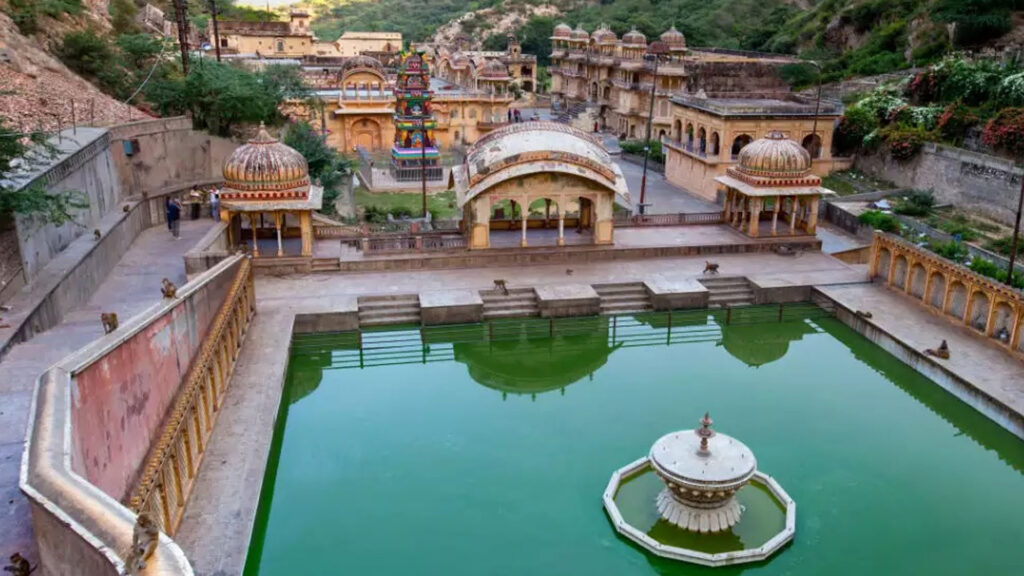
One of the most remarkable features of the temple complex is the presence of seven sacred water tanks, locally known as kunds. These kunds are filled by a natural spring that flows down from the hills of the Aravalli Range.
Galta Kund
The most sacred tank in the complex is Galta Kund, which is believed to possess holy properties. Pilgrims take ritual baths here to cleanse their sins and purify their souls. What makes Galta Kund unique is that it is believed to never dry up, even during the harsh summers of Rajasthan.
Other Sacred Kunds
The temple complex contains several additional water tanks used for religious bathing rituals. These kunds serve different purposes for pilgrims, including:
- Ritual purification
- Sacred bathing during festivals
- Religious ceremonies
The sight of temples reflected in the water of these kunds creates a serene and picturesque atmosphere.
Why Galta Ji Is Called the Monkey Temple
Galta Ji Temple is widely known as the Monkey Temple of Jaipur because of the large number of monkeys that live in the surrounding hills.
The temple complex is home to two major monkey species:
- Rhesus macaque
- Gray langur
These monkeys roam freely around the temples, ghats, and pathways. Visitors often see monkeys:
- Sitting on temple walls
- Playing near the kunds
- Jumping across rooftops
- Swimming in the sacred tanks
Although the monkeys are a major attraction, visitors are advised to be cautious and avoid carrying visible food items.
Trekking Route to Galta Ji Temple
One of the most exciting ways to reach Galta Ji Temple is by hiking through the hills from Jaipur. The trekking trail begins near Suraj Pol, located in the eastern part of the city.
Trekking Experience
The trek typically takes 30 to 45 minutes and offers incredible views of Jaipur’s historic landscape. During the hike, visitors pass through:
- Ancient stone pathways
- Aravalli hill ridges
- Traditional temples and shrines
- Scenic viewpoints overlooking the Pink City
The trek provides an opportunity to explore the natural beauty surrounding Jaipur while visiting a sacred site.
Sun Temple at Galta Ji
One of the most spectacular viewpoints in the region is the Sun Temple, located above the Galta Ji complex. The temple is dedicated to Surya and offers panoramic views of Jaipur.
Sunset Views
The Sun Temple is particularly famous for its breathtaking sunset views. From the hilltop, visitors can see:
- The entire city of Jaipur
- Historic forts and walls
- The surrounding Aravalli hills
Watching the sunset from this location is one of the most memorable experiences in Jaipur.
Architecture of Galta Ji Temple Complex
The architecture of Galta Ji Temple is unlike most temples in Rajasthan. Instead of a single structure, the complex consists of multiple temples, pavilions, and ghats built around the sacred kunds.
Key architectural features include:
- Pink sandstone buildings
- Decorative arches and domes
- Intricate wall carvings
- Pillared courtyards
- Step-like ghats surrounding the water tanks
The structures are designed in a palace-like style that resembles the royal architecture of Jaipur.
Major Temples Inside the Complex
The Galta Ji complex houses several temples dedicated to different Hindu deities. Important temples include:
- Brahma Temple: Dedicated to Brahma, this shrine holds religious importance for devotees.
- Vishnu Temple: A temple dedicated to Lord Vishnu, symbolizing preservation and cosmic balance.
- Hanuman Temple: One of the most visited shrines in the complex.
These temples together form an important spiritual center for devotees visiting Jaipur.
Festivals Celebrated at Galta Ji Temple
The temple experiences the highest number of visitors during important Hindu festivals.
Makar Sankranti
During Makar Sankranti, thousands of pilgrims gather at Galta Ji Temple to take a holy dip in the sacred kunds. Devotees believe that bathing in the kund during this festival brings spiritual purification.
Kartik Purnima
Another major festival celebrated here is Kartik Purnima. Special prayers, devotional songs, and religious ceremonies take place during this auspicious occasion.
Best Time to Visit Galta Ji Temple
The ideal time to visit Galta Ji Temple is during the cooler months.
Best Months to Visit
- October
- November
- December
- February
- March
- These months offer pleasant weather for trekking and sightseeing.
The summer months in Rajasthan can be extremely hot, making daytime visits uncomfortable.
How to Reach, Destination Attractions, Destination Facilities, Transportation, Accessibility
Timings and Entry Fees of Galtaji Temple Jaipur
The temple is open all days of the year between 5:00 AM to 9:00 PM.
Entry is free for all irrespective of nationality or faith.
Nearest Railway Station:
The nearest railway station to Galta Ji Temple is Bais Godam Railway Station. The temple is located one kilometer from the station.
Nearest Airport:
Jaipur International Airport is the nearest airport to Galta Ji Temple. One may hire a cab from the airport to reach the temple.
Travel Tips for Visitors
If you plan to visit Galta Ji Temple, keep these tips in mind:
- Avoid carrying food openly because monkeys may snatch it
- Wear comfortable shoes for trekking
- Carry drinking water
- Visit early morning or evening to avoid heat
- Respect religious rituals and temple traditions
These precautions ensure a safe and enjoyable visit.
Why Galta Ji Temple Is a Must-Visit
There are many reasons why Galta Ji Temple is one of the most unique attractions in Jaipur.
- Spiritual Importance: The temple is a sacred pilgrimage site with centuries-old traditions.
- Natural Beauty: The Aravalli hills create a stunning natural backdrop.
- Unique Monkey Population: The temple’s monkeys make it one of the most unusual religious sites in India.
- Scenic Trekking Experience: Visitors can enjoy a scenic hike through the hills.
- Incredible Sunset Views: The nearby Sun Temple provides one of the best viewpoints in Jaipur.