
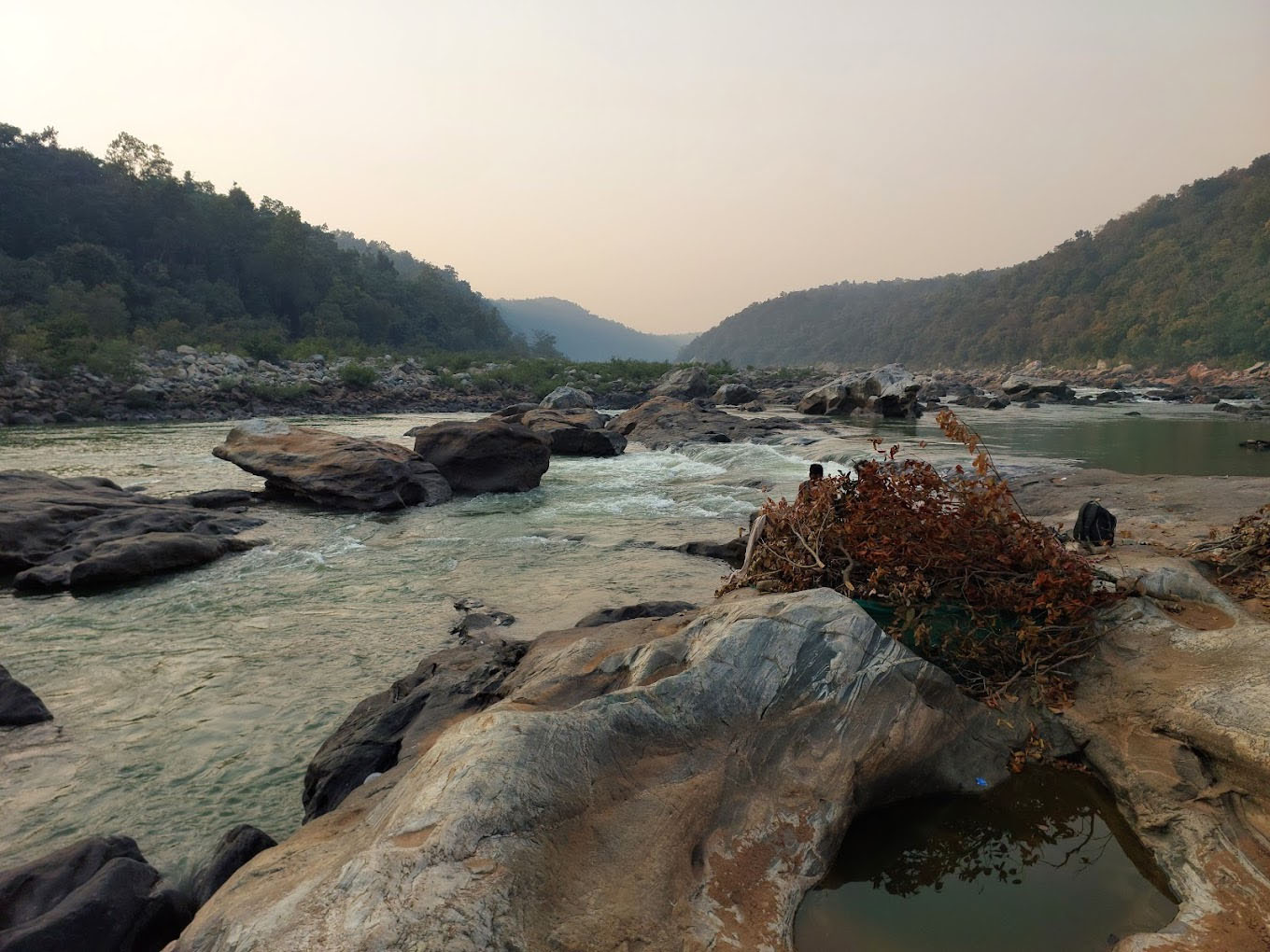
Sonamuni Jungle Beach is not actually a sea beach. It is a wide stretch of golden sand on the banks of the Baitarani River, tucked inside the Sonamuni forest near Manoharpur village in Keonjhar district, Odisha. Locals call it a “beach” because the riverbank looks and feels like one, and it has become a favourite picnic, camping and photography spot about 73 km from Keonjhar town.
Key Highlights
- What it is: A sandy riverbank on the Baitarani River inside the Sonamuni forest — there is no sea here at all.
- Location: Near Manoharpur village (Sanapurunapani), about 3 km from Manoharpur and around 73 km from Keonjhar town, Odisha.
- Timings: Open daily from 7:00 am to 6:00 pm; plan a day trip, not a night halt.
- Best time to visit: October to February, when the weather is cooler and the river is calmer.
- Nearest railway station/airport: Keonjhar railway station (~72 km); Biju Patnaik International Airport, Bhubaneswar (~185 km).
What Exactly Is Sonamuni Jungle Beach?
The name confuses first-time visitors, so let’s clear it up right away. Sonamuni sits on the Baitarani River, not the coast. Here the river widens, its current slows, and a broad bank of fine sand builds up — close enough to a seaside shore that villagers started calling it a beach, and the name stuck. Dense sal forest and low hills close in around it: beach-like sand underfoot, proper jungle all around.
The setting is the real draw. Huge slabs of rock sit scattered along the riverbank and make natural seating — people come to sit, cook, eat and spend unhurried hours with family and friends. Music video crews have used the spot as a shoot location too, which tells you how it looks on camera. But don’t come expecting stalls, changing rooms or lifeguards. This is a raw, offbeat place, and you should treat it as such.
Where Is It and How to Reach
Sonamuni Jungle Beach lies near Manoharpur village, in the Sanapurunapani area of Keonjhar district, close to the Keonjhar–Mayurbhanj border. The commonly quoted distances are about 3 km from Manoharpur and roughly 73–75 km from Keonjhar town. The last stretch needs a short walk — roughly a kilometre — through the jungle path to the riverbank, which is part of the charm as long as you arrive with daylight to spare.
By Air
The nearest airport is Biju Patnaik International Airport in Bhubaneswar, around 185 km away. From there, hire a taxi or self-drive north towards Keonjhar and on to Manoharpur. The drive takes roughly four to five hours depending on road conditions, so an early start matters if you want a full day at the spot.
By Train
The nearest railway station is Keonjhar, about 72 km from Sonamuni. Trains connect Keonjhar with Bhubaneswar and other Odisha cities — check current schedules and book on IRCTC before travelling, since options on this route are limited. From the station, hire a private taxi to Manoharpur and the beach; expect the onward drive to take close to two hours.
By Road
Road is how almost everyone reaches Sonamuni, and honestly it’s the most practical option. Drive from Keonjhar town towards Anandapur, then on to Manoharpur village — the spot is about 3 km beyond it. Manoharpur is also the nearest bus stop (around 3 km from the beach), so state buses and shared autos can get you that far; the final stretch needs a walk or a lift. Roads into the village are rural and narrow in places, and the last kilometre to the riverbank is a forest path, not a motorable road — wear proper footwear and avoid arriving after dark.
Best Time to Visit
October to February is the best window. The air is cooler, the forest is at its greenest, and the Baitarani runs lower and calmer, leaving a wider sandbank. Locals visit year-round, and dry summer mornings are fine too. The season to be careful about is the monsoon (roughly June to September): heavy rain swells the Baitarani, the bank can flood or turn slippery, and the forest path in gets genuinely difficult. If the river looks high when you arrive, skip the bathing and stay well back from the water.
Things to Do at Sonamuni Jungle Beach
Picnic and cooking with family: This is what most visitors come for. Odia-style picnic feasts — cooking on the riverbank with a group — are the norm here. Bring your own utensils, fuel and ingredients, because there are no shops at the spot, and clean up thoroughly before you leave.
River bathing: Bathing in the Baitarani is popular here, but treat the river with respect. It has deep stretches, so stick to the shallow areas you can see clearly, never go in alone, and keep an eye on children at all times.
Photography and shooting: The mix of sand, black river rocks, moving water and forest canopy makes for strong photos, and local music video crews have filmed here. Mornings give the softest light.
Jungle walk and birdwatching: The forest around the beach is alive with birds and butterflies. The kilometre-long walk in from the road is itself a pleasant nature trail — carry binoculars if you have them.
Quiet time on the rocks: The big flat rocks along the bank are made for sitting. Bring a packed lunch, watch the river, and don’t rush — Sonamuni is at its best taken slowly.
Timings, Entry Fee and Facilities
Sonamuni Jungle Beach is open every day from 7:00 am to 6:00 pm. I could not find any officially published entry fee, so treat it as free while carrying a little cash in hand. Facilities are basic: expect little more than the natural setting itself, with no confirmed food stalls, changing rooms or washrooms. Carry drinking water, snacks, sunscreen, insect repellent, a first-aid kit and a change of clothes. Mobile network can be patchy inside the forest, so download your maps and let someone know your plan before you set off.
Where to Stay
There is no reliable information about guesthouses at the beach itself, so treat Sonamuni as a day trip. Keonjhar town, about 73 km away, is the sensible base — it has a fair range of budget and mid-range hotels, plus restaurants and fuel stations for the drive. Stay the night there, leave early, and you’ll comfortably be back by evening.
Nearby Attractions
Keonjhar district is generous with picnic and nature spots, so Sonamuni pairs well with others on the same trip. Patahara Waterfall is another popular Keonjhar picnic destination. And if Sonamuni has you craving the real coast, northern Odisha has genuine sea beaches: Chandipur with its famous disappearing sea, Dagara and Talsari near Balasore, and the quieter Pentha Sea Beach in Kendrapara. Wildlife lovers can look at Bhitarkanika National Park, Odisha’s famous mangrove sanctuary.
Travel Tips
Go as a group — the forest setting is safe enough in daylight with company, but not a place to be alone. Start early so you get the walk in, a full day on the sand and the walk back well before the 6 pm closing. Carry everything in and carry everything out; plastic left behind ruins places exactly like this. Don’t light fires on the sandbank, keep music low, and stay on the visible forest paths. Finally, respect the river — never swim out of your depth, and avoid the water entirely during or just after heavy rain.
Frequently Asked Questions
Is Sonamuni Jungle Beach a real sea beach?
No. Despite the name, Sonamuni is a sandy bank of the Baitarani River inside the Sonamuni forest near Manoharpur village, Keonjhar district. It is called a “beach” because the riverbank is covered in fine sand that looks and feels like a seaside shore. The nearest actual coast is far away, so if you want the sea, head to Chandipur or Talsari instead.
Where exactly is Sonamuni Jungle Beach located?
It is located near Manoharpur village in the Sanapurunapani area of Keonjhar district, Odisha, close to the Keonjhar–Mayurbhanj border. It sits about 3 km from Manoharpur village and roughly 73 km from Keonjhar town, with the last kilometre or so covered on foot through a jungle path.
What is the best time to visit Sonamuni Jungle Beach?
October to February is the best time — cooler weather, a greener forest and a calmer river. Locals visit throughout the year, but avoid the monsoon months (roughly June to September), when the Baitarani swells and the riverbank can flood or become slippery.
How do I reach Sonamuni Jungle Beach from Keonjhar or Bhubaneswar?
From Keonjhar town, drive towards Anandapur and on to Manoharpur village — about 73 km, then a short walk of roughly a kilometre through the forest to the riverbank. From Bhubaneswar, the nearest airport and major rail hub, it is around 185 km by road (roughly four to five hours). The nearest railway station is Keonjhar, about 72 km away.
Is it safe to bathe at Sonamuni Jungle Beach?
It can be, with caution. The Baitarani has deep stretches at this spot, so bathe only in clearly shallow water, never go in alone, and supervise children closely. Avoid the water completely during or after heavy rain, when the current strengthens. The spot is open 7 am to 6 pm — don’t enter the forest area after dark.
Is there an entry fee, and what facilities are available?
No officially published entry fee could be found, so entry is effectively free — though it’s wise to carry some cash in case of local charges. Facilities are very basic: no confirmed shops, changing rooms or washrooms. Bring your own food, drinking water, first-aid kit and essentials, and carry all your waste back out with you.
Weather Sonamuni Jungle Beach
[location-weather id="5549"]