
Bhubaneswar is often described as India’s Temple City, a place where stone carvings whisper stories of dynasties, devotion, and time itself. Amid these ancient shrines, the ISKCON Temple, Bhubaneswar rises with a different kind of presence—modern in form, timeless in spirit. It does not compete with the past; instead, it carries age-old Vaishnavite philosophy into the rhythm of contemporary life.
For locals searching “ISKCON temple near me in Bhubaneswar” or travelers planning ISKCON temple, Bhubaneswar tours, this sacred space offers more than rituals. It offers stillness inside motion, clarity inside chaos, and devotion that feels deeply personal rather than ceremonial. From the constant hum of Hare Krishna chants to the aroma of incense and freshly cooked prasadam, the temple breathes—softly, steadily—inviting anyone who enters to slow down.
The Story Behind the Temple’s Creation
The foundation of the ISKCON Temple in Bhubaneswar is deeply tied to the vision of Sri Srimad Gour Govinda Swami Maharaja, one of the closest disciples of A.C. Bhaktivedanta Swami Prabhupada, the founder of ISKCON. In 1975, Bhubaneswar was approved as the 108th ISKCON mission, a number sacred in Hindu cosmology—and notably, the last mission personally sanctioned by Prabhupada.
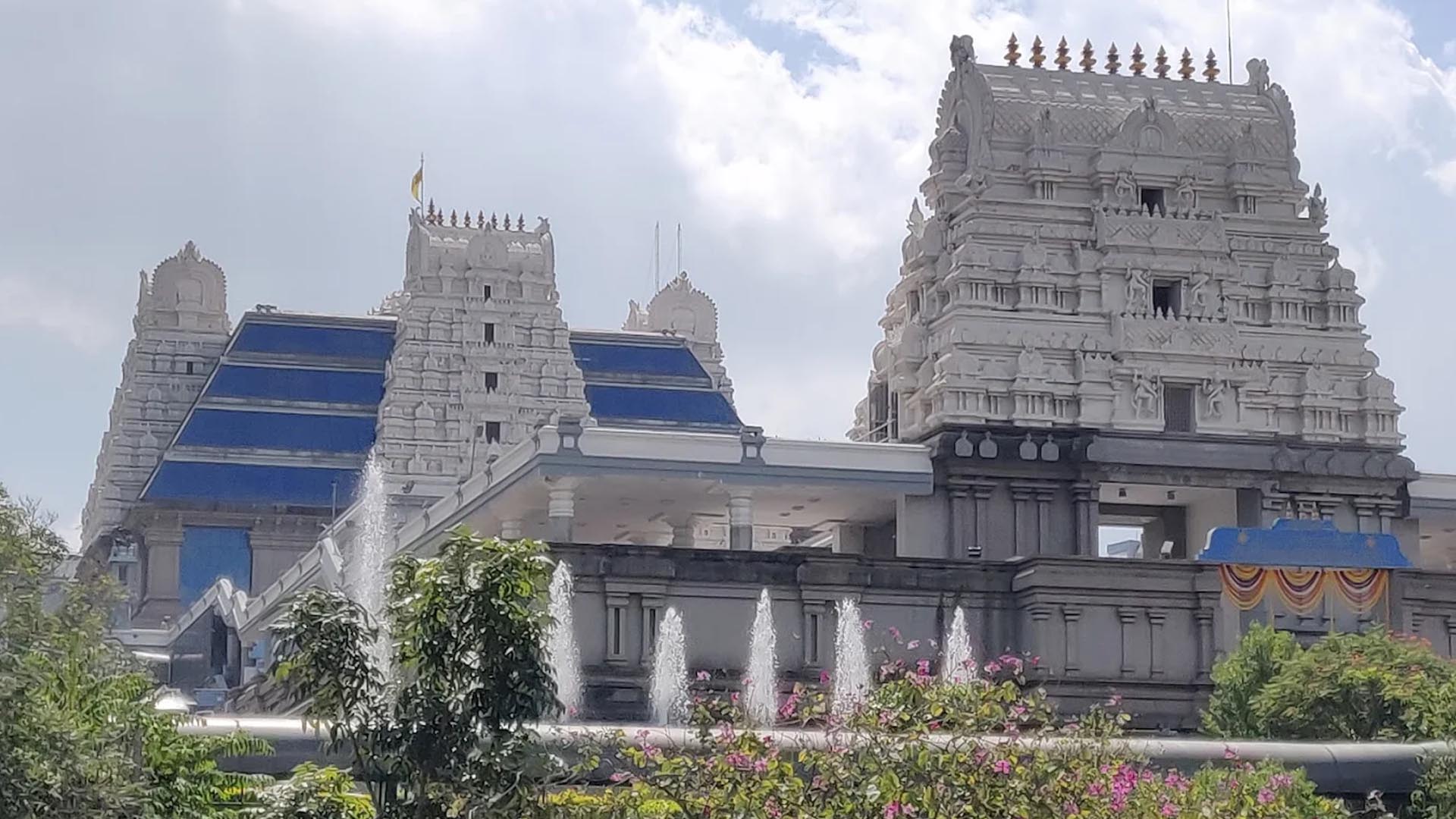
At the time, the temple area was largely undeveloped, surrounded by greenery rather than highways. Construction progressed slowly, guided by spiritual intent rather than commercial urgency. By 1991, the temple officially opened its doors, transforming quiet land into a center of devotion, learning, and service.
Today, the ISKCON Temple stands not just as a religious structure but as a living institution—one that teaches bhakti (devotion) as a way of life, not a ritual confined to walls.
Architecture That Breaks Tradition—Yet Honors It
Unlike the ancient Kalinga-style temples surrounding Bhubaneswar, the ISKCON Temple, Bhubaneswar follows a circular architectural design, symbolizing completeness, eternity, and unity. Crafted largely from white marble, the structure reflects light beautifully under Odisha’s vast skies, creating an atmosphere of openness rather than grandeur.
Inside, tall domes rise above intricately carved pillars, blending modern engineering with spiritual symbolism. The central sanctum houses exquisitely adorned deities:
- Krishna and Balarama
- Radha Gopinath
- Jagannath, Baladeva, and Subhadra
This inclusion of Jagannath connects ISKCON Bhubaneswar spiritually with Puri, reinforcing Odisha’s deep Vaishnavite roots. The temple’s design encourages quiet contemplation—no dark corridors, no heaviness—just space, light, and devotion.
Things to Do in ISKCON Temple, Bhubaneswar
For visitors wondering about things to do in ISKCON Temple, Bhubaneswar, the experience extends far beyond darshan.
1. Attend the Mangala Arati
Early mornings begin at 4:30 AM with Mangala Arati. Soft lamp light, rhythmic bells, and collective chanting create an atmosphere that feels deeply grounding, even for first-time visitors.
2. Join Evening Kirtans
Evenings are when the temple truly comes alive. Devotional singing builds slowly, voices merging into a powerful, meditative rhythm that dissolves mental clutter.
3. Visit the Spiritual Bookstore
ISKCON’s literature section offers translations and commentaries on the Bhagavad Gita, Srimad Bhagavatam, and other Vaishnavite texts—ideal for both spiritual seekers and curious readers.
4. Experience Govinda’s Prasadam
A visit is incomplete without eating at Govinda’s Restaurant. The prasadam here is simple, sattvic, and deeply nourishing—prepared as an offering, not a product.
5. Spend Quiet Time in the Temple Complex
Many visitors simply sit—on steps, in shaded areas, or near the prayer hall—absorbing the calm energy that lingers long after chants fade.
Visit Planning Times And Fees
Morning visits begin when bells ring at 4:30 AM, just as the first light creeps in. By midday, gates shut close to 1:00 PM, pausing the chants and rituals inside. After a quiet break, activity returns sharply at 4:30 in the afternoon. Evenings stay alive with movement up till 9:00 PM, glowing under warm lamps. What pulls people in most?
That moment when songs rise, and oil lamps flicker at dusk. Here’s what helps those watching expenses – entry costs nothing at all. Open gates welcome visitors to the ISKCON Temple in Bhubaneswar – no charge required. Anyone can enter, whatever their background may be. Support flows through gifts, which help feed people via efforts like “Food for Life.” These offerings? They’re received with quiet thanks.
Easy Ways To Get There
The temple is located in Nayapalli, a well-connected area of the city.
- From Biju Patnaik International Airport: ~6 km
- From Bhubaneswar Railway Station: ~5 km
Autos, taxis, and ride-hailing services like Ola and Uber are readily available. For most visitors, a simple map search for “ISKCON Temple, Bhubaneswar” leads directly to the entrance.
Hotels Near ISKCON Temple, Bhubaneswar
For travelers planning extended stays, there are several hotels near ISKCON Temple, Bhubaneswar, ranging from budget to premium:
- Budget lodges and guesthouses in Nayapalli
- Mid-range business hotels near Jaydev Vihar
- Premium hotels within 15–20 minutes’ drive
Staying nearby allows easy access for early morning aratis and evening kirtans without navigating heavy traffic.
How to visit respectfully
To maintain the sanctity of the space:
- Wear modest clothing (covered shoulders and knees)
- Remove footwear before entering prayer halls
- Photography is not allowed inside the sanctum
- Maintain silence during rituals
These small acts of respect preserve the calm that makes the ISKCON Temple experience so powerful.